Adhyaya 184
Chapter 184 — अष्टमीव्रतानि (Aṣṭamī Observances: Kṛṣṇāṣṭamī, Budhāṣṭamī/Svargati-vrata, and Mātṛgaṇa-Aṣṭamī)
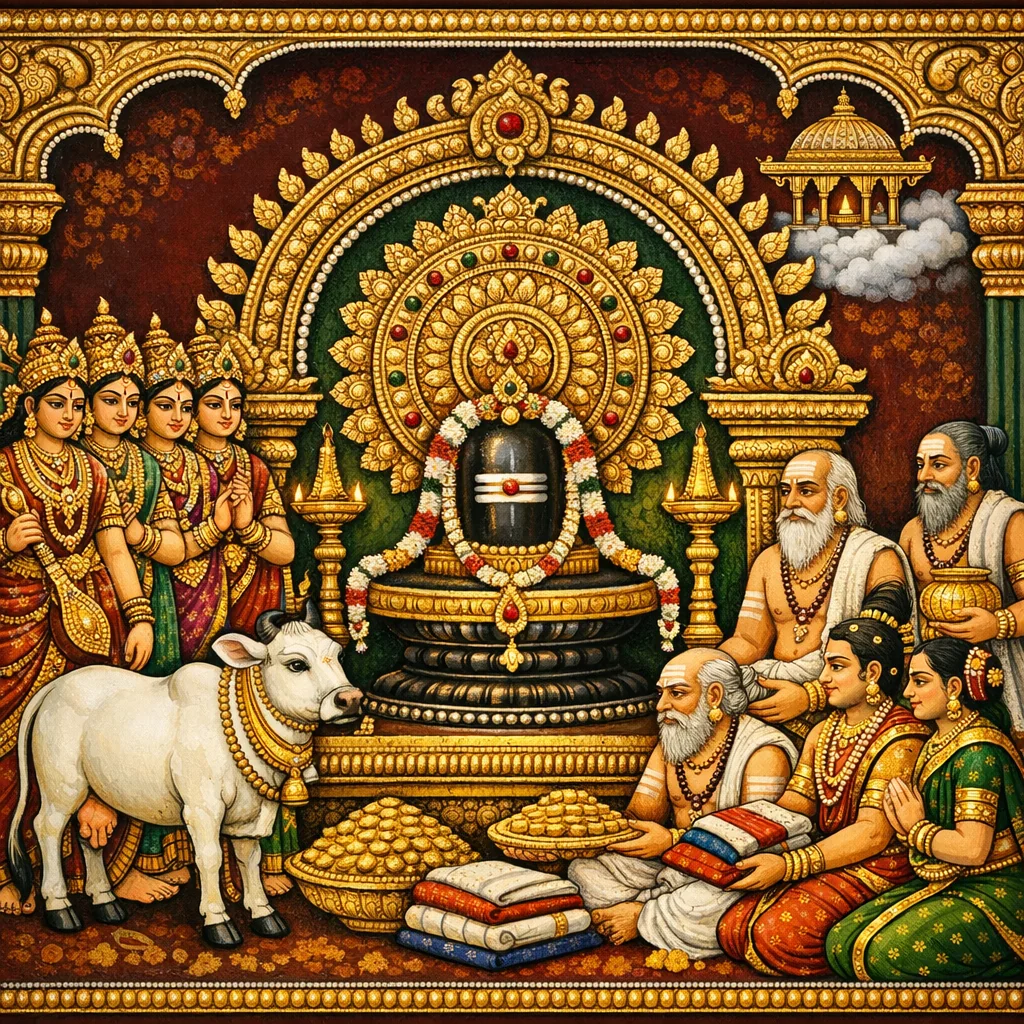
Agni teaches Vasiṣṭha Aṣṭamī-based vows that combine calendrical exactness, bodily restraint, Śaiva devotion, and social-ritual duties. The chapter begins with Mātṛgaṇa-Aṣṭamī: worship of the Mothers starting with Brahmāṇī on Kṛṣṇāṣṭamī in Caitra, promising prosperity and entry into Kṛṣṇa’s world. It then details a year-long Kṛṣṇāṣṭamī vrata beginning in Mārgaśīrṣa—nakta fasting (eating only at night), ritual purification, sleeping on the ground, and month-by-month Śiva worship (Śaṅkara/Śambhu/Maheśvara/Mahādeva/Sthāṇu/Paśupati/Tryambaka/Īśa) with austere dietary rules (go-mūtra, ghee, milk, sesame, barley, bilva leaves, rice, etc.). The observance culminates in homa, maṇḍala-pūjā, feeding brāhmaṇas, and prescribed dāna (cow, garments, gold), granting both bhukti and mukti. A special Budhavāra-Aṣṭamī (Svargati-vrata) is said to bestow Indra’s station, featuring a fixed rice-measure offering in a mango-leaf vessel with kuśa, sāttvika worship, kathā-śravaṇa, and dakṣiṇā. An exemplum (Dhīra’s family, the bull Vṛṣa, loss and recovery, Yama’s realm, and the fruit of observing Budhāṣṭamī twice) shows its salvific power, raising ancestors from hell to heaven. The chapter closes with an aśoka-bud drinking rite on Punarvasu and an Aṣṭamī prayer for sorrow-removal, reaffirming that Mātṛ-pūjā from Caitra onward brings victory over enemies.
Shlokas
No shlokas available for this adhyaya yet.
Frequently Asked Questions
A year-linked discipline starting in Mārgaśīrṣa with nakta-fasting and purification, followed by month-specific Śiva-worship names and corresponding dietary austerities, concluding with homa, maṇḍala worship, feeding brāhmaṇas, and dāna (cow, garments, gold).
When Aṣṭamī coincides with Wednesday in either fortnight it is termed Svargati-vrata; the text assigns it a specific offering protocol (measured rice preparation, mango-leaf vessel with kuśa, sāttvika pūjā, kathā-śravaṇa, and dakṣiṇā) and promises attainment of Indra’s station.
By combining austerity (niyama), purity (śauca), devotion (Śiva/Mātṛ worship), narrative-hearing, and charity (dāna) into a complete sādhanā, it explicitly states the attainment of both bhukti and mukti and illustrates salvific efficacy through the liberation of ancestors from naraka.
Prosperity, victory over enemies through Mātṛ-pūjā on Aṣṭamī, sorrow-removal via the Aśoka rite, and restoration of fortune/standing through proper rule-keeping and sanctioned dāna.