Adhyaya 183
Aṣṭamī-vratāni — Jayantī (Janmāṣṭamī) Vrata with Rohiṇī in Bhādrapada
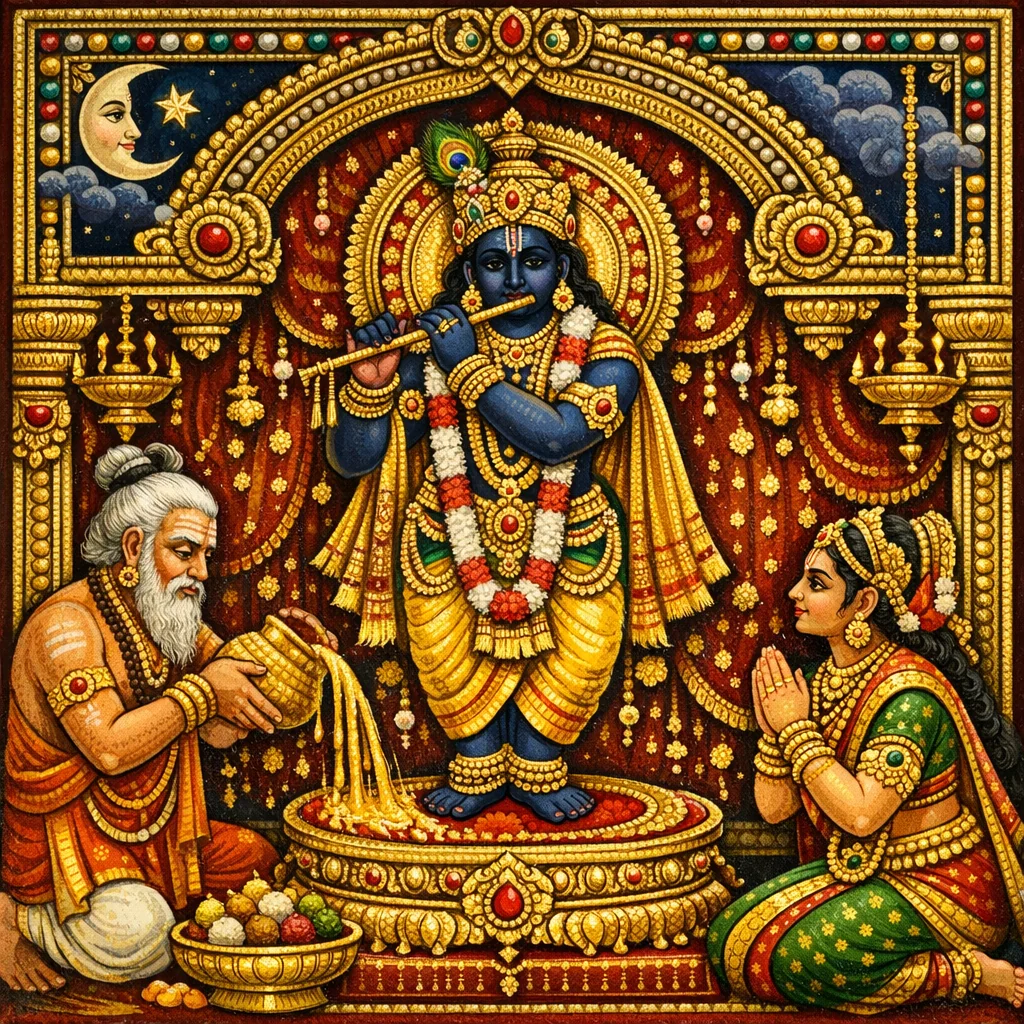
Lord Agni opens the Aṣṭamī-vrata cycle by prescribing a supreme observance when the eighth lunar day coincides with the Rohiṇī nakṣatra in Bhādrapada’s dark fortnight—called Jayantī, for Śrī Kṛṣṇa was born at that conjunction. Centered on midnight worship, the vrata moves from inner purification through upavāsa (fasting) to formal deity installation and layered offerings. The votary invokes Kṛṣṇa with Balabhadra and the parental circle (Devakī, Vasudeva, Yaśodā, Nanda), then performs mantra-led upacāras—snāna (ritual bath), arghya, flowers, dhūpa, dīpa, and nivedya—praising Govinda as the source of Yoga, Yajña, Dharma, and the cosmos. A lunar-astral feature appears in worship of the Moon with Rohiṇī and arghya to Śaśāṅka. At midnight the rite culminates in stream-like offerings of jaggery mixed with ghee while reciting the sacred names. It concludes with dāna (cloth, gold) and feeding brāhmaṇas, promising release from sins of seven births, progeny, fearlessness through annual observance, and attainment of Viṣṇuloka—explicitly uniting bhukti (worldly blessings) with mukti (higher ascent and liberation).
Shlokas
No shlokas available for this adhyaya yet.
Frequently Asked Questions
The vow is emphasized for Bhādrapada’s kṛṣṇa-pakṣa Aṣṭamī when it coincides with the Rohiṇī nakṣatra, with the principal worship performed at midnight.
Kṛṣṇa is invoked as primary, together with Balabhadra, Devakī, Vasudeva, and Yaśodā (with attendants), and additionally the Moon (Śaśāṅka) is worshipped along with Rohiṇī through arghya and related rites.
It ties ritual action to purification and ascent: fasting is said to remove sins from seven births, the liturgy praises Govinda as the source of Yoga/Yajña/Dharma/Viśva, and the fruits include ūrdhva-gati (higher progress) and Viṣṇuloka, aligning bhakti and vrata-discipline with mokṣa.