Adhyaya 181
Vows of the Sixth Lunar Day (Ṣaṣṭhī-vratāni)
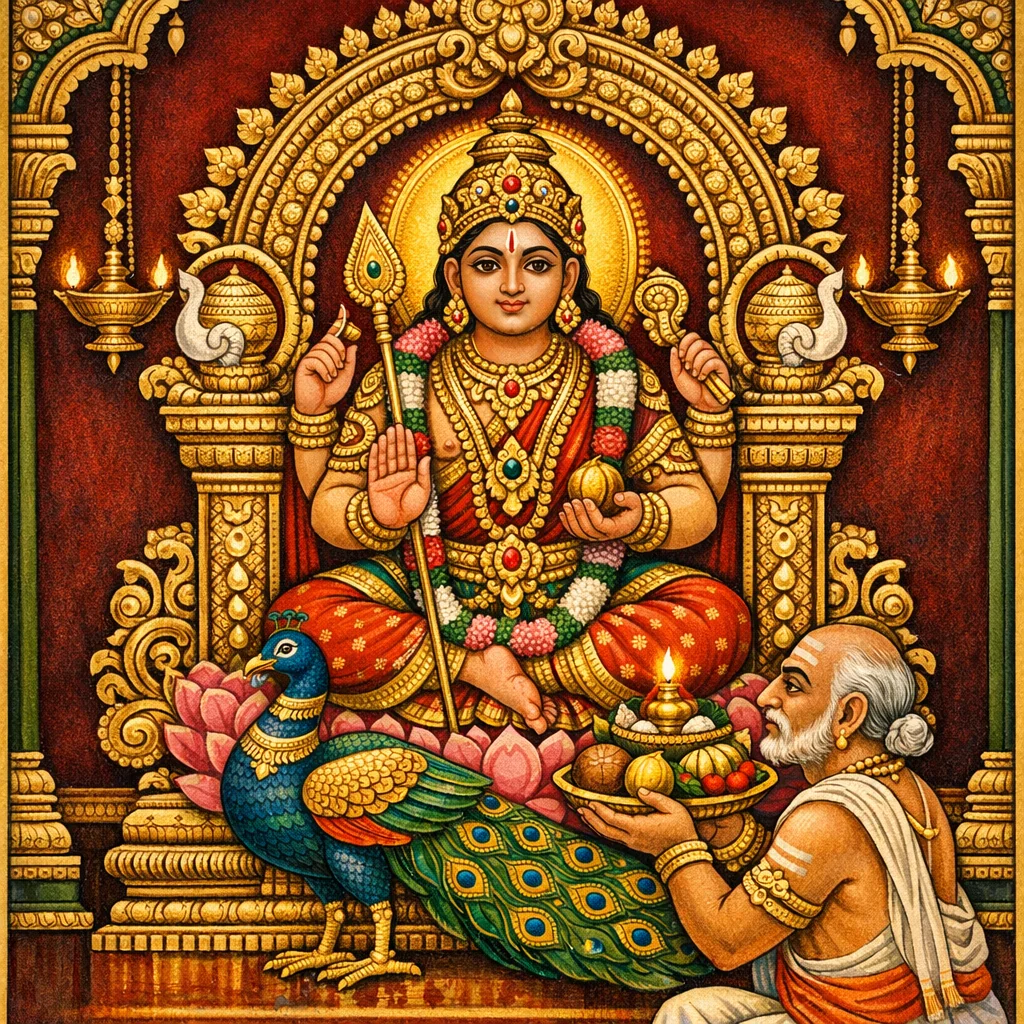
Lord Agni continues the Vrata-khaṇḍa’s calendrical instruction by moving from Pañcamī-vratas to Ṣaṣṭhī-vratas, presenting the sixth lunar day as a ritual nexus that can yield both bhukti (worldly enjoyment) and mukti (liberation). He opens by promising to explain Ṣaṣṭhī observances—beginning in Kārttika in one recension, while manuscript variants preserve alternate openings and readings. The core discipline includes regulated intake (fruit-only or a single simple pure meal, depending on the recension) and ritual offerings such as arghya. Agni then names Skanda-Ṣaṣṭhī, said to be akṣaya when performed on the sixth day in Bhādrapada, and announces the next vow, Kṛṣṇa-Ṣaṣṭhī, to be observed in Mārgaśīrṣa. The chapter culminates in heightened austerity: a year-long abstention from food is declared capable of granting the dual puruṣārtha fruit of enjoyment and liberation, linking ritual discipline to transcendence in the Agni Purāṇa.
Shlokas
No shlokas available for this adhyaya yet.
Frequently Asked Questions
Observing Ṣaṣṭhī with dietary restraint (fruit-only or a simple pure meal in variants) and performing offerings such as arghya, oriented toward attaining bhukti and mukti.
Skanda-Ṣaṣṭhī is described as an akṣaya observance on the sixth day in Bhādrapada; Kṛṣṇa-Ṣaṣṭhī is announced to be performed in Mārgaśīrṣa.
Some recensions include the directive to begin observance in Kārttika, while the Jha manuscript reportedly lacks that ending; other variants adjust the dietary instruction from fruit-only to a simple pure meal.