Adhyaya 179
Caturthī-vratāni (Vows of the Fourth Lunar Day)
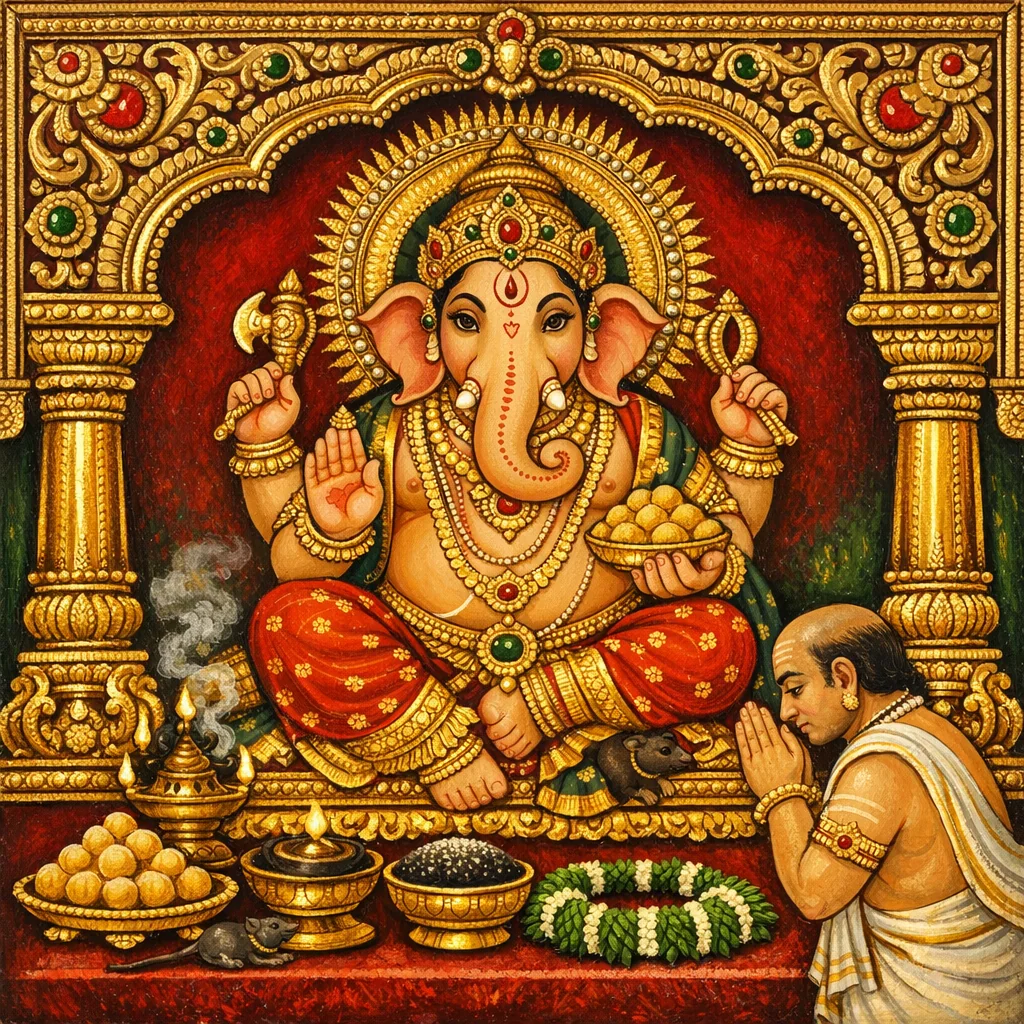
Lord Agni begins a systematic exposition of Caturthī-based vratas, explicitly presenting them as dual-fruit disciplines that grant Bhukti (worldly enjoyment/welfare) and Mukti (liberation). The chapter opens with a brief note on recension and manuscript variation, then lays out month- and tithi-specific rules. For Māgha śukla-caturthī it enjoins fasting and worship, with the deity’s ‘Guṇa’ (excellence/virtue) as the ritual focus. The observance continues to the pañcamī with sesame-rice offerings for a year of obstacle-free well-being, introducing the mūla-mantra “gaṁ svāhā” and its use in aṅga-nyāsa (heart and limb mantras beginning with “gām”). It then gives a precise sequence for āvāhana and visarjana using “āgaccha ulkā” and “gaccha ulkā,” along with offerings of guggulu fragrance and modaka sweets, plus an additional Gaṇeśa-gāyatrī-style mantra. Finally, it maps specialized observances: the Bhādrapada Caturthī Kṛcchra, the Phālguna Caturthī night-fast called Avighnā, and the Caitra Caturthī worship of Gaṇa with damana/dūrvā, portraying vrata as a means of auspiciousness and spiritual purification.
Shlokas
No shlokas available for this adhyaya yet.
Frequently Asked Questions
It specifies mantra-technology and ritual sequencing: the mūla-mantra “gaṁ svāhā,” its gāmādi application as hṛdaya and aṅga-mantras for nyāsa, and the precise āvāhana–visarjana formulas (“āgaccha ulkā” / “gaccha ulkā”) alongside prescribed offerings.
By presenting Caturthī vratas as disciplined, time-bound sādhana that removes obstacles (Avighnā), cultivates restraint (fasting/kṛcchra), and aligns ritual action with inner purification—thereby supporting both worldly stability (Bhukti) and liberation-oriented refinement (Mukti).