Adhyaya 178
Tṛtīyā-vratāni (Vows for the Third Lunar Day): Lalitā Tṛtīyā, Mūla-Gaurī Vrata, and Saubhāgya Observances
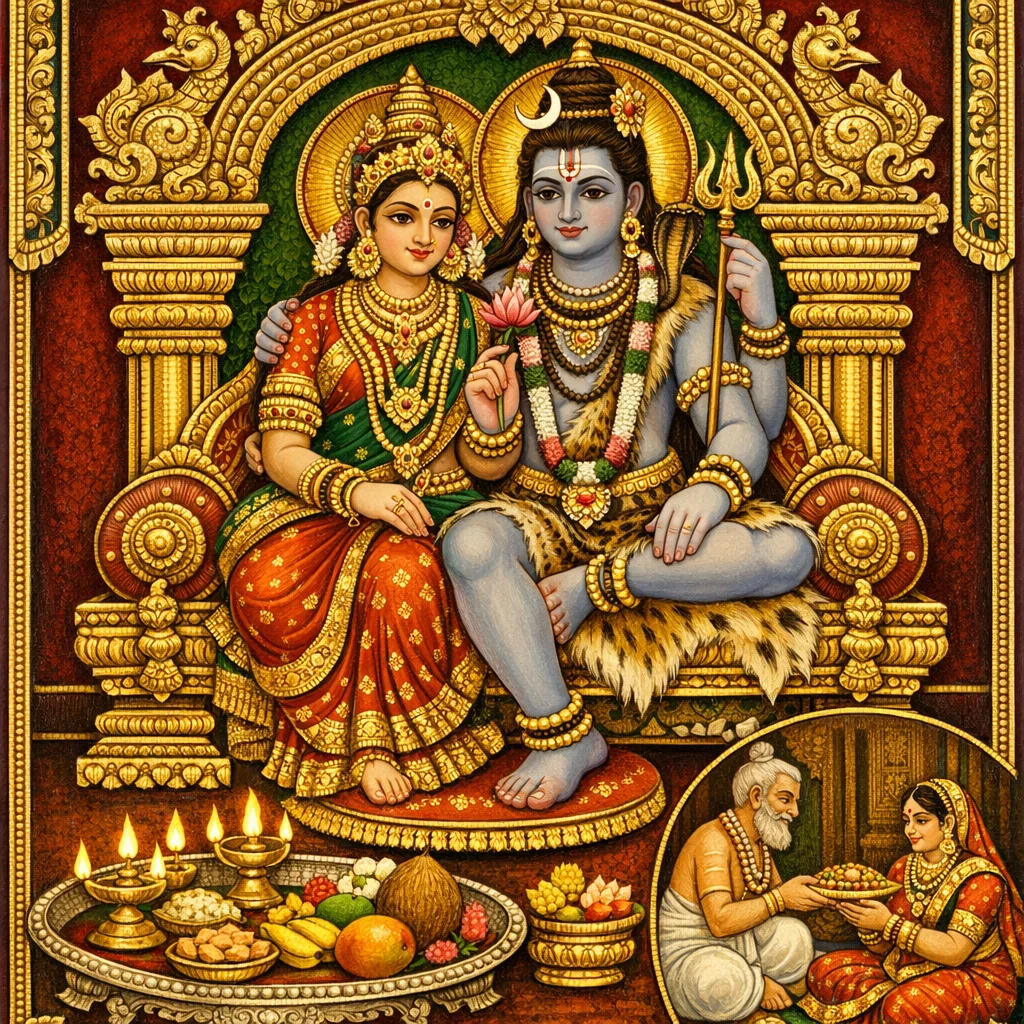
Lord Agni opens by moving from Dvitīyā-vratas to Tṛtīyā-vratas, declaring them bestowers of both bhukti and mukti. He describes the Mūla-Gaurī observance on Caitra śukla tṛtīyā, commemorating Gaurī’s marriage to Hara: purification by a sesame bath, then joint worship of Śambhu with Gaurī using auspicious offerings such as “golden fruits.” The ritual’s core is an extended mantra-nyāsa with limb-wise invocations, assigning divine names and powers from feet and ankles up through knees, waist, belly, breasts, throat, hands and arms, face, nose, eyebrows, palate, hair, and head—embodying Śiva–Śakti theology in worship. Flowers, fragrances, and month-wise offering sequences are prescribed, and the rite concludes with dāna: honoring a brāhmaṇa couple, giving sets of items, and major gifts like a golden Umā–Maheśvara image with cattle. Alternative timings (Vaiśākha, Bhādrapada/Nābhasya, Mārgaśīrṣa) and a second method include repeated worship with Mṛtyuñjaya recitations. Finally, Agni introduces Saubhāgya-vrata (notably salt-abstinence from Phālguna tṛtīyā) and lists goddess-forms across successive tṛtīyās, promising saubhāgya and svarga.
Shlokas
No shlokas available for this adhyaya yet.
Frequently Asked Questions
The chapter primarily teaches Tṛtīyā-vratas, especially Lalitā Tṛtīyā and the Mūla-Gaurī vrata, including a detailed mantra-nyāsa and concluding dāna; it also introduces the Saubhāgya-vrata for marital prosperity.
By embedding limb-wise mantra-nyāsa (a technical ritual technology) within Śiva–Śakti worship and ethical-social duties (honoring a brāhmaṇa couple and dāna), the chapter frames embodied discipline and generosity as means toward both prosperity (bhukti) and liberation (mukti).
Caitra śukla tṛtīyā is highlighted for Lalitā/Mūla-Gaurī; alternative performance months include Vaiśākha, Bhādrapada (Nābhasya), and Mārgaśīrṣa, with additional mentions of Māgha and Bhādra for Tṛtīyā-vrata practice.