Adhyaya 177
Adhyāya 177 — Dvitīyā-vratāni (Observances for the Lunar Second Day)
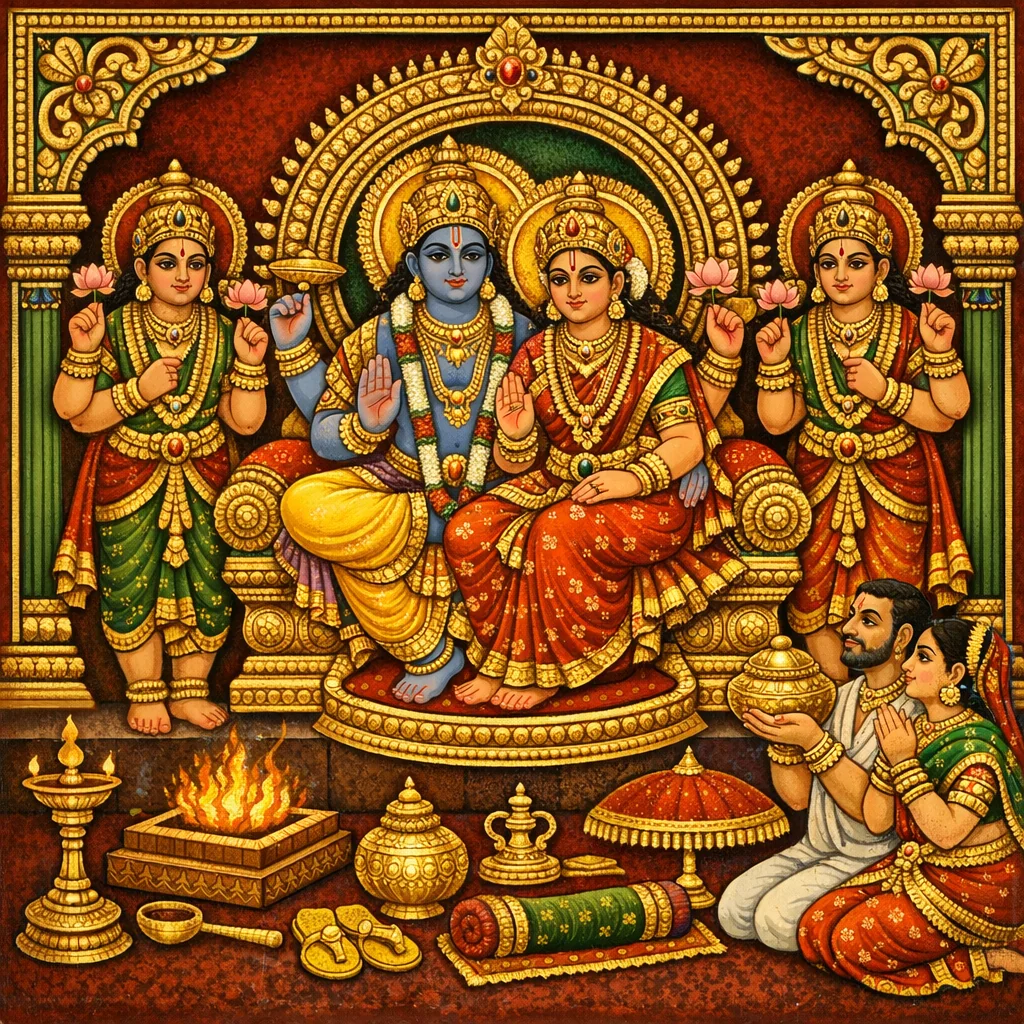
Lord Agni teaches a sequence of Dvitīyā-based vows, where exact month–pakṣa–tithi observance becomes a ritual framework for gaining both bhukti (worldly enjoyment) and mukti (liberation). It begins with the Dvitīyā-vrata: a flower-diet fast with worship of the Aśvins, granting prosperity, beauty, and heavenly merit; a Kārttika śukla-dvitīyā variant prescribes worship of Yama. Next is the Aśūnya-śayana observance (Śrāvaṇa kṛṣṇa-dvitīyā), meant to protect household continuity—sacred fires, deities, ancestors, and marital unity—through invocations to Viṣṇu with Śrī (Lakṣmī), culminating in pūjā, monthly Soma-arghya with mantra, ghee-homa, night-discipline, and ordered dāna (notably a bed, lamps, utensils, umbrella, footwear, seat, water-pot, icon, vessel). Then comes Kānti-vrata (Kārttika bright fortnight): eating only at night and worship of Bala–Keśava for radiance, longevity, and health. Finally, Śiṣṇu-vrata is taught as a four-day regimen from Pauṣa śukla-dvitīyā, with progressive ritual baths (mustard, black sesame, vacā, and sarvauṣadhi herbs), name-based worship (Kṛṣṇa/Acyuta/Ananta/Hṛṣīkeśa) with flower placements, lunar arghya with epithets, and a conclusion praising extended purification, alongside notes on manuscript variants and customary performers (kings, women, gods).
Shlokas
No shlokas available for this adhyaya yet.
Frequently Asked Questions
It treats Dvitīyā as a repeatable ritual node: specific deities, dietary rules (flowers or night-only eating), mantra, homa, and dāna are coordinated to yield prosperity/health (bhukti) and purification/heavenward merit (mukti-oriented phala).
Time-fixation (Śrāvaṇa kṛṣṇa-dvitīyā), Viṣṇu–Śrī invocations, monthly Soma-arghya with mantra, ghṛta-homa, nakta discipline, and a specified dāna-set (bed plus household and ritual items) culminating in merit tied to marital stability and household continuity.
It prescribes a four-day bath sequence using siddhārthaka (mustard), black sesame, vacā, and a defined sarvauṣadhi herb group—showing the Purāṇa’s characteristic fusion of vrata procedure with āyurvedic-style materia lists.
The Aśvins (general Dvitīyā vow), Yama (Kārttika śukla-dvitīyā), Lakṣmī–Viṣṇu/Śrīdhara (Aśūnya-śayana), Bala–Keśava (Kānti-vrata), and Soma/Indu (monthly arghya and lunar-focused elements).