Adhyaya 176
Pratipadā-vratāni (Vows Observed on the Lunar First Day)
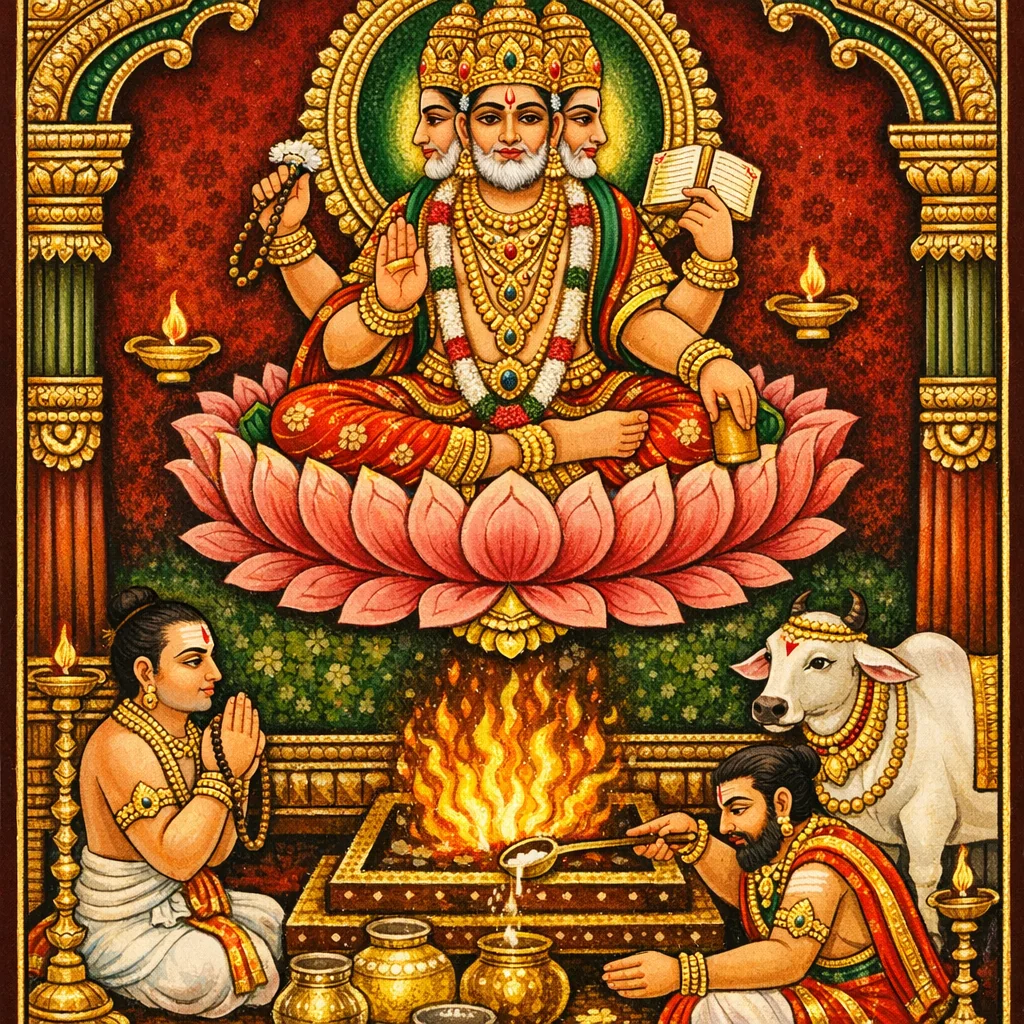
Lord Agni begins a systematic teaching of Pratipadā-based vratas, declaring the lunar first day a ritually potent gateway into year-long disciplines. He identifies Pratipadā in Kārttika, Āśvayuja, and Caitra as Brahmā’s tithi, linking calendrical time to a specific devatā-focus. The chapter then sets out the vrata method: fasting rules (including prolonged abstinence and regulated meal patterns), mantra-japa of “Oṃ tat sat brahmaṇe namaḥ” together with the Gāyatrī, and a clear visualization of Brahmā—golden, matted-haired, holding akṣamālā and ritual ladles, with a kamaṇḍalu. Dāna is included as a measurable ethical outcome—gift of milk according to one’s capacity—promising purification, heavenly enjoyment, and worldly prosperity for a brāhmaṇa. A second stream introduces the Dhanya-vrata in Mārgaśīrṣa with nakta discipline and homa, followed by year-long worship of Agni and the concluding gift of a tawny cow. The chapter ends by naming the Śikhī-vrata and its fruit: attainment of the Vaiśvānara state/abode, thus joining vrata practice to both bhukti (prosperity) and higher spiritual destinations.
Shlokas
No shlokas available for this adhyaya yet.
Frequently Asked Questions
Kārttika, Āśvayuja, and Caitra are identified as months where Pratipadā is regarded as Brahmā’s tithi.
The chapter prescribes the mantra “Oṃ tat sat brahmaṇe namaḥ” together with Gāyatrī, maintained as a year-long observance.
Brahmā is described as golden and matted-haired, with akṣamālā and a ladle (śruva) in the right hand, and a sacrificial ladle (śruc) and kamaṇḍalu in the left, with a long tuft/brush-like emblem (lambakūrca).
Milk is to be donated according to capacity with the resolve “May Brahmā be pleased,” yielding purification, heavenly enjoyment, and wealth on earth (for a brāhmaṇa). The Dhanya/Agni-oriented year observance culminates in gifting a kapilā (tawny) cow.
By mapping time-discipline (tithi), mantra, and dāna into repeatable observances culminating in destinations like Vaiśvānara pada, it frames vrata as a sādhana that integrates ethical action and higher spiritual attainment (bhukti-mukti samanvaya).