Adhyaya 366
Chapter 366 — सामान्यनामलिङ्गानि (Common Noun-Forms and Their Grammatical Genders)
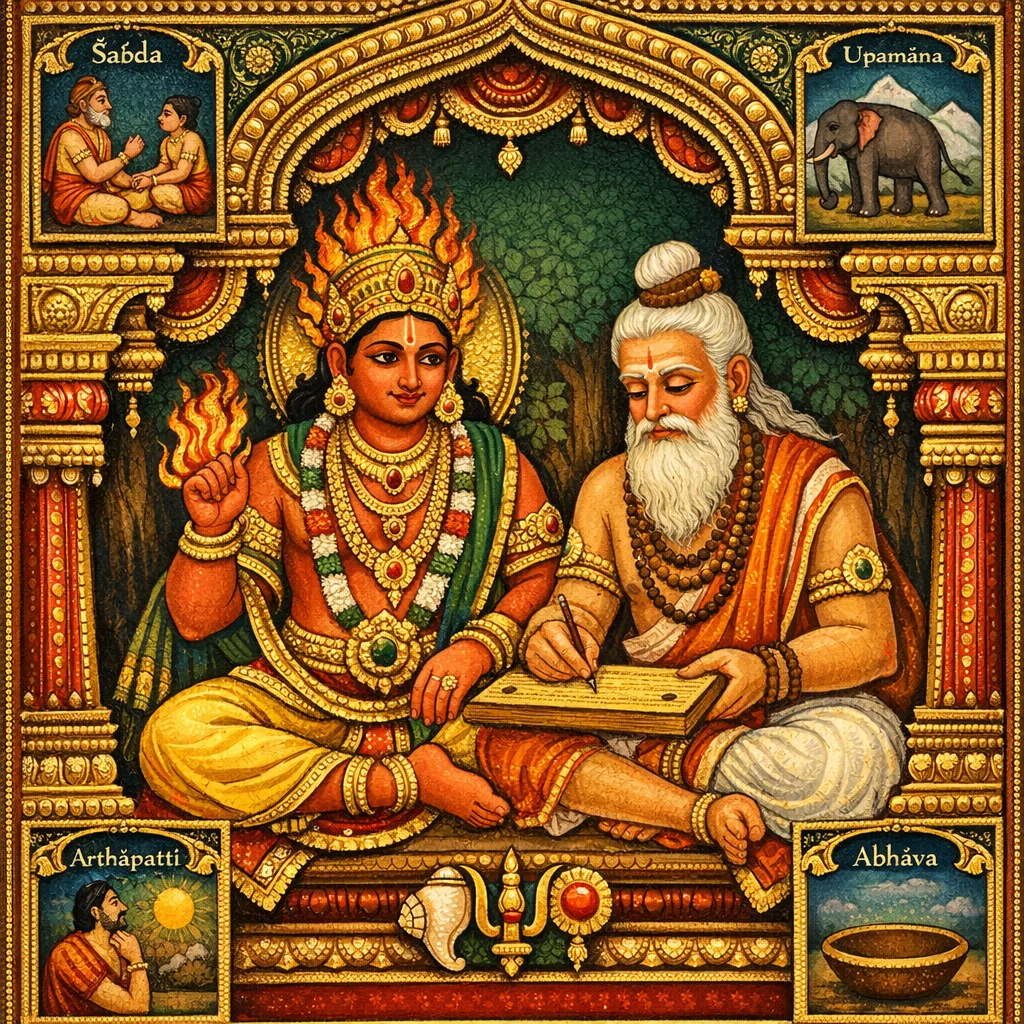
Lord Agni turns from occupational and institutional terms to linguistic standardization, offering a Kośa-like catalogue of common nouns, adjectives, and semantic fields, attentive to synonymy and usage. The chapter groups words for virtue and excellence (sukṛtī, puṇyavān, dhanya, mahāśaya), competence and learning, generosity and largesse, authority and leadership (nāyaka, adhipa), and then sets out moral-behavioral contrasts: roguishness, delay, rashness, sloth, industriousness, greed, humility, boldness, restraint, garrulity, disgrace, cruelty, deceit, miserliness, pride, and auspicious disposition. It supplies lexical gradations for beauty versus emptiness, superiority, size and corpulence versus thinness, proximity versus distance, circularity, loftiness and permanence (dhruva, nitya, sanātana), and faults of style in recitation. The text then broadens to technical descriptors used in applied contexts (abhiyoga/abhigraha) and culminates in epistemic vocabulary on pramāṇa: śabda-pramāṇa (verbal testimony), upamāna (analogy), arthāpatti (postulation), parārthadhī, and cognition of abhāva—ending with a theological-philosophical anchor by noting Hari as “aliṅga” for human understanding. Thus grammar, semantics, and pramāṇa theory are woven into one divine knowledge system that upholds dharma.
Shlokas
Verse 1
इत्य् आग्नेये महापुराणे क्षत्रविट्शीद्रवर्गा माम पञ्चषष्ट्यधिकत्रिशततमो ऽध्यायः अथ षट्षष्ट्यधिकत्रिशततमो ऽध्यायः सामान्यनामलिङ्गानि अग्निर् उवाच सामान्यान्य् अथ वक्ष्यामि नामलिङ्गानि तच्छृणु सुकृती पुण्यवान् ध्नयो महेच्छस्तु महाशयः
Thus, in the Agni Mahāpurāṇa ends the three-hundred-and-sixty-fifth chapter on the classes of Kṣatriyas, Vaiśyas, and Śūdras. Now begins the three-hundred-and-sixty-sixth chapter: “Common noun-forms and (their) grammatical genders.” Agni said: “Now I shall explain the common noun-forms and their genders; listen to that—(terms such as) ‘virtuous’, ‘meritorious’, ‘fortunate/blessed’, ‘great in aspiration’, and ‘noble-minded’.”
Verse 2
प्रवीणनिपुणाभिज्ञविज्ञनिष्णातशिक्षिताः स्युर्वदान्यस्थूललक्षदानशौण्डा बहुप्रदे
They should be accomplished, skillful, well-informed, learned, deeply trained, and well-educated—generous donors, bold in giving substantial gifts worth lakhs, and bestowing abundantly.
Verse 3
कृती कृतज्ञः कुशल आसक्तोद्युक्त उत्सुकः इभ्य आढ्यः परिवृढो ह्य् अधिभूर्नायको ऽधिपः
He is capable and accomplished; grateful; skilled; attached yet energetically engaged; keen and eager. He is a nobleman and wealthy; mature and experienced; indeed a paramount ruler—leader and overlord.
Verse 4
लक्ष्मीवान् लक्ष्मणः श्रीलः स्वतन्त्रः स्वैर्यपावृतः खलपूः स्याद्वहुकरो दीर्घसूत्रश्चिरक्रियः
“One possessed of fortune” is called lakṣmīvān; “one endowed with auspicious marks” is lakṣmaṇa; “one who is splendid and illustrious” is śrīla. “One who acts independently” is svatantra; “one veiled by self-willedness” is svairyapāvṛta. A rogue is khalapū; one who does many tasks is bahukara; one who drags matters out is dīrghasūtra; and one who acts slowly is cirakriya.
Verse 5
जाल्मो ऽसमीक्ष्यकारी स्यात् कुण्ठो मन्दः क्रियासु यः कर्मशूरः कर्मठः स्याद्भक्षको घस्मरो ऽद्मरः
‘Jālma’ is one who acts without due consideration. ‘Kuṇṭha’ is the sluggish person—slow in carrying out tasks. ‘Karmaśūra’ and ‘karmaṭha’ denote a man vigorous and industrious in work. ‘Bhakṣaka’, ‘ghasmara’, and ‘admara’ mean an eater—one who devours greedily.
Verse 6
लोलुपो गर्धलो गृध्रुर्विनीतप्रश्रितौ तथा धृष्टे धृष्णुर्वियातश् च निभृतः प्रतिभान्विते
‘Greedy’ is also expressed by lolupa, gardhala, and gṛdhru. Likewise, one who is humble and well-mannered is said to be vinīta and praśrita. For ‘bold’ the terms are dhṛṣṭa and dhṛṣṇu; for ‘gone away’ viyāta; for ‘reserved/quiet’ nibhṛta; and for ‘endowed with brilliance/intelligence’ pratibhānvita.
Verse 7
प्रगल्भो भीरुको भीरुर्वन्दारुरभिवादके भूष्णुर्भविष्णुर्भविता ज्ञाता विदुरबिन्दुकौ
He is bold and self-possessed; to the wicked He appears as the fearer and the fearful. He is the recipient of salutations and the one who is to be reverently greeted. He is the adorning Lord; the one who becomes, the one who will become, and the very cause of becoming. He is the Knower; the wise (Vidura); and the one without any limiting “dot”—spotless and untainted.
Verse 8
मत्तशौण्डोत्कटक्षीवाश् चण्डस्त्वत्यन्तकोपनः देवानञ्चति देवद्र्यङ्विश्वद्र्यङ्विश्वगञ्चति
The terms “matta,” “śauṇḍa,” “utkaṭa,” and “kṣīva” denote one who is violently intoxicated (or in a raging, rut-like state). “Caṇḍa” means exceedingly wrathful. The word “devānañcati” is used for “one who moves among the gods”; likewise “devadryaṅ,” “viśvadryaṅ,” and “viśvaga” denote “one who ranges everywhere / moves in all directions.”
Verse 9
यः सहाञ्चति स सध्र्यङ् स तिर्यङ् यस्तिरो ऽञ्चति वाचोयुक्तिः पटुर्वाग्मी वावदूकश् च वक्तरि
He who moves along (in the same direction) is called “sadhryaṅ” (going with); he who moves crosswise is “tiryaṅ” (transverse); and he who moves away/obliquely (as if turning aside) is “tiro’ñcati”. In a speaker, “vācoyukti” is aptness in phrasing; “paṭu” is verbal skill; “vāgmī” is eloquence; and “vāvadūka” is one who talks much (a garrulous speaker).
Verse 10
स्याज्जल्पकस्तु वाचालो वाचाटो बहुगर्ह्यवाक् अपध्वस्तो धिक्कृतः स्याद्बद्धे कीलितसंयतौ
A chatterer is called “jalpaka,” “vācāla,” or “vācāṭa”—one whose speech is much blameworthy. One who is disgraced is termed “apadhvasta” or “dhikkṛta.” For one who is bound (restrained), the terms are “kīlita” and “saṃyata.”
Verse 11
वरणः शब्दनो नान्दीवादी नान्वीकरः समाः व्यसनार्तोपरक्रौ द्वौ बद्धे कीलितसंयतौ
“Varaṇa,” “Śabdana,” “Nandīvādī,” and “Nānvīkara” are synonymous terms. Likewise, the pair “Vyasanārta” and “Uparakrau” are synonyms; and the pair “Baddha” and “Kīlita” are also synonyms (and “Saṃyata” likewise has an equivalent term).
Verse 12
विहिस्तव्याकुलौ तुल्यौ नृशंसक्रूरघातुकाः पापो धूर्तो वञ्चकः स्यान्मूर्खे वैदेहवालिशौ
“Vihista” and “Ākula” are equivalent (synonymous). “Nṛśaṃsa,” “Krūra,” and “Ghātuka” denote a ruthless, cruel killer. “Pāpa,” “Dhūrta,” and “Vañcaka” can denote a sinful man, a rogue, and a deceiver. For a fool, the terms “Vaideha” and “Vāliśa” are used.
Verse 13
कदर्ये कृपणक्षुद्रौ मार्गणो याचकार्थिनौ अहङ्कारवानहंयुः स्याच्छुभंयुस्तु शुभान्वितः
“Kadar” denotes the miserly; “kṛpaṇa” and “kṣudra” denote the petty and mean. “Mārgaṇa” is one who seeks (for gain), and “yācaka” and “arthin” are the beggar and the one desirous (of wealth). One possessed of pride is “ahaṅkāravān”; “ahaṃyuḥ” is the self-conceited. But “śubhaṃyuḥ” is one endowed with auspicious dispositions.
Verse 14
कान्तं मनोरमं रुच्यं हृद्याभीष्टे ह्य् अभीप्सिते असारं फल्गु शून्यं वै मुख्यवर्यवरेण्यकाः
Though it may be charming, delightful, pleasing, and heart-captivating—indeed even desired and sought after—yet it is without substance, trivial, and empty: thus it is judged by the foremost, the best, the most eminent authorities.
Verse 15
श्रेयान् श्रेष्ठः पुष्कलः स्यात्प्राग्र्याग्र्यग्रीयमग्रिमं वड्रोरु विपुलं पीनपीव्नी तु स्थूलपीवरे
“Śreyān”, “śreṣṭha”, and “puṣkala” are used in the sense of “excellent/superior.” “Prāgrya”, “agr ya”, “agrīya”, and “agrima” denote “foremost/first.” “Vaḍroru” and “vipula” mean “broad/expansive.” “Pīna” and “pīvnī” are used for “plump/well-fleshed,” and “sthūla” and “pīvara” for “stout/corpulent.”
Verse 16
स्तोकाल्पक्षुल्लकाः सूक्ष्मं श्लक्ष्णं दभ्रंकृशन्तनु मात्राकुटीलवकणा भूयिष्ठं पुरुहं पुरु
They are of small and scanty build—minute, smooth, possessing little flesh, and thin-bodied; their measures are irregular and crooked, their hairs are fine and curled; such traits are, for the most part, numerous and abundant.
Verse 17
अखण्डं पूर्णसकलमुपकण्ठान्तिकाभितः समीपे सन्निधाभ्यासौ नेदिष्टं सुसमीपकं
“Akhaṇḍa” means “unbroken/whole”; “pūrṇa” means “complete,” that is, “having all parts” (“sakala”). “Upakaṇṭha”, “āntika”, and “abhitaḥ” denote “nearby”; “samīpa” means “in proximity.” “Sannidhi” and “abhyāsa” indicate “close presence/attendance.” “Nediṣṭa” means “nearest,” and “su-samīpaka” means “very near”.
Verse 18
सुदूरे तु दविष्ठं स्याद्वृत्तं निस्तलवर्तुले उच्चप्रांशून्नतोदग्रा ध्रुवो नित्यः सनातनः
Indeed, it is exceedingly far—the most distant; it is circular, a smooth, round disk. Lofty and tall, rising upward with a prominent summit—Dhruva (the Pole Star) is fixed, eternal, and primeval.
Verse 19
आविद्धं कुटिलं भुग्नं वेल्लितं वक्रमित्यपि पाठो ऽयं पुररुक्तिदोषेण दुष्टः चञ्चलं तरलञ्चैव कठोरं जठरं दृढं
“Pierced/jerked,” “crooked,” “bent,” “undulating,” and “curved”—this manner of recitation too is corrupt, spoiled by the fault of repetition (punaḥ-ukti). Likewise, faulty delivery is unsteady, overly fluid, harsh, heavy from the throat, and rigid.
Verse 20
प्रत्यग्रो ऽभिनवो नव्यो नवीनो नूतनो नवः एकतानो ऽनन्यवृत्तिरुच्चण्डमविलम्बितं
He is ever-fresh and newly arisen—new, newer, the newest; ever-renewed. He is of single, unbroken intent, not wavering toward any other course; intensely formidable, and without delay (swift in action).
Verse 21
उच्चावचं नैकभेदं सम्बाधकलिलं तथा तिमितं स्तिमितं क्लिन्नमभियोगत्वभिग्रहः
“High and low,” “of many kinds,” “crowded and confused,” likewise “dark,” “still,” and “wet/soaked”—these are terms taken up as technical descriptors (abhigraha) in applied usage (abhiyoga).
Verse 22
स्फातिर्वृद्धौ प्रथा ख्यातौ समाहारः समुच्चयः अपहारस्त्वपचयो विहारस्तु परिक्रमः
“Sphāti” denotes increase (growth). “Prathā” means renown (wide fame). “Samāhāra” is a collection, i.e., an aggregation. “Apahāra” signifies decrease (diminution). And “Vihāra” means roaming about, i.e., going around (perambulation).
Verse 23
प्रत्याहार उपादानं निर्हारो ऽभ्यवकर्षणं विघ्नो ऽन्तरायः प्रत्यूहः स्यादास्यात्वासना स्थितिः
“Pratyāhāra” is the withdrawal (of the senses); “nirhāra” is the drawing out; “abhyavakarṣaṇa” is the pulling away. “Vighna” is an obstacle; “antarāya” an impediment; “pratyūha” a counter-obstruction. “Āsyatva” is the state of being seated, and “āsana-sthiti” is steadiness in posture.
Verse 24
सन्निधिः सन्निकर्षः स्यात्मंक्रमो दुर्गसञ्चरः उपलम्भस्त्वनुभवः प्रत्यादेशो निराकृतिः
“Sannidhi” means proximity; “sannikarṣa” means close contact. “Ātmakrama” denotes an inward (intrinsic) sequence, and “durgasañcara” means difficult to traverse. “Upalambha” is direct apprehension (experience), and “pratyādeśa” is refutation (a counter-statement); “nirākṛti” is rejection/negation.
Verse 25
परिरम्भःपरिष्वङ्गः संश्लेष उपगूहनं अनुमा पक्षहेत्वाद्यैर् डिम्बे भ्रमरविप्लवौ
“Parirambha”, “pariṣvaṅga”, “saṃśleṣa”, and “upagūhana” are names for embracing and close clasping; likewise there is “anumāna” (inference) together with “pakṣa” (proposition), “hetu” (reason), and the rest; and the terms “ḍimba”, “bhramara”, and “viplava” are also to be understood as technical designations in poetic and literary usage.
Verse 26
असन्निकृष्तार्थज्ञानं शब्दाद्धि शाब्दमीरितं सादृश्यदर्शनात्तुल्ये बुद्धिः स्यादुपमानकं
Knowledge of an object not directly present to the senses, arising from words, is declared to be “śabda-pramāṇa” (verbal testimony). And from perceiving similarity, the cognition of something as comparable to another arises—this is “upamāna-pramāṇa” (analogy).
Verse 27
कार्यं दृष्ट्वा विना नस्यादर्थापत्तिः परार्थधीः प्रतियोगिन्यागृहीते भुवि नास्तीत्यभावकः इत्यादिनामलिङ्गो हि हरिरुक्तो नृबुद्धये
“Arthāpatti” (postulation/presumption) is the cognition that arises when, on seeing an effect, one concludes that without assuming a (necessary) cause it would not be possible. “Parārthadhī” is cognition meant for another (i.e., a reason stated to persuade someone else). “Abhāvaka” (cognition of absence) is knowledge such as “it does not exist here on the ground,” when the counter-correlate has not been apprehended. And likewise—Hari (Viṣṇu) is described as “aliṅga” (without marks/attributes) for the understanding of human beings.
Frequently Asked Questions
It functions as a semantic-grammar index: dense synonym clusters for traits and states, plus explicit epistemology terms (śabda, upamāna, arthāpatti, abhāva) that connect linguistic usage to valid knowledge.
By refining language and categories of knowing, it disciplines thought and speech—supporting satya, viveka, and pramāṇa-clarity—while grounding the lexicon in a theological horizon (Hari as aliṅga), aligning scholarship with contemplation.