
Shloka 24
Shraddhatraya Vibhaga Yoga — Shraddhatraya Vibhaga Yoga
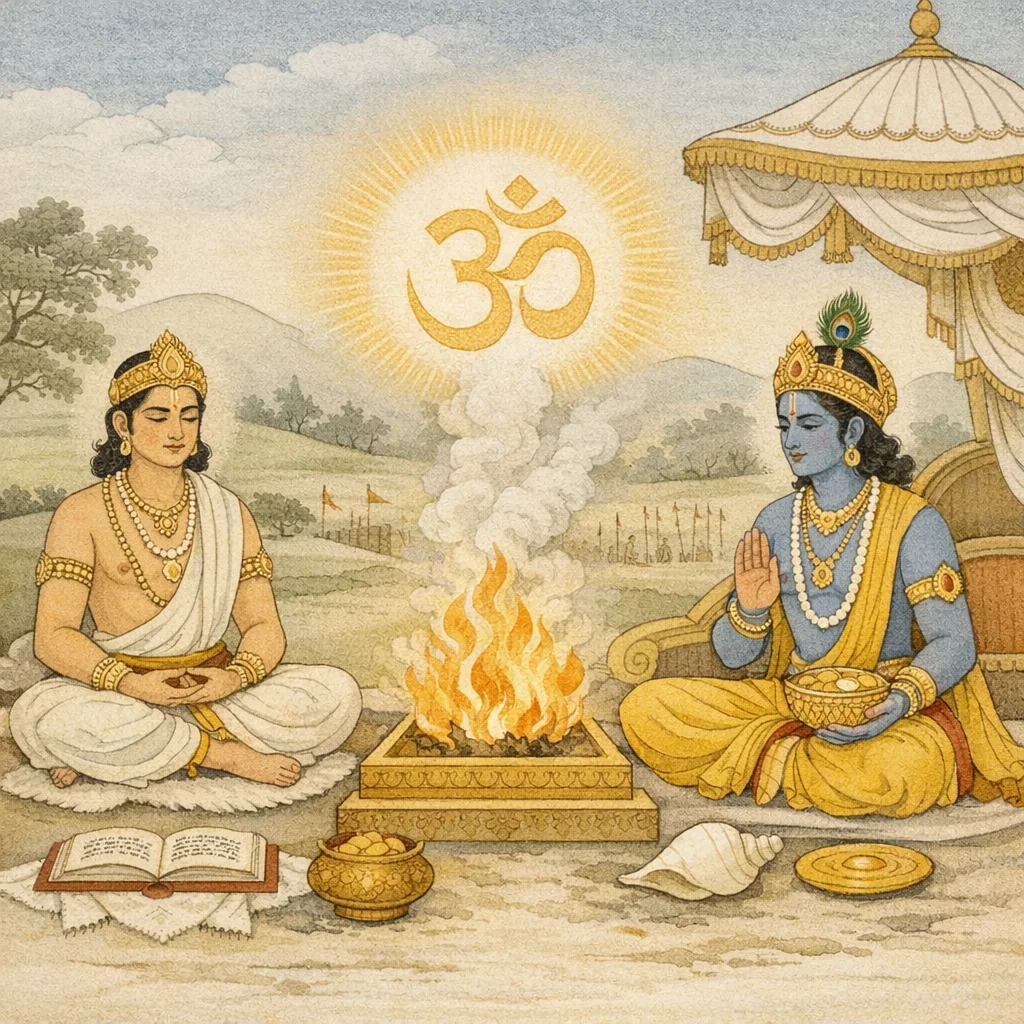
तस्माद ॐ द्दत्युदाहृत्य यज्ञदानतपःक्रियाः । प्रवर्तन्ते विधानोक्ताः सततं ब्रह्मवादिनाम् ॥ १७.२४ ॥
tasmād oṁ ity udāhṛtya yajña-dāna-tapaḥ-kriyāḥ | pravartante vidhānoktāḥ satataṁ brahma-vādinām || 17.24 ||

Darum werden, nachdem „Om“ ausgesprochen ist, die in den Vorschriften genannten Handlungen von Opfer, Gabe und Askese stets von den Brahman-Kundigen begonnen und vollzogen.
Therefore, uttering ‘Om,’ the acts of sacrifice, charity, and austerity prescribed by rule are always undertaken by the exponents of Brahman.
Therefore, having pronounced ‘oṁ,’ ritual acts of sacrifice, giving, and tapas—those enjoined by ordinance—proceed continually among those who speak of Brahman.
Some translations construe brahma-vādinām as “knowers/teachers of the Veda/Brahman,” others as “those who discourse on Brahman,” reflecting whether the emphasis is ritual orthopraxy or philosophical orientation. Minor Sanskrit orthography in the prompt (spacing/duplication) does not affect meaning.
FAQs
Beginning an act with a consecrating utterance can stabilize intention and create a reflective pause, supporting mindful and value-consistent action.
Oṁ is treated as a marker of ultimate reality in many Indian traditions; here it functions as a verbal sign linking finite actions to Brahman-oriented meaning.
The verse operationalizes 17.23 by specifying how ‘Om’ is used to initiate sanctioned practices (yajña, dāna, tapas).
Use a deliberate opening intention (religious invocation or secular commitment statement) before significant tasks to reduce impulsivity and ego-driven motives.