
Bhagavad Gita — Shraddhatraya Vibhaga Yoga, Shloka 21
Shraddhatraya Vibhaga Yoga
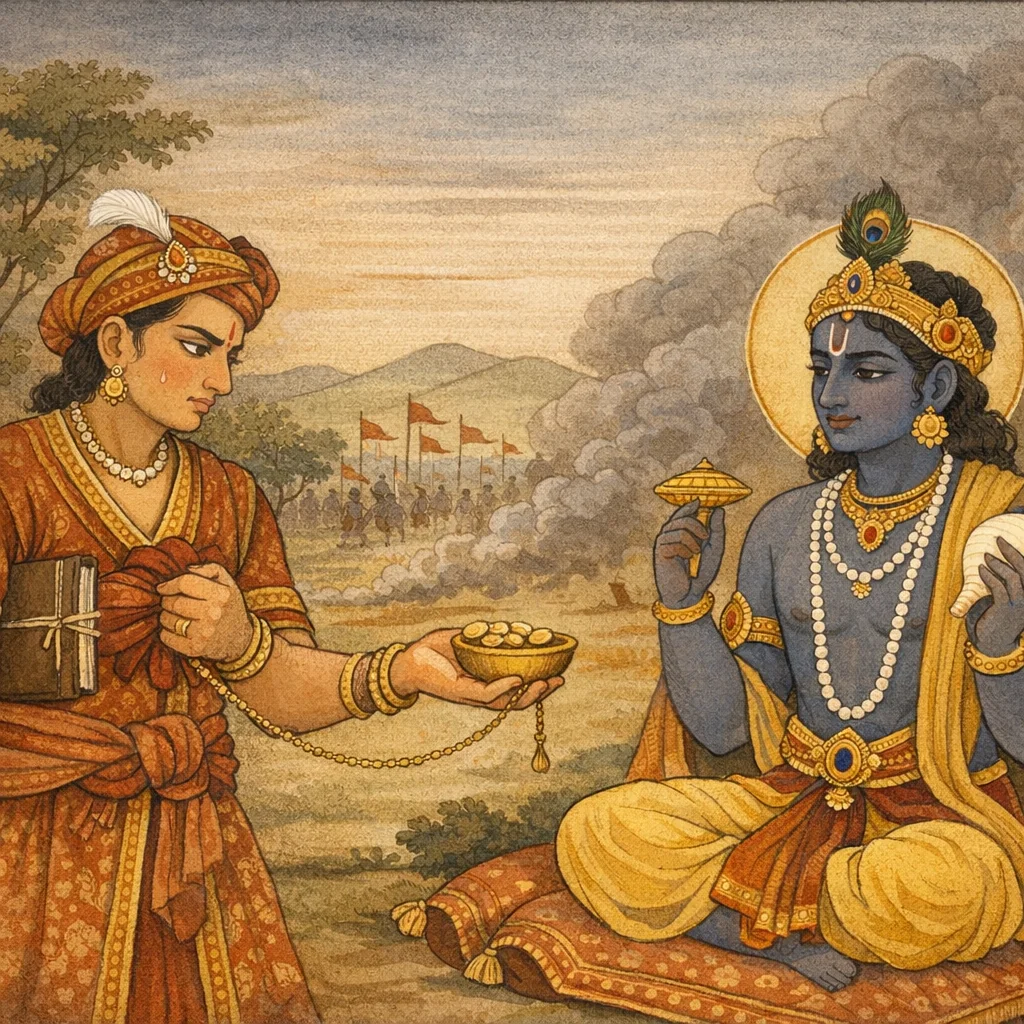
यत्तु प्रत्युपकारार्थं फलमुद्दिश्य वा पुनः । दीयते च परिक्लिष्टं तद्दानं राजसं स्मृतम् ॥ १७.२१ ॥
yat tu pratyupakārārthaṁ phalam uddiśya vā punaḥ | dīyate ca parikliṣṭaṁ tad dānaṁ rājasaṁ smṛtam || 17.21 ||

Die Gabe jedoch, die in der Absicht gegeben wird, eine Gegenleistung zu erhalten, oder im Hinblick auf ihren Lohn, und die widerwillig dargebracht wird, gilt als rājasa.
But charity given with the aim of receiving something in return, or with a view to its reward, and given reluctantly, is considered rājasa.
That gift which is given for reciprocal benefit, or again with reward in mind, and given with strain/reluctance, is remembered as rājasa.
parikliṣṭa is rendered “reluctantly,” “with distress,” or “under strain,” indicating either emotional reluctance or burdensome calculation. The verse emphasizes transactional intention (reciprocity/reward) as the rājasa marker.
FAQs
It highlights how giving can be compromised by bargaining and resentment, turning generosity into a stressful exchange rather than a free offering.
Because it strengthens attachment to results and social leverage, rājasa dāna is treated as less purifying than sāttvika giving.
The verse contrasts with 17.20 by shifting from duty-based, discerning giving to reward-based, reciprocity-seeking giving.
When donating or helping, notice expectations (credit, influence, returns). Reducing those expectations aligns the act more closely with non-attachment.