
Shloka 16
Shraddhatraya Vibhaga Yoga — Shraddhatraya Vibhaga Yoga
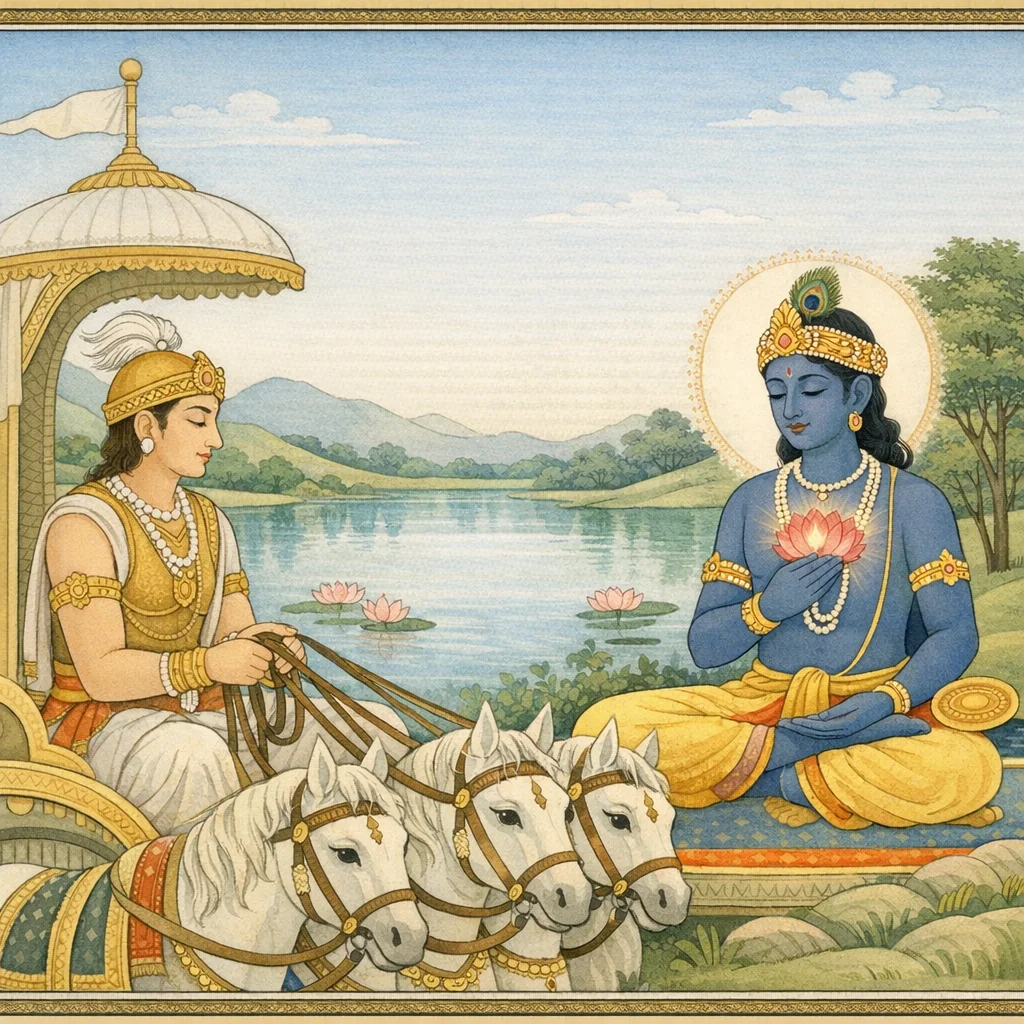
मनः प्रसादः सौम्यत्वं मौनमात्मविनिग्रहः । भावसंशुद्धिरित्येतत्तपो मानसमुच्यते ॥ १७.१६ ॥
manaḥ-prasādaḥ saumyatvaṁ maunam ātma-vinigrahaḥ | bhāva-saṁśuddhir ity etat tapo mānasam ucyate || 17.16 ||

Heiterkeit des Geistes, Sanftmut, Schweigen, Selbstbeherrschung und Läuterung der Gesinnung — dies nennt man geistige Askese (Tapas des Geistes).
Serenity of mind, gentleness, silence, self-control, and purity of intention—this is called mental austerity (tapas).
Mental discipline is said to be: clarity/cheerfulness of mind, mildness, silence, restraint of oneself, and purification of one’s inner disposition.
Most translations agree on the list of five traits. Interpretive variance centers on (a) manaḥ-prasāda—rendered as “serenity,” “clarity,” or “cheerfulness,” and (b) bhāva—taken as “intention,” “inner attitude,” or “affective disposition,” affecting whether the emphasis is ethical motivation or psychological purification.
FAQs
The verse frames “austerity” as mental training: calmness, gentle affect, measured speech/silence, impulse regulation, and refining motivation—traits associated with stable attention and reduced reactivity.
Rather than describing metaphysical entities directly, it supports soteriology by presenting mental purification as a prerequisite condition for discernment and steadiness in spiritual practice.
It continues the chapter’s taxonomy of practices by guṇa, first defining the forms of tapas (bodily, verbal, mental) before classifying them as sāttvika/rājasa/tāmasa.
It can be read as guidance for contemplative ethics: cultivate calm, kindness, intentional silence, self-restraint, and honest motives in study, work, and relationships.