
Shloka 2
Moksha Sannyasa Yoga — Moksha Sannyasa Yoga
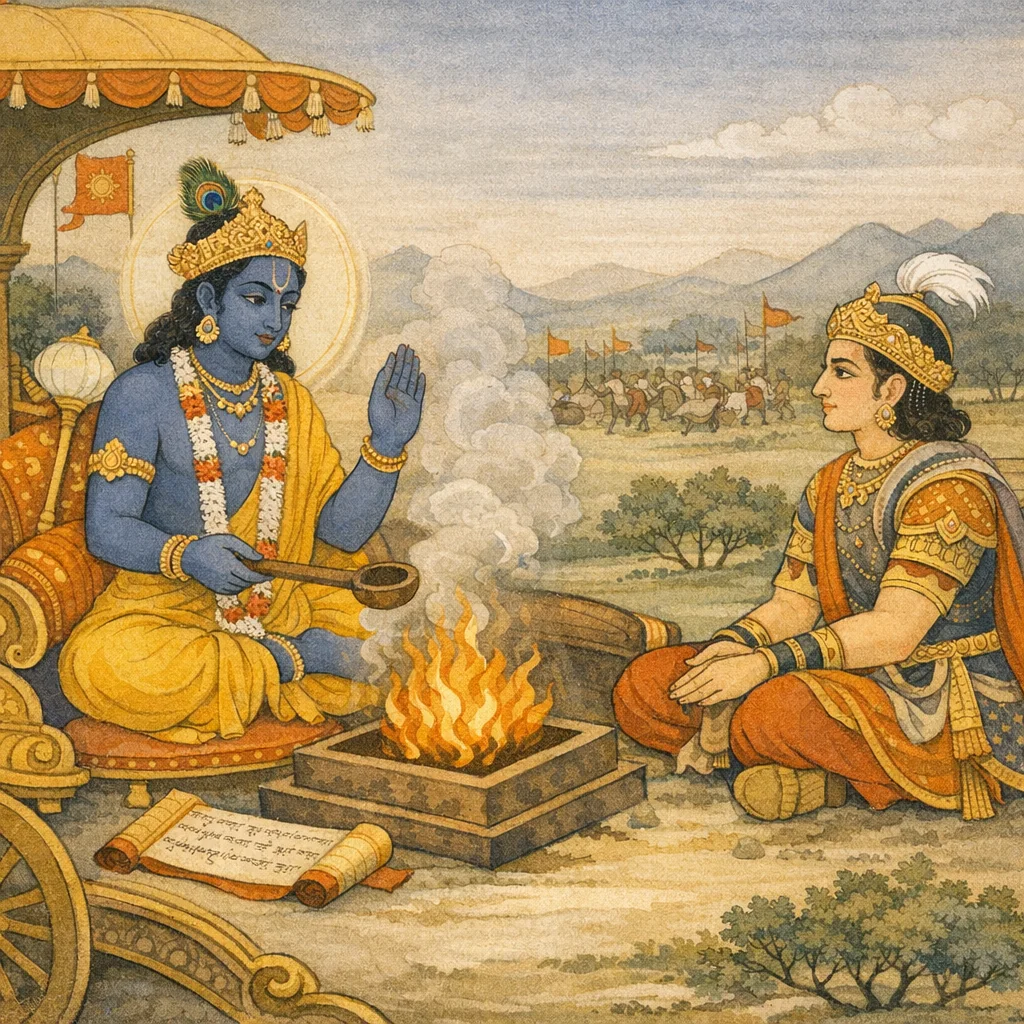
श्रीभगवानुवाच । काम्यानां कर्मणां न्यासं संन्यासं कवयो विदुः सर्वकर्मफलत्यागं प्राहुस्त्यागं विचक्षणाः ॥ १८.२ ॥
śrībhagavān uvāca | kāmyānāṃ karmaṇāṃ nyāsaṃ saṃnyāsaṃ kavayo viduḥ | sarvakarmaphalatyāgaṃ prāhus tyāgaṃ vicakṣaṇāḥ || 18.2 ||

Der Erhabene sprach: „Das Niederlegen (Nyāsa) der begehrensorientierten Handlungen nennen die Weisen Sannyāsa; das Aufgeben der Früchte aller Handlungen nennen die Einsichtigen Tyāga.“
श्रीभगवान् बोले— काम्य कर्मों के त्याग (न्यास) को विद्वान ‘संन्यास’ कहते हैं और समस्त कर्मों के फलों के त्याग को विवेकी जन ‘त्याग’ कहते हैं।
The Blessed Lord said: The sages understand saṃnyāsa as the laying aside of desire-motivated actions; the discerning declare tyāga to be the relinquishment of the fruits of all actions.
Many traditional commentaries align saṃnyāsa with renouncing kāmya-karmas (optional, desire-driven rites) while allowing obligatory duties; tyāga is framed as inner non-claiming of results. The academic gloss highlights this as a functional-ethical distinction rather than only an institutional one.
FAQs
The verse separates two psychological levers: reducing desire-driven projects (saṃnyāsa as nyāsa of kāmya-karmas) and reducing possessiveness about outcomes (tyāga of fruits), both aimed at lowering anxiety and compulsive striving.
By relocating renunciation to the level of ‘fruit-claiming,’ the teaching supports a view where agency operates without egoic appropriation, compatible with broader Gītā ideas about the self and guṇas.
It answers Arjuna’s request with a technical distinction that will structure the chapter’s later typology of tyāga across the three guṇas.
It can guide professional life: one may keep doing necessary work while releasing fixation on recognition or payoff, and also reduce optional activities driven mainly by craving or status.