
Bhagavad Gita — Arjuna Vishada Yoga, Shloka 11
Arjuna Vishada Yoga
अयनेषु च सर्वेषु यथाभागमवस्थिताः । भीष्ममेवाभिरक्षन्तु भवन्तः सर्व एव हि ॥ १.११ ॥
ayaneṣu ca sarveṣu yathā-bhāgam avasthitāḥ | bhīṣmam evābhirakṣantu bhavantaḥ sarva eva hi || 1.11 ||

Darum sollt ihr an allen Stellungen, jeder gemäß seinem zugeteilten Anteil, fest auf eurem Platz stehen; und ihr alle sollt wahrlich den Großvater Bhīṣma von allen Seiten her schützen.
“आप सब लोग अपनी-अपनी जगह पर विभागानुसार स्थित रहकर निश्चय ही केवल पितामह भीष्म की ही सब ओर से रक्षा करें।”
“And all of you, stationed at all the strategic points as allotted, should indeed protect Bhīṣma on every side.”
अर्थ में मुख्यतः भेद नहीं है। ‘अयनेषु’ को प्रायः ‘रणनीतिक स्थान/द्वार/मार्ग’ (approaches, positions) के रूप में लिया जाता है; कुछ अनुवाद इसे ‘व्यूह के प्रवेश-मार्ग’ के रूप में अधिक विशिष्ट करते हैं।
FAQs
The instruction to “protect Bhīṣma” can be read as anxiety-management through consolidating around a respected figure—seeking stability by anchoring morale in a senior authority.
Metaphysically, the verse is not doctrinal; it is primarily narrative. In allegorical readings, “protecting Bhīṣma” can symbolize guarding one’s foundational commitments or guiding principles amid inner conflict.
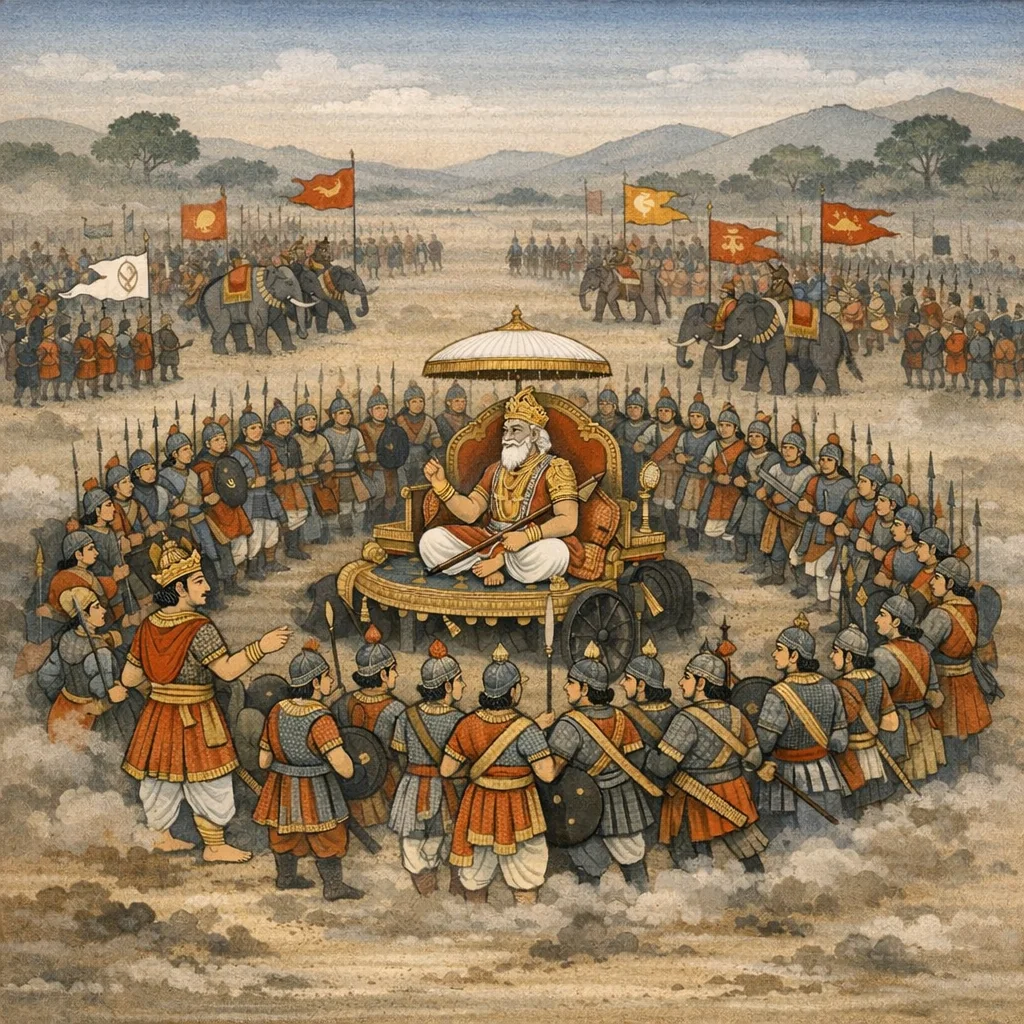
Duryodhana addresses his side’s leaders, emphasizing disciplined placement and unified focus as the opposing forces prepare to begin.
In non-military contexts, it suggests role-clarity and coordinated support for key institutional knowledge-holders during high-stakes transitions.