Adhyaya 206
Agastyārghyadāna-kathana (On the Giving of the Agastya Honor-Offering)
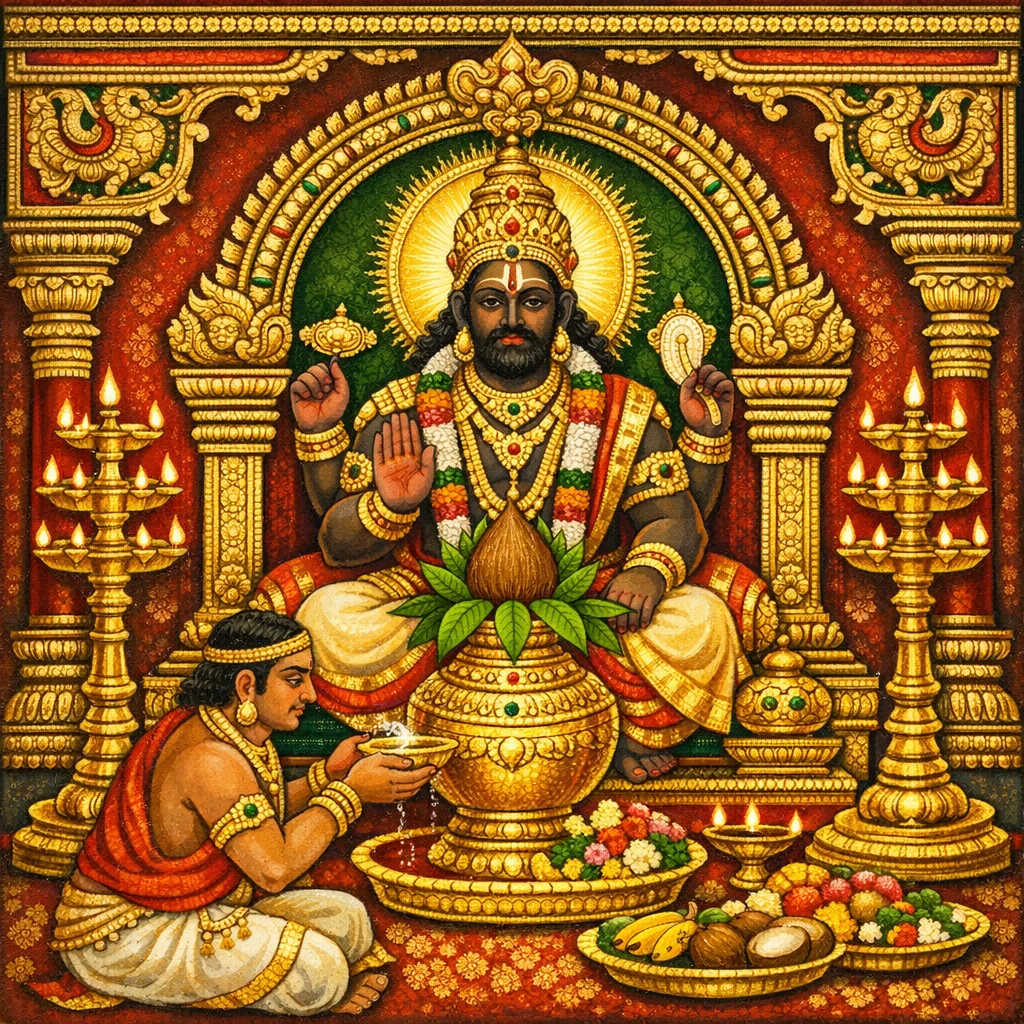
Herr Agni schreibt eine vrata‑artige Verehrung vor, die auf Agastya zentriert ist und ausdrücklich mit Viṣṇu gleichgesetzt wird; so wird die Sage‑Verehrung mit der vaiṣṇavischen Heilslehre (das Erreichen Haris) verbunden. Das Ritual ist zeitlich gebunden und genau geregelt: drei Tage lang fastet der Ausübende vor Sonnenaufgang, verehrt und bringt Agastya Arghya dar. Zur Pradoṣa‑Zeit wird ein aus kāśa‑Blüten gefertigtes Bild in einem Wassergefäß (ghaṭa/kumbha) eingesetzt, gefolgt von nächtlicher Wache (prajāgara). Am Morgen wird Arghya nahe einem Wasserreservoir dargebracht, mit hymnischem Lob auf Agastyas mythische Taten (das Austrocknen des Ozeans; die Vernichtung von Ātāpi–Vātāpi) und Bitten um Gaben und ein glückverheißendes Jenseits. Das Kapitel nennt rituelle Substanzen und die Spendenordnung: Sandelholz, Girlanden, Räucherwerk, Tuch, Reis/Getreide, Früchte, Gold sowie die Gefäßspende an einen Brāhmaṇa, dazu Bewirtung und Dakṣiṇā (Kuh, Gewänder, Gold). Es vermerkt Varianten der Mantra‑Überlieferung und eine Zugänglichkeitsregel: Frauen und Śūdras sollen den Ritus ohne vedische Mantras ausführen. Eine langfristige Observanz (sieben Jahre Arghya) verheißt umfassenden Wohlstand—Söhne für Kinderlose und einen königlichen Gatten für eine Jungfrau.
Shlokas
No shlokas available for this adhyaya yet.
Frequently Asked Questions
Fasting and worship precede the arghya; at pradoṣa a kāśa-flower image is placed in a ghaṭa/kumbha, followed by night vigil; in the morning the arghya is offered near water, then tyāga (grain, fruit, libation) and charitable gifts/feeding of brāhmaṇas conclude the rite.
Sandalwood, garlands, incense, cloth, rice/grains, fruits, gold (and in an expanded description: five gems, gold and silver, seven grains, curd, sandalwood), plus a pot-gift to a brāhmaṇa and dakṣiṇā including cow, garments, and gold.
The rite explicitly aims at attaining Hari through Agastya-worship (mukti-oriented devotion) while also promising dharma-anchored prosperity—health, fortune, desired boons, lineage, and marital success—thus integrating dharma, artha, kāma, and mokṣa.
It states that for women and Śūdras the rite is ‘non-Vedic,’ i.e., performed without Vedic mantras, indicating an inclusive procedural adaptation while preserving the devotional and charitable structure.
By giving the arghya for seven years, ‘all obtain everything’: a childless woman gains sons and good fortune, and a maiden gains a husband of royal birth; the arghya is also described in some readings as imperishable and mind-fulfilling.