Adhyaya 198
Monthly Vows (Māsa-vratāni) and Cāturmāsya Disciplines; Introduction of Kaumudī-vrata
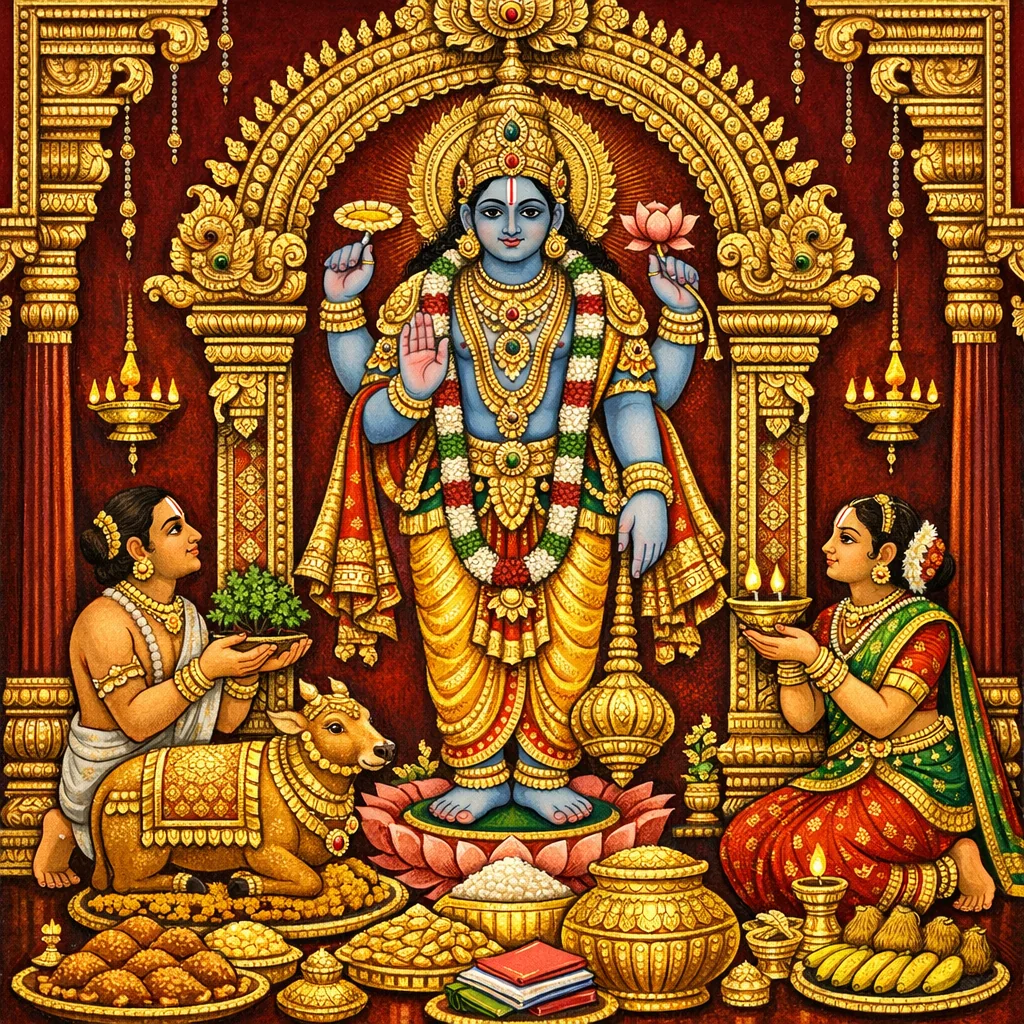
Herr Agni beschreibt das māsa-vrata als ein monatliches, streng geordnetes Gelübdeprogramm, das sowohl bhukti (weltliche Wohlfahrt und Genuss) als auch mukti (Befreiung) verleiht. Das Kapitel beginnt mit Cāturmāsya-ähnlichen Entsagungen, besonders dem Verzicht auf das Einölen des Körpers während der heiligen viermonatigen Zeit, und zählt dann monatsbezogene Entsagungen und dāna auf: etwa die Gabe einer Kuh im Monat Vaiśākha; die Darbringung einer „Jaggery-Kuh“ (jaggery-cow) in Māgha oder Caitra. Es verbindet Speise- und Verhaltensaskesen (nakta-bhojana, ekabhakta, Fruchtgelübde, Fasten an jedem zweiten Tag, Schweigen, cāndrāyaṇa, prājāpatya) mit abgestuften geistigen Bestimmungen wie Himmel, Viṣṇuloka und schließlich verdienstvoller Ausrichtung auf Befreiung. Durch saṅkalpa und kalendarische Verankerung wird das vrata rituell vollendet: Vorbereitungen für Cāturmāsya, Verehrung Haris beim Eintritt der Sonne in Karkaṭa (Krebs), sowie Gebete, das Gelübde möge selbst bei dazwischenkommendem Tod als erfüllt gelten. Abschließend wird das Kaumudī-vrata im Monat Āśvina eingeführt: Dvādaśī-Verehrung Viṣṇus mit Blumen, Lichtern, Ghee- und Sesamölopfern und dem Mantra „Om namo Vāsudevāya“, das die Erlangung der vier puruṣārtha verheißt.
Shlokas
No shlokas available for this adhyaya yet.
Frequently Asked Questions
Renunciation of oil-anointing (abhyanga/taila-tyāga) during the four months beginning with Āṣāḍha, paired with dawn-bathing and devotion to Hari.
It repeatedly couples renunciation/fasting with formal gifts—especially go-dāna and guḍa-dhenu—presenting donation as the outward completion of inner restraint and a generator of merit and higher worlds.
The Kaumudī-vrata (Āśvina) is introduced: on Dvādaśī, worship Viṣṇu with lotus-type flowers, offer lamp and naivedya using ghee and sesame-oil, and recite ‘Om namo Vāsudevāya’.
By mapping regulated conduct (niyama), calendrical worship, and charitable giving to tangible outcomes (bhukti) while explicitly promising Viṣṇuloka/Vaikuṇṭha and liberation-oriented fruits (mukti), culminating in the fourfold puruṣārtha attainment through Kaumudī-vrata.