Adhyaya 179
Caturthī-vratāni (Vows of the Fourth Lunar Day)
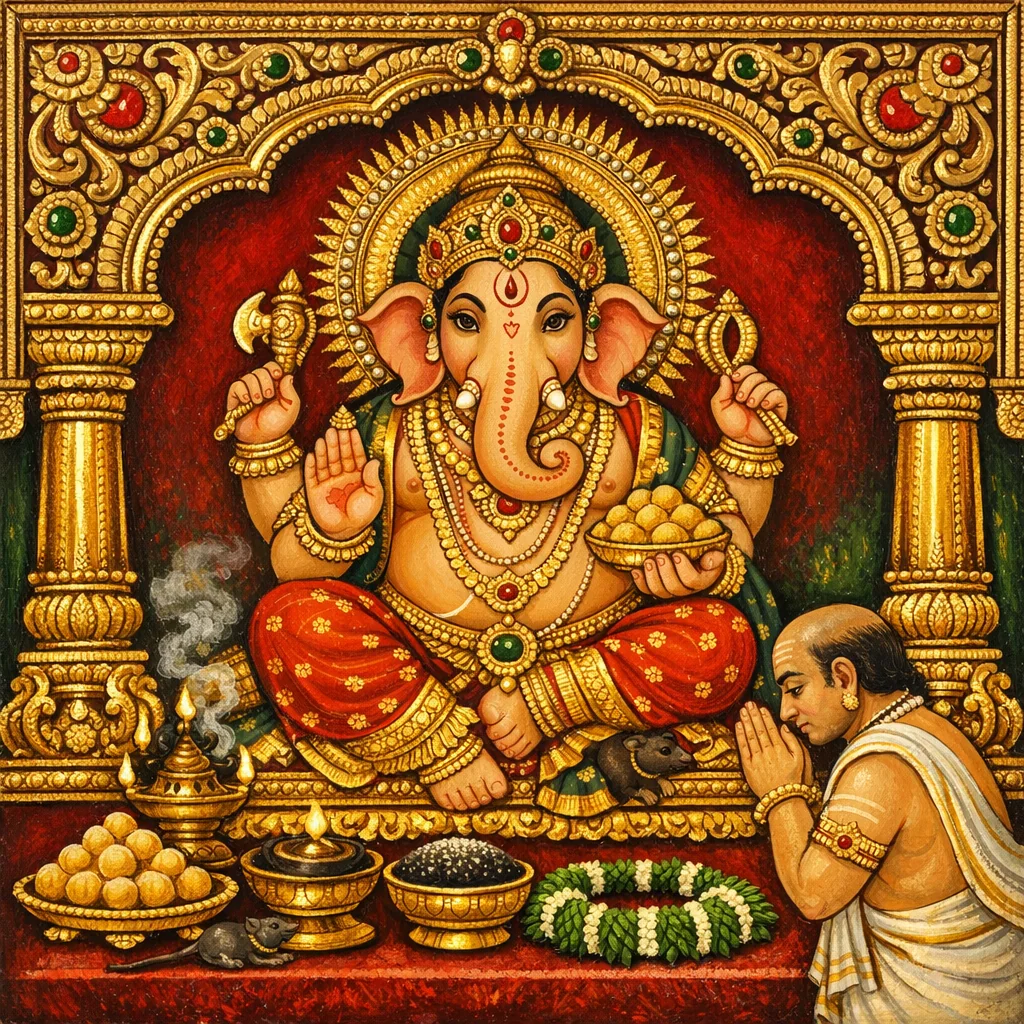
Herr Agni beginnt eine systematische Darlegung der auf Caturthī gegründeten Vratas und rahmt sie ausdrücklich als Disziplinen mit doppelter Frucht, die Bhukti (weltliches Wohlergehen und Genuss) und Mukti (Befreiung) verleihen. Das Kapitel eröffnet mit einem kurzen Hinweis auf Unterschiede von Rezensionen/Handschriften und geht dann zu monat- und tithi-spezifischen Vorschriften über. Für Māgha śukla-caturthī werden Fasten und Verehrung geboten, wobei ‘Guṇa’ (Vortrefflichkeit/Tugend) als ritueller Fokus dient. Die Übung wird bis zur pañcamī ausgedehnt, mit Sesam-Reis-Opfern für ein ganzes Jahr hindernisfreien Wohlergehens; eingeführt werden das mūla-mantra „gaṁ svāhā“ und seine Anwendung im aṅga-nyāsa (Herz- und Gliedmaßen-Mantras beginnend mit „gām“). Sodann wird eine genaue Abfolge von āvāhana und visarjana mittels „āgaccha ulkā“ und „gaccha ulkā“ beschrieben, zusammen mit Opfergaben (Guggulu-Duft, Modaka-Süßigkeiten) sowie einem zusätzlichen Mantra im Stil einer Gaṇeśa-gāyatrī. Abschließend werden besondere Observanzen zugeordnet: Bhādrapada Caturthī Kṛcchra, das nächtliche Fasten der Phālguna Caturthī namens Avighnā und die Verehrung Gaṇas an Caitra Caturthī mit damana/dūrvā, wodurch das Vrata als Technik des Heilsamen und der geistigen Läuterung erscheint.
Shlokas
No shlokas available for this adhyaya yet.
Frequently Asked Questions
It specifies mantra-technology and ritual sequencing: the mūla-mantra “gaṁ svāhā,” its gāmādi application as hṛdaya and aṅga-mantras for nyāsa, and the precise āvāhana–visarjana formulas (“āgaccha ulkā” / “gaccha ulkā”) alongside prescribed offerings.
By presenting Caturthī vratas as disciplined, time-bound sādhana that removes obstacles (Avighnā), cultivates restraint (fasting/kṛcchra), and aligns ritual action with inner purification—thereby supporting both worldly stability (Bhukti) and liberation-oriented refinement (Mukti).