Adhyaya 143
Chapter 143 — Worship of Kubjikā (कुब्जिकापूजा)
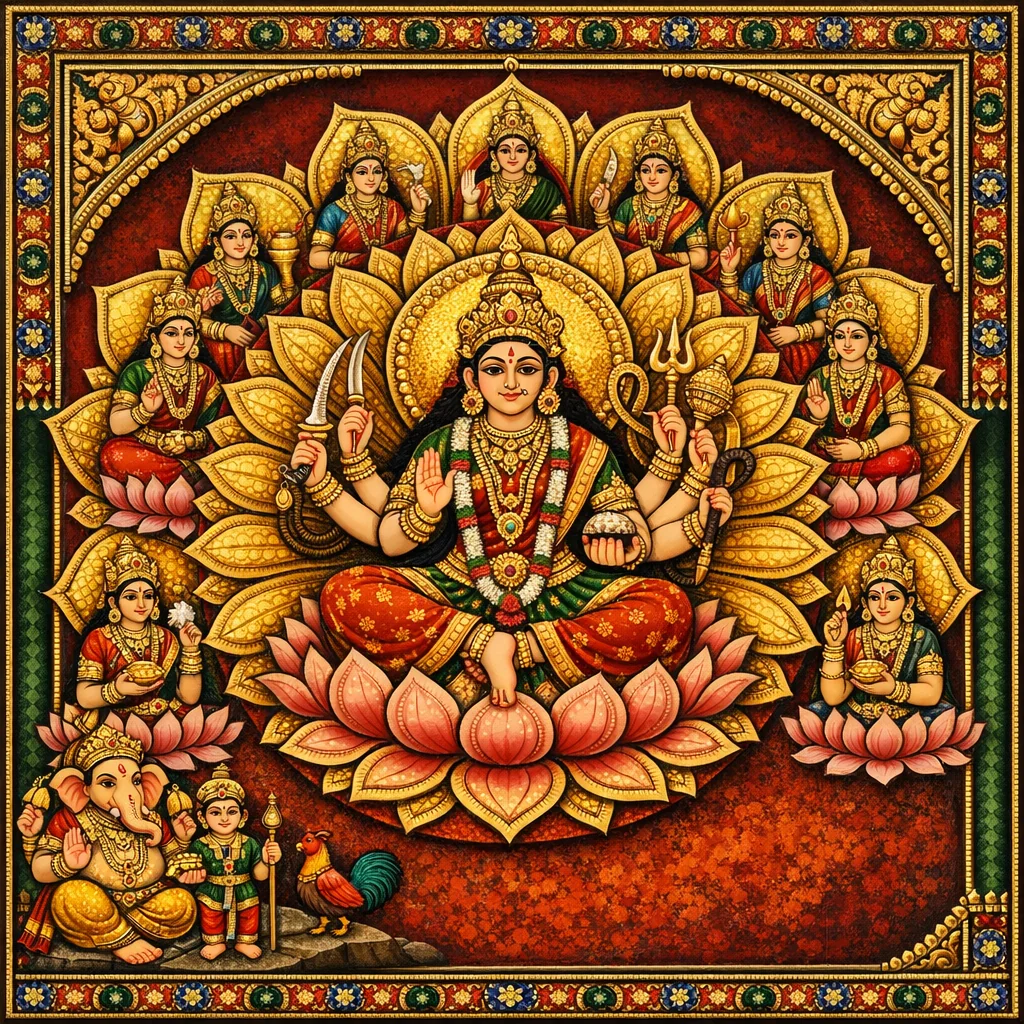
Dieses Kapitel führt vom vorherigen Thema der Mantras und Heilmittel zu einem śākta-tantrischen Siegesritus im Rahmen des Yuddhajayārṇava über. Der Herr lehrt die stufenweise (krama) Verehrung Kubjikās, dargestellt als „sarvārtha-sādhanī“—die alle Ziele zu verwirklichen vermag, einschließlich des Sieges im Kampf, wenn sie mit geweihten Substanzen, besonders ājya/Ghee, und mit ritueller Waffen-Ermächtigung verbunden wird. Die Ritualarchitektur ist technisch: Sie nennt Kennzeichen der chakra-pūjā, bīja-Silben und ein nyāsa-System, das Mantras auf Körperstellen (geheimes Organ, Hand, Herz, Haupt) legt und den Übenden in ein geweihtes Kraftfeld verwandelt. Diese Kraft wird sodann in ein maṇḍala nach außen projiziert: Mantras wie astra, kavaca, netra, śikhā u.a. werden in den Richtungsquadranten stationiert, während ein wesentlicher, mehrsilbiger bīja im 32-blättrigen Zentrum eingesetzt wird. Der Ritus entfaltet eine Pantheon-Logik: Die Mātṛkās emanieren aus der höchsten Macht Caṇḍikās; heilige pīṭhas und richtungsbezogene Platzierungen werden angerufen; und das Vimalapañcaka wird über Richtungen und Gipfel verteilt. Abschließend wird das maṇḍala geordnet bevölkert—mit Gaṇapati/Vaṭuka, Gurus, nāthas und umgebenden Gottheiten—wobei Kubjikā (und Kulaṭā) als beständiger Mittelpunkt der sukzessiven Verehrung für Schutz, Meisterschaft und dharmisch gerahmten Sieg gilt.
Shlokas
No shlokas available for this adhyaya yet.
Frequently Asked Questions
A krama (sequential) Kubjikā worship that combines chakra-pūjā, nyāsa (body-installation of mantras), and maṇḍala-based directional placements of protective and weapon mantras (kavaca, netra, astra, śikhā, etc.).
The Māyā-bīja is placed on the secret organ; the ṣaṭkarma-astra is assigned to the hand; “Kālī, Kālī” is placed on the heart; and “Duṣṭa-cāṇḍālikā” is placed on the head.
It frames Kubjikā worship as sarvārtha-sādhanī and explicitly links success over adversaries to consecrated empowerment—weaponization through mantra (astra), protection through kavaca, and correct directional/mandala deployment.
Mantras are stationed by quarters (dik): kavaca and netra are centralized, astra is distributed to directions, and a specific essential bīja-string is installed in a 32-petalled core (karṇikā), establishing a layered protective grid.
The chapter invokes the Mātṛkās arising from Caṇḍikā, the Vimalapañcaka distributed across quarters/peaks, and a populated mandala including Gaṇapati/Vaṭuka, gurus, nāthas, and surrounding deities with Kubjikā at the center.