Adhyaya 216
Gāyatrī-nirvāṇa (The Liberative/Concluding Doctrine of Gāyatrī)
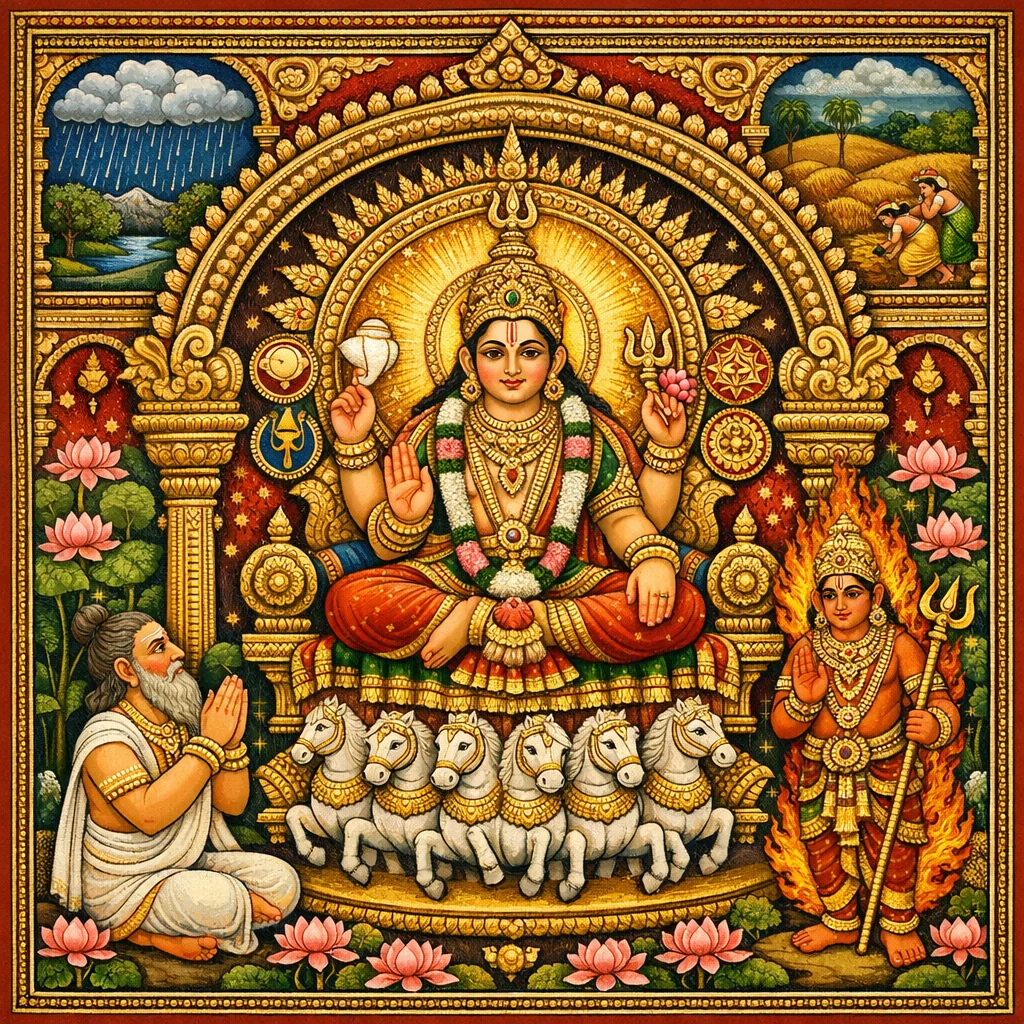
Nach dem Abschluss des Sandhyā-vidhi lehrt Agni, dass der Übende das Ritual mit Gāyatrī-japa und smaraṇa vollenden soll, wobei das Mantra als Schutz (rakṣā) und innere Disziplin hervorgehoben wird. Das Kapitel entfaltet sodann eine philologisch-theologische Auslegung: Gāyatrī heißt Sāvitrī, weil sie erleuchtet, und Sarasvatī, weil sie die Sprachgestalt (vāc) des Savitṛ ist. Der Schlüsselbegriff bharga wird aus Wurzeln erklärt, die „leuchten“ und „reinigen“ bedeuten, wie ein „Brennen/Kochen“, und verbindet Strahlkraft mit verwandelnder Läuterung. Vareṇyam wird als höchster, wählbarer Zustand bestimmt, nach dem Suchende nach Himmel und Befreiung verlangen; dhīmahi wird als anhaltendes geistiges Festhalten und Kontemplation gedeutet. Der Text löst sektiererische Lesarten, indem er das Licht des Mantras als eine Wirklichkeit darstellt, die als Viṣṇu, Śiva, Śakti, Sūrya oder Agni rezitiert wird, und bekräftigt zugleich den einen Brahman am Anfang der Veden. Es folgt eine rituelle Kosmologie: Die Opfergabe an Agni stützt die Sonne und bringt Regen, Nahrung und Wesen hervor—so wird gezeigt, wie Mantra und Ritual die Welt tragen. Der Höhepunkt ist advaitisch: Das höchste Licht im Sonnenorb ist die turīya-Wirklichkeit und das Viṣṇu-parama-pada; durch Meditation werden Geburt und Tod sowie das dreifache Leiden vernichtet, und es endet mit der Identitätsaussage: „Ich bin Brahman… ich bin jener solare Puruṣa, das Unendliche (Oṃ).“
Shlokas
No shlokas available for this adhyaya yet.
Frequently Asked Questions
Completion through Gāyatrī-japa and mental recollection (smaraṇa), framed as both spiritual discipline and protective power for disciples, spouse, and vital breaths (prāṇa).
Bharga is interpreted as tejas (radiance) and purifying brilliance, supported by etymological links to roots meaning ‘to shine’ and ‘to burn/cook’ (purificatory transformation).
It acknowledges multiple recitations (Śiva, Śakti, Sūrya, Agni) while asserting their unity in the one supreme light/Brahman, explicitly identifying that light with Viṣṇu as the world-cause.
It presents a causal chain: oblation to Agni supports Āditya; from the Sun comes rain; from rain food; from food living beings—linking ritual action to world-order.
By meditating on the supreme light as turīya within the solar orb, one destroys birth-death and threefold suffering, culminating in the non-dual recognition ‘I am Brahman’ and identity with the Āditya-Puruṣa.