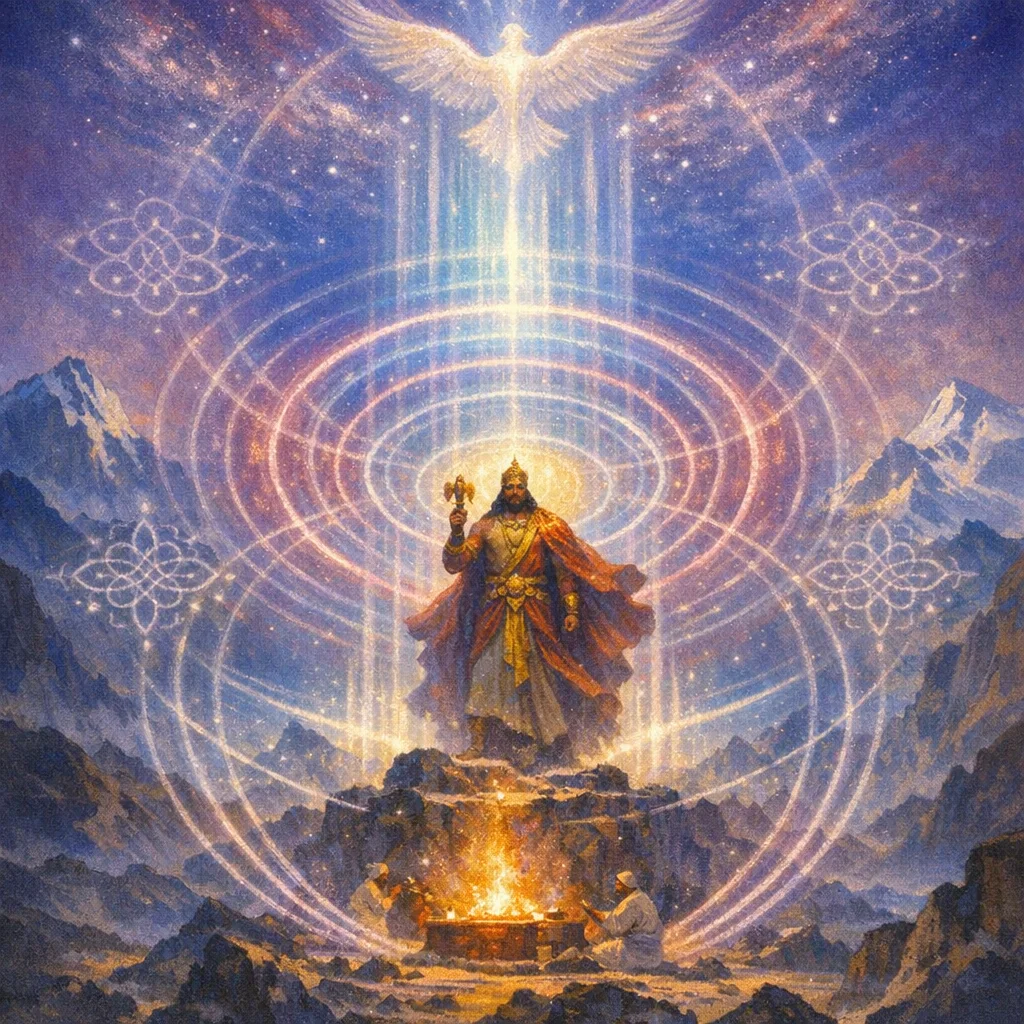
Dashati 13
Aindra stotra as a plea to Indra to hear the Soma-pressing call and unite with perfected praise, framed by cosmic messenger imagery (suparṇa/drapsa) that upholds ṛta.
Indra
Urgent summoning and luminous—an audible ‘call’ that intensifies into visionary/cosmic description.
Rṣi not specified in the provided data; the diction is Rigvedic in style and the dashati appears as a Samaveda gāna selection rather than a clearly marked single-family hymn set in this input.
এই ঐন্দ্র স্তোত্রে ইন্দ্রকে তীব্র আহ্বান জানানো হয়—তিনি যেন সোম-নিষ্পেষণ (অদ্রি/গ্রাবণ)‑এর ডাক শোনেন এবং পরিশুদ্ধ, উৎকৃষ্ট স্তব (মনীষা) ও উপাসনা‑কর্ম (দুৱাংসি)‑র সঙ্গে এসে সোমযজ্ঞে যুক্ত হন। পরে স্তোত্রটি আচারকে ঋত/বিধর্মের বৃহৎ মহাজাগতিক পরিসরে স্থাপন করে: স্বর্ণপক্ষ সুপর্ণ ও দীপ্ত দ্রপ্স (সূর্য/সোম‑জ্যোতি) দূতরূপে বরুণের বিধানকে লোকান্তরে—যমের অধিক্ষেত্র পর্যন্ত—বহন করে, এবং সেই গতি‑পরিক্রমায় ‘প্রিয়াণি’ (কাঙ্ক্ষিত দান) ও সঠিক শৃঙ্খলা প্রতিষ্ঠিত হয়। অর্থাৎ ঋতের সঙ্গে সঙ্গত ধ্বনিত স্তোত্রই কার্যকর; তা ইন্দ্রকে আকর্ষণ করে যজমানকে শক্তি, বর ও বিশ্বব্যবস্থার সঙ্গে সংযুক্ত করে।
Mantras
Mantra 1
श्रुधी हवं विपिपानस्याद्रेर्बोधा विप्रस्यार्चतो मनीषाम् कृष्वा दुवांस्यन्तमा सचेमा
হে (দেব), সোমপান-আকাঙ্ক্ষীর—অদ্রি (সোম-পেষণশিলা) থেকে ওঠা—এই হ্বান (আহ্বান) শোনো; স্তবকারী বিপ্রের মনীষা (অন্তঃপ্রেরণা) উপলব্ধি করো। আমাদের নমস্যা (দুবাংসি) সর্বোত্তম করে, আমরা যেন তোমার সঙ্গে যুক্ত হই।
Mantra 2
ऊर्ध्वो गन्धर्वो अधि नाके अस्थात्प्रत्यञ्चित्रा बिभ्रदस्यायुधानि वसानो अत्कं सुरभिं दृशे कं स्व3र्ण नाम जनत प्रियाणि
স্বর্গের শিখরে গন্ধর্ব ঊর্ধ্বে দাঁড়িয়ে; সে তার দীপ্ত শক্তিগুলিকে অস্ত্ররূপে ধারণ করে। সুগন্ধি অট্ক (বস্ত্র) পরিধান করে, দর্শনীয় মনোহর, ‘স্বর্ণ’ নামে সে প্রিয় বস্তুসমূহকে উৎপন্ন/প্রকাশ করে।
Mantra 3
द्रप्सः समुद्रमभि यज्जिगाति पश्यन्गृध्रस्य चक्षसा विधर्मन् भानुः शुक्रेण शोचिषा चकानस्तृतीये चक्रे रजसि प्रियाणि
দীপ্ত বিন্দু (দ্রপ্স) সমুদ্রের দিকে দ্রুত ধাবিত হয়; গৃধ্র (পাখি)-এর তীক্ষ্ণ দৃষ্টিতে দেখে, ধর্ম-নিয়ম ধারণ করে। শুদ্ধ জ্যোতিতে উজ্জ্বল ভানু আনন্দিত হয়ে তৃতীয় চক্র/পরিক্রমায়, রজস্-প্রদেশে, প্রিয় বস্তুসমূহ স্থাপন করে।
Frequently Asked Questions
It urges Indra to hear the sound and intention of the Soma-pressing and the priest’s praise, so that worship becomes ‘most excellent’ and the sacrificer is united with Indra’s power, all within a vision of cosmic order.
They supply a cosmic frame: the golden-winged messenger (suparṇa) moves within Varuṇa’s ordinance and near Yama’s realm, showing that the ritual invocation participates in a wider, law-governed universe, not only a single deity’s domain.
Traditional interpretation can take it either way: as the pressed Soma-drop rushing toward its ‘ocean’ (goal) or as solar/fiery radiance moving through cosmic circuits; both readings reinforce that ritual offering and cosmic light follow ṛta (right order).