Dashati 19
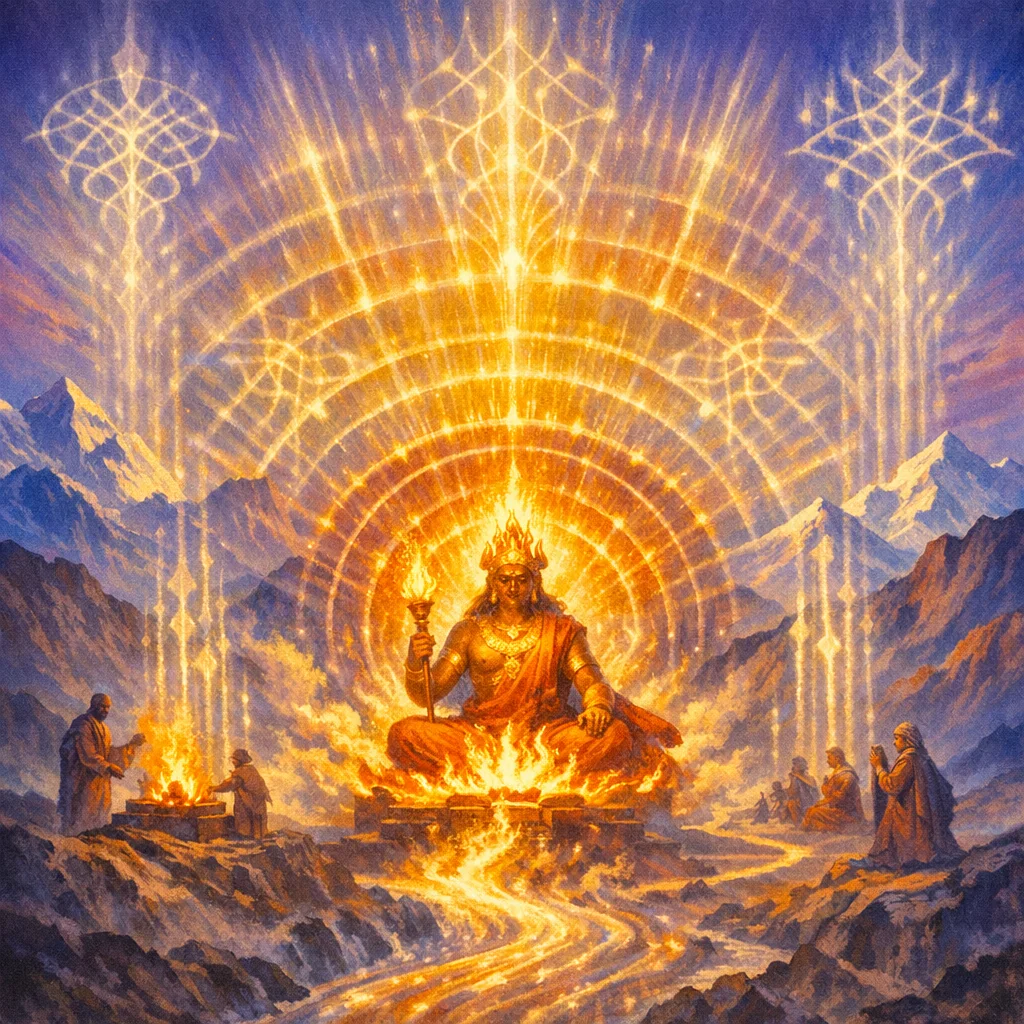
Vaiśvānara-Agni as the embodiment of ṛta who illumines and carries the sacrifice
Agni Vaiśvānara
Majestic and solar-bright (tejas-driven) with a steady authoritative lift
Rṣi not identified from the supplied data; the verses function as Agneya/Vaiśvānara stuti typical of Uttarārcika usage rather than a clearly marked single-family hymn here.
এই দশতির মূল ভাব বৈশ্বানর-অগ্নি—ঋতের প্রত্যক্ষ প্রকাশ, যিনি যজ্ঞকে আলোকিত করেন এবং বহন করেন। তিনি পবিত্র আলোর অধিপতি (জ্যোতিষস্পতী) ও অবিরাম ঘর্ম/তেজের উৎস; ঋতু ও যজ্ঞকালকে সঠিকভাবে নিয়ন্ত্রণ করে বিধিকে প্রতিষ্ঠিত করেন এবং যজ্ঞকে স্বর্গাভিমুখে উত্তীর্ণ করেন। ভূত–ভব্য উভয় কালে সমভাবে কার্যকর এই অগ্নি প্রিয় ধামসমূহে একক, সূর্যদীপ্ত জ্যোতিতে প্রতিষ্ঠিত থেকে যজমানকে অভীষ্ট ফল দান করেন।
Mantras
Mantra 1
ऋतावानं वैश्वानरमृतस्य ज्योतिषस्पतिम् अजस्रं घर्ममीमहे
ঋতে প্রতিষ্ঠিত বৈশ্বানরকে—অমৃতের জ্যোতির অধিপতিকে—সেই অজস্র ঘর্ম (অবিরত তাপ-তেজ)কে আমরা উপাসনা-গানে আরাধনা করি।
Mantra 2
य इदं प्रतिपप्रथे यज्ञस्य स्वरुत्तिरन् ऋतूनुत्सृजते वशी
যিনি এই (যজ্ঞ-বিধি) আমাদের আগে প্রসারিত করেছেন—যজ্ঞকে স্বর্গে উত্তোলনকারী, স্বাধীন অধিপতি—তিনিই ঋতুসমূহ, নির্ধারিত কালকে প্রবাহিত করেন।
Mantra 3
अग्निः प्रियेषु धामसु कामो भूतस्य भव्यस्य सभ्राडेको वि राजति
অগ্নি, তাঁর প্রিয় ধামসমূহে—কাম্য, ভূত ও ভবিষ্যতের সাধক—দীপ্তিমান, একাই উজ্জ্বল হয়ে প্রকাশিত হন।
Frequently Asked Questions
Vaiśvānara is Agni understood as the universal fire—present in the rite and aligned with cosmic order (ṛta), shining as the lord of sacred light.
“Jyotiṣas-pati” means ‘lord of light’—Agni as the master of radiant sacrificial brilliance. “Gharma” is ‘heat/splendour’ and also echoes the Pravargya ‘gharma’ vessel/rite, emphasizing intense ritual tejas.
It presents Agni as the sovereign regulator of appointed times (ṛtus)—both cosmic seasons and ritual calendars—so the sacrifice proceeds in right order and reaches its heavenly goal.