Dashati 14
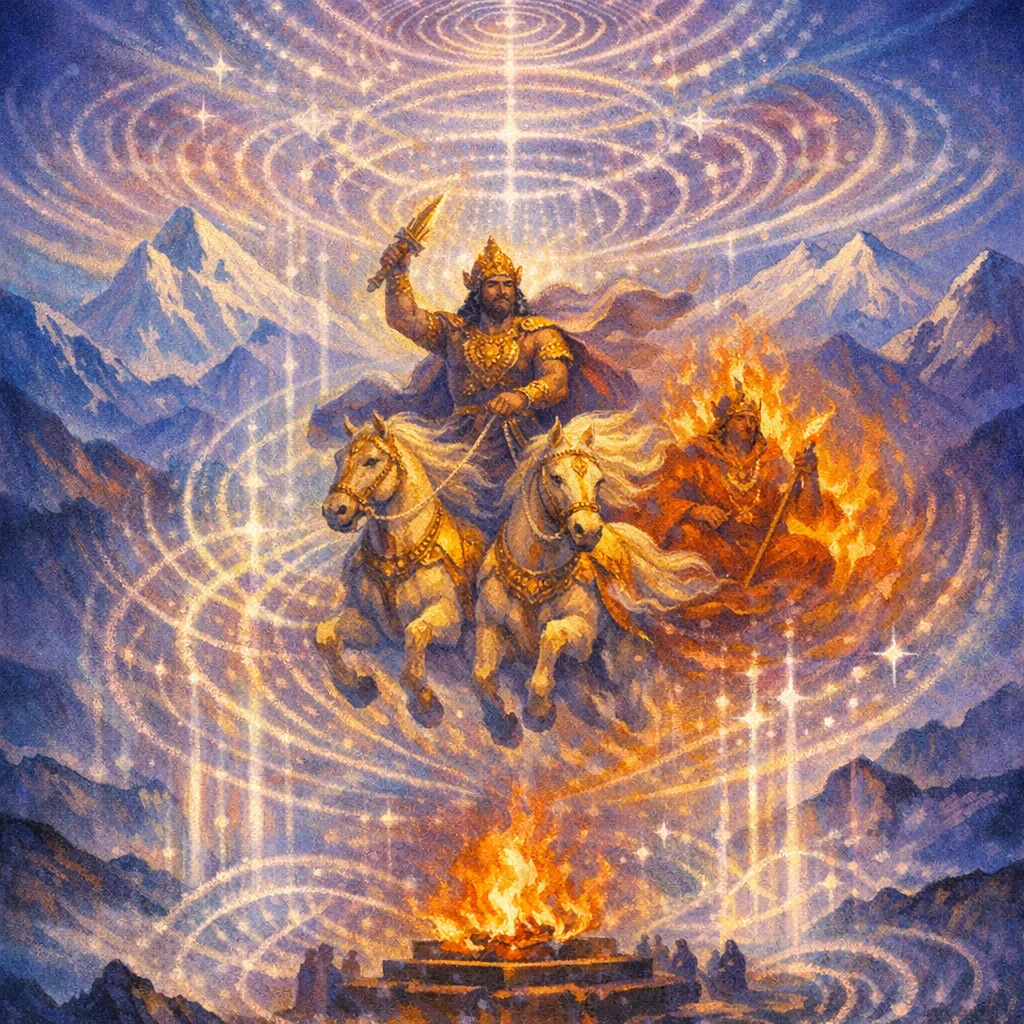
Aindra invocations centering on Indra’s power made effective through yajña—especially Indra’s joint action with Agni and his swift approach to the rite.
Indra
Energetic triumphant and summoning—aimed at quick divine arrival and visible empowerment.
Rishi attribution is not provided in the input; the material draws on widely attested Ṛgvedic strata commonly adapted into Sāman chant-books without always preserving explicit seer labels at the dashati summary level.
এই দশতী সোমযজ্ঞে ইন্দ্রকে কার্যকরভাবে আহ্বান করার উপর কেন্দ্রীভূত—বিশেষত অগ্নির সঙ্গে ইন্দ্র–অগ্নির যৌথ বীর্যশক্তি এবং যজ্ঞের মাধ্যমে ‘বাজ’ (বল/পুরস্কার) লাভ। ইন্দ্রের দুই হরিকে জুড়ে দেবতাকে দ্রুত নিকটে আনবার প্রত্যক্ষ আহ্বান আছে। পাশাপাশি নক্তা–উষসা (রাত্রি ও উষা)-র পরস্পর-অবিরোধী, অবিচ্ছিন্ন অনুক্রমের দ্বারা ঋত (কসমিক বিধান)-এর প্রতীকী প্রকাশ ঘটে, যাতে যজ্ঞ ‘দেবশিষ্ট’ নিয়মে সুসংগত থাকে। যথাযথ স্তোত্র ও আহুতির ফলে ইন্দ্রের শক্তি ‘প্রত্যক্ষ’ হয়ে যজমানকে সমৃদ্ধি, বল ও পুরস্কারের ফল প্রদান করে।
Mantras
Mantra 1
इदं श्रेष्ठं ज्योतिषां ज्योतिरागाच्चित्रः प्रकेतो अजनिष्ट विभ्वा यथा प्रसूता सवितुः सवायैवा रात्र्युषसे योनिमारैक्
এই জ্যোতিগণের মধ্যে শ্রেষ্ঠ জ্যোতি এসে পৌঁছেছে; এক উজ্জ্বল, বিচিত্র-প্রকেত (চিহ্ন) জন্মেছে, সর্বব্যাপী। সवিতৃ-এর সव (প্রেরণা) দ্বারা প্রেরিত হয়ে, সে রাত্রি ও উষার জন্য তাদের নিজ নিজ যোনি/স্থান নির্ধারণ করেছে।
Mantra 2
रुशाद्वत्सा रुशती श्वेत्यागादारैगु कृष्णा सदनान्यस्याः समानबन्धू अमृते अनूची द्यावा वर्णं चरत आमिनाने
রুশতী, শ্বেত ও দীপ্তিমতী (উষা) কৃষ্ণ (রাত্রি) থেকে এমনভাবে বেরিয়ে এসেছে, যেমন বাছুর মায়ের কাছ থেকে; এই দুই, সমান-বন্ধু, অমৃত, পরপর, নিজেদের নিজ নিজ সদনে বিচরণ করে—বর্ণ বদলালেও ঋত (ব্যবস্থা)কে আঘাত না করে।
Mantra 3
समानो अध्वा स्वस्रोरनन्तस्तमन्यान्या चरतो देवशिष्टे न मेथेते न तस्थतुः सुमेके नक्तोषासा समनसा विरूपे
দুই বোনের পথ এক—অনন্ত; দেব-শিষ্ট (দেবগণের দ্বারা নির্ধারিত) সেই পথে তারা একের পর এক চলে। তারা না সংঘর্ষ করে, না থামে; নক্ত (রাত্রি) ও উষাস—এক মন, রূপে ভিন্ন।
Frequently Asked Questions
It chiefly invokes Indra (often with Agni) to come to the sacrifice, manifest heroic power, and grant ‘vāja’—the invigorating gain and reward connected with yajña.
They are a ritual-poetic way to hasten Indra’s arrival: yoking the well-matched steeds symbolizes bringing the god swiftly and surely to the offering.
It reinforces ṛta (cosmic and ritual order): just as Night and Dawn move without conflict or pause by divine ordinance, the rite too must proceed in correct sequence for its power to be effective.