Dashati 11
Aindra prosperity-prayer supported by Agni’s protective, Rakṣas-burning guardianship of the rite
Indra
Invocatory and martial-protective moving from boon-seeking to obstacle-clearing assurance
Rṣi attribution is not provided in the input; the diction aligns with common RV-style Aindra petitions and Agni-protective formulas used in Sāman adaptation.
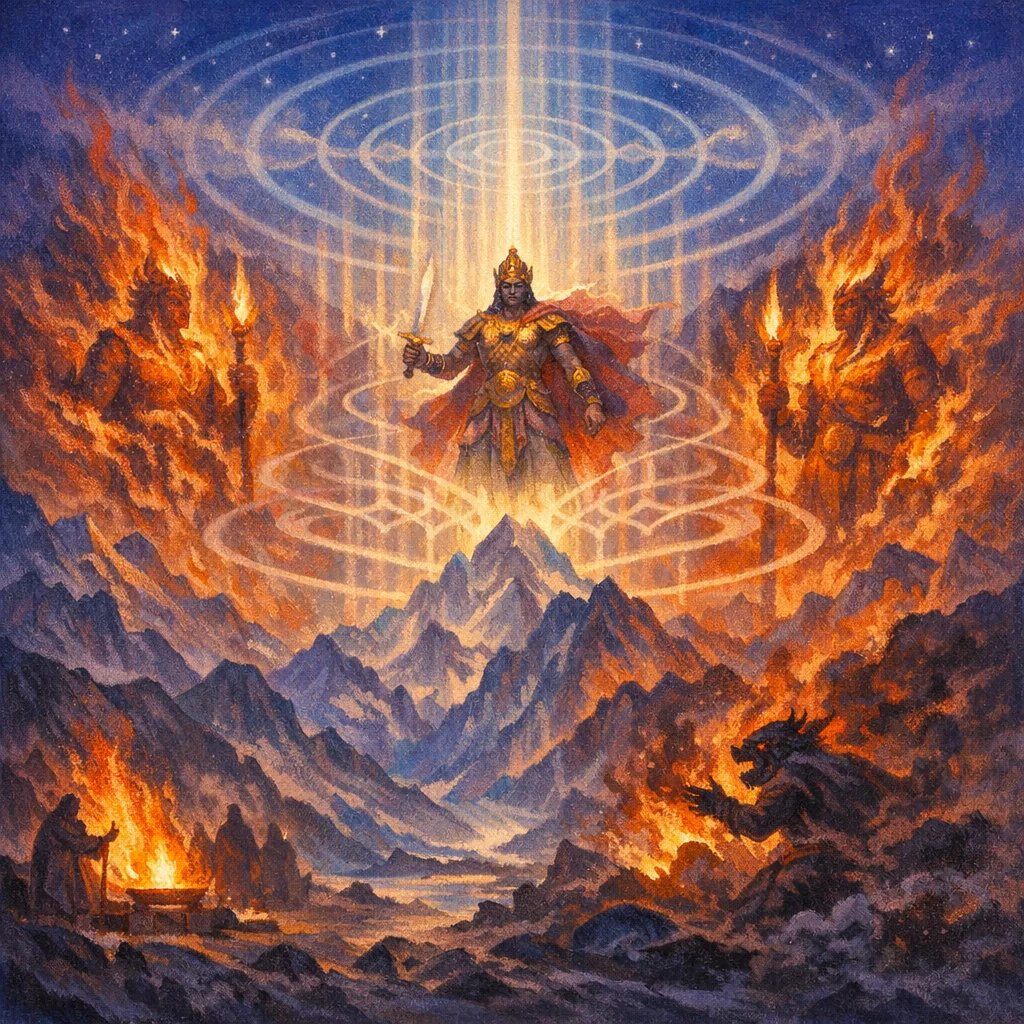
এই দশতিতে ইন্দ্রকে কেন্দ্র করে সমৃদ্ধি-প্রার্থনা করা হয়েছে—যজ্ঞকারীর ধী (যজ্ঞবাণী/সংকল্প) যেন ‘বিজয়ী’ হয়ে গাভী, অশ্ব, বাজ (পুরস্কার/বল) ও নর (সমর্থক) ইত্যাদি দৃশ্যমান লাভ এনে দেয়। পাশাপাশি অগ্নিকে যজ্ঞের প্রহরী রূপে আহ্বান করা হয়—তিনি যজ্ঞভূমি জুড়ে প্রসারিত হয়ে বিরাজ করেন, ‘দিব্য আশ্রয়ে’ স্থিত থাকেন, এবং রাত্রি ও ঊষাকালে হব্যে বাধা সৃষ্টিকারী রাক্ষসদের দগ্ধ করে দূরে তাড়ান—ফলে যজ্ঞ নিরাপদ ও নির্বিঘ্ন হয়। যথাযথ স্তোত্র ও সঠিকভাবে পালিত অগ্নির মাধ্যমে ইন্দ্রের বিজয়শক্তি ও অগ্নির রক্ষাশক্তি বাস্তব বরদানে পরিণত হয়।
Mantras
Mantra 1
अग्ने वाजस्य गोमत ईशानः सहसो यहो अस्मे देहि जातवेदो महि श्रवः
হে অগ্নি! গো-সমৃদ্ধ বাজ (পুরস্কার)-এর অধীশ্বর, হে সহস-শক্তিমান, হে যশস্বী! হে জাতবেদস্, আমাদের মহৎ শ্রবঃ (কীর্তি) দান কর।
Mantra 2
स इधानो वसुष्कविरग्निरीडेन्यो गिरा रेवदस्मभ्यं पुर्वणीक दीदिहि
প্রজ্বলিত অগ্নি—বসু-দাতা, কবি, স্তবনীয়—আমাদের গীত দ্বারা পূজিত হয়ে, হে পূর্বণীক (অগ্রণী), আমাদের উপর ধন-সমৃদ্ধিসহ দীপ্ত হও।
Mantra 3
क्षपो राजन्नुत त्मनाग्ने वस्तोरुतोषसः स तिग्मजम्भ रक्षसो दह प्रति
হে রাজন্ অগ্নি, রাত্রিগুলিতেও এবং উষাদের নিবাসস্থলে—নিজ শক্তিতেই; হে তীক্ষ্ণ-জম্ভ, রাক্ষসদের প্রতিহত করে দগ্ধ করো।
Frequently Asked Questions
To make the sacrificer’s dhī (ritual prayer/formulation) effective—bringing cattle, horses, prizes, and supporters—while securing the sacrifice through Agni’s protective power.
Agni is the guardian of the yajña: he spreads through the altar-space, stands in ‘heavenly shelter,’ and drives away Rakṣasas (obstacle-forces), ensuring Indra’s offering proceeds without disruption.
It is an apotropaic request: Agni is asked to repel and neutralize all forces that spoil the rite—fear, impurity, mistakes, or hostile influences—especially during vulnerable times like night and dawn.