Dashati 20
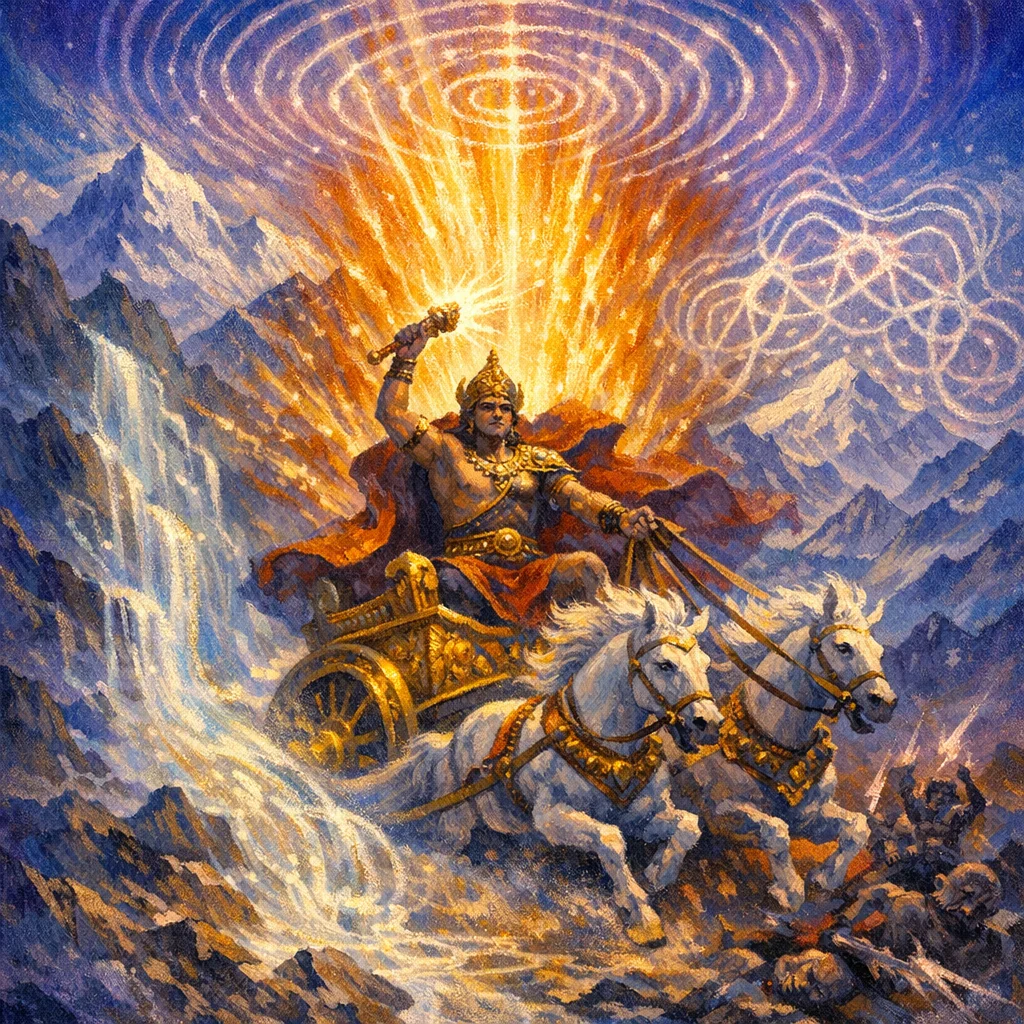
Indra empowered by Soma-exhilaration (mada/matsara) to grant victory and wealth
Indra
Exultant martial and triumphant—built on the imagery of surging Soma-power and battle-victory
Ṛṣi attribution and chandas are not supplied here; they require Rigvedic concordance for the underlying RV originals used by this Sāmavedic selection.
সোমের উল্লাস-শক্তি (মদ/মৎসর) দ্বারা প্রবল ইন্দ্রকে যজ্ঞে আহ্বান করা হচ্ছে—যেন তিনি সোমের বল নিয়ে আমাদের নিকটে আসেন, যজমানকে শক্তি দেন, শত্রুবল ও অব্রত-দস্যু বিরোধ দমন করে যুদ্ধে জয় দান করেন, রথকে বীরোচিতভাবে অগ্রসর করেন, এবং ‘সহস্র-লাভ’ সদৃশ বিপুল ধন ও দান-সমৃদ্ধি প্রদান করেন।
Mantras
Mantra 1
मत्स्यपायि ते महः पात्रस्येव हरिवो मत्सरो मदः वृषा ते वृष्ण इन्दुर्वाजी सहस्रसातमः
হে হরিবান্! পাত্র থেকে উথলে ওঠা যেন—তোমার জন্য এই মহান্ মত্সর (উন্মাদক সোম-উৎসাহ) ও প্রবল মদ। বৃষভ-স্বরূপ ইন্দ্রের জন্য বৃষভ-তুল্য এই ইন্দু (সোম-বিন্দু) বাজ (বল/বিজয়) দানকারী, সহস্র লাভে সর্বাধিক বিজয়ী।
Mantra 2
आ नस्ते गन्तु मत्सरो वृषा मदो वरेण्यः सहावां इन्द्र सानसिः पृतनषाडमर्त्यः
আমাদের কাছে তোমার সেই মত্সর-প্রেরণা আসুক—বৃষভসম, বরেণ্য (শ্রেষ্ঠ) মদ। হে ইন্দ্র! সহাবান্ (বলসম্পন্ন), সানসি (লাভদাতা), পৃতনাষাড্ (যুদ্ধজয়ী), অমর্ত্য (অমর)—আমাদের নিকট আগমন করো।
Mantra 3
त्वं हि शूरः सनिता चोदयो मनुषो रथम् सहावान्दस्युमव्रतमोषः पात्रं न शोचिषा
কারণ তুমিই শূর, সনিতা (বিজয়ী/প্রাপ্তিদাতা); তুমি মানুষের রথকে প্রেরণা দাও। সহাবান্, দস্যু-নাশক, অব্রত-হরণকারী—আর তুমি তেজে পাত্রের মতো দীপ্যমান।
Frequently Asked Questions
It celebrates Soma’s ritual exhilaration (mada/matsara) as the power that makes Indra victorious—bringing battle-success, protection, and abundant gains to the sacrificer.
The ‘pātra’ points to the Soma-cup used in the rite; the imagery stresses that Indra’s strength and the sacrificer’s benefits arise from a concrete sacrificial act, not from emotion alone.
They represent opponents of Vedic order—those without observance (a-vrata) and hostile forces (Dasyu). The hymn frames Indra’s victory as both martial and moral-ritual protection for the yajamāna.