Adhyaya 24
Śrāddha-kāla, Pātratā (Eligibility), and Phala (Consequences) — श्राद्धकाल-पात्रता-फलनिर्णयः
Upa-parva: Dāna–Śrāddha-vidhi (Ritual Protocols for Offerings and Ancestral Rites)
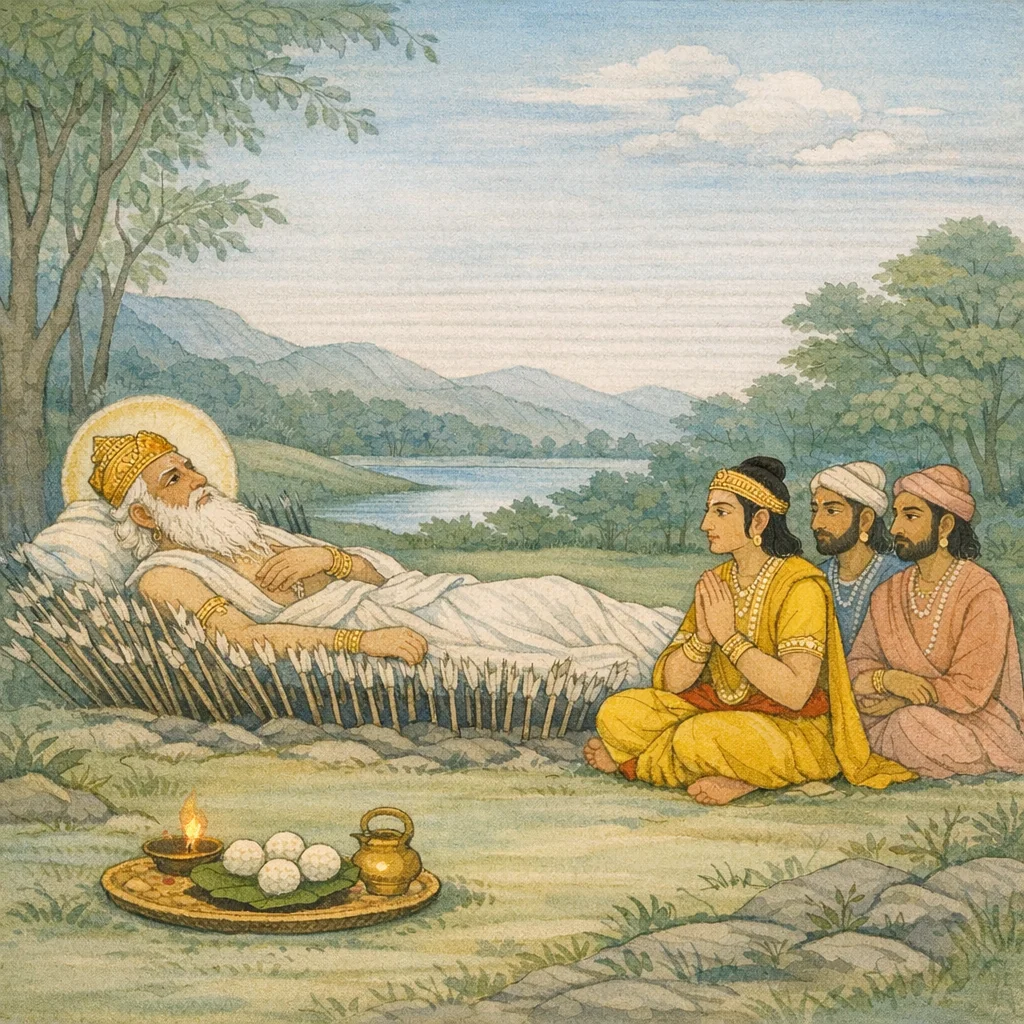
Chapter 24 is a technical dialogue in which Yudhiṣṭhira asks Bhīṣma to specify the rule-set established by authoritative tradition for offerings at śrāddha and daiva occasions. Bhīṣma first defines temporal sequencing: daiva rites in the forenoon and ancestral rites in the afternoon, with human feeding placed appropriately at midday. He then enumerates conditions that render food/offerings ritually compromised—being time-inappropriate, contaminated, disrespected, or handled in ways that negate sanctity—stating that such portions are understood as diverted to rākṣasa-share (i.e., non-meritorious consumption). The chapter next lists categories of brāhmaṇas deemed ineligible to be invited/installed for śrāddha/daiva (due to ethical, ritual, or livelihood disqualifications), followed by positive qualifications for eligible recipients (discipline, Savitrī-recitation, correct conduct, non-harm, and proper livelihood). It also restricts certain sources of wealth as unfit for offerings. Finally, it contrasts actions leading to negative posthumous outcomes with those aligned to svarga-gati: truthfulness, restraint, generosity, protection of dependents, and support of social welfare. The chapter closes by framing these as established dharma/adharma criteria for daiva and paitṛka giving.
Chapter Arc: युधिष्ठिर धर्म के सूक्ष्म प्रश्नों के साथ भीष्म के समक्ष उपस्थित होते हैं—विशेषतः श्राद्ध और दान के ऐसे नियम जिनसे पितरों की तृप्ति और जीवितों का कल्याण दोनों साधे जा सकें। → प्रश्नों की परतें खुलती हैं: किसे दान देना श्रेष्ठ है, किस समय और किस भाव से श्राद्ध करना फलदायी है, और कौन-से दान ‘अल्प’ होकर भी ‘अक्षय’ फल देते हैं। युधिष्ठिर की जिज्ञासा धर्म के बाह्य कर्मकाण्ड और आन्तरिक नीयत के बीच के तनाव को उभारती है। → भीष्म निर्णायक स्वर में श्राद्ध-दान की ‘उत्तम पात्रता’ और ‘शुद्ध भाव’ का प्रतिपादन करते हैं—दान का मूल्य वस्तु से अधिक दाता की श्रद्धा, शुचिता, और उचित पात्र-चयन में है; श्राद्ध में भी विधि के साथ सत्य-भाव ही पितृ-तृप्ति का मूल है। → युधिष्ठिर को श्राद्ध और दान के श्रेष्ठ आचरण का संक्षिप्त, व्यवहार-योग्य मार्ग मिलता है—धर्म का सार ‘उचित पात्र, उचित काल, उचित विधि, और करुणा-युक्त नीयत’ में प्रतिष्ठित है। → अगले अध्याय हेतु संकेत: दानधर्म के और सूक्ष्म भेद—विशेष दानों के फल, निषिद्ध पात्र, तथा श्राद्ध के विशिष्ट विधान—पर चर्चा आगे बढ़ती है।
Shlokas
Verse 1
(दाक्षिणात्य अधिक पाठका १ श्लोक मिलाकर कुल २० श्लोक हैं) द्ाविशोद्ध्याय: युधिष्ठटिरके विविध धर्मयुक्त प्रश्नोंका उत्तर तथा श्राद्ध और दानके उत्तम पात्रोंका लक्षण [मार्कण्डेयजीके द्वारा विविध प्रश्न और नारदजीके द्वारा उनका उत्तर] (युधिष्टिर उवाच पुत्र: कं महाराज पुरुषस्तरितो भवेत् | यावन्न लब्धवान् पुत्रमफल: पुरुषो नूप ।। युधिष्ठिरने पूछा--नरेश्वर! महाराज! पुत्रोंद्वारा पुरुषका कैसे उद्धार होता है? जबतक पुत्रकी प्राप्तिन हो तबतक पुरुषका जीवन निष्फल क्यों माना जाता है? ।। भीष्म उवाच अत्राप्युदाहरन्तीममितिहासं पुरातनम् । नारदेन पुरा गीत मार्कण्डेयाय पृच्छते ।। भीष्मजीने कहा--राजन्! इस विषयमें इस प्राचीन इतिहासका उदाहरण दिया जाता है। पूर्वकालमें मार्कण्डेयके पूछनेपर देवर्षि नारदने जो उपदेश दिया था
যুধিষ্ঠির বললেন— হে নরেশ্বর মহারাজ! পুত্রদের দ্বারা পুরুষের উদ্ধার কীভাবে হয়? আর যতক্ষণ পুত্রলাভ না হয়, ততক্ষণ কেন পুরুষের জীবনকে নিষ্ফল বলা হয়?
Verse 21
इस प्रकार श्रीमह्याभारत अनुशासनपर्वके अन्तर्गत दानधर्मपर्वमें अष्टावक्र और उत्तरदिशाका संवादविषयक इकक््कीसवाँ अध्याय पूरा हुआ
এইভাবে শ্রীমহাভারতের অনুশাসনপর্বের দানধর্মপর্বে অষ্টাবক্র ও উত্তরদিকের সংলাপ-বিষয়ক একবিংশ অধ্যায় সমাপ্ত হল।
Frequently Asked Questions
Bhīṣma specifies a time-order: daiva offerings are to be performed in the forenoon, ancestral (paitṛka/śrāddha) in the afternoon, with feeding aligned to appropriate midday placement, emphasizing that timing is part of ritual validity.
Ritual efficacy depends on disciplined conduct: cleanliness, respectful handling, correct recitation/acts, and qualified recipients; negligence, contamination, or improper intent converts a rite into a non-meritorious act.
Yes. It explicitly contrasts outcomes: improper acts and exploitative behaviors are categorized as leading toward negative posthumous destinations, while truth, restraint, generosity, and protection of others are presented as determinants of svarga-oriented merit.