Prapathaka 3
Somayāga (Soma-sacrifice) — specifically the Pravargya/Upasad–preparatory complex and its integrations with the Agniṣṭoma framework (heating/handling of gharma, invocations to Aśvins/Indra, and consecratory-protective formulas that precede the main Soma pressing days).
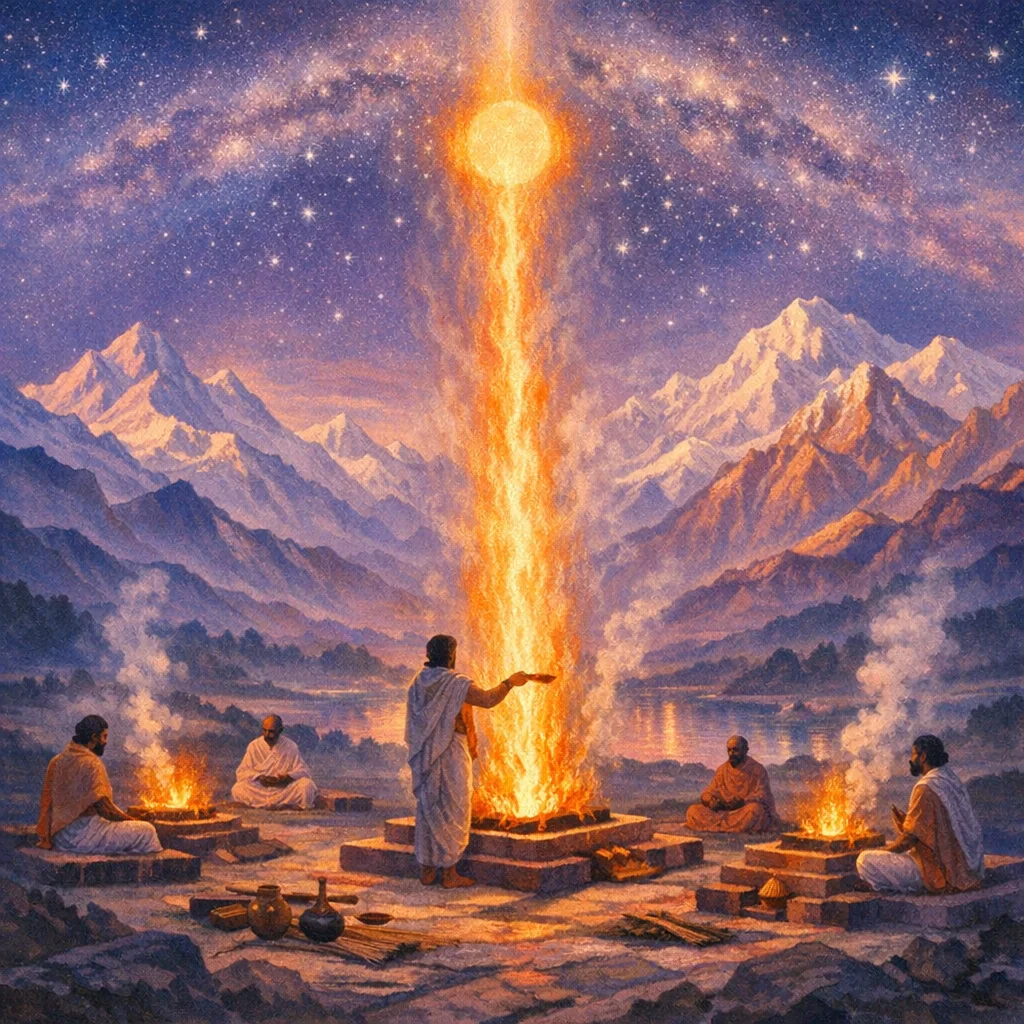
Kṛṣṇa Yajurveda 3.3 belongs to the Soma-sacrificial continuum and is best read as a liturgical-technical unit that consolidates preparatory and protective operations leading into the pressing-day ritual. The chapter’s mantric texture foregrounds the liminal status of the sacrificer and the rite: it repeatedly negotiates purity, heat, and controlled potency—hallmarks of Pravargya/Upasad materials—while simultaneously aligning these with the broader Agniṣṭoma economy of offerings, priestly roles, and cosmic correspondences. The mantras function not merely as invocations but as performative “bindings” that stabilize the rite against error, impurity, and hostile forces, and that authorize the transition from ordinary time to sacrificial time. The chapter’s theology is characteristically Brāhmaṇa-like: deities are mapped onto ritual implements and sequences, and success is framed as the correct orchestration of speech (mantra), heat (tapas/gharma), and offering (havis) to secure vitality, cattle, and sovereignty.
Anuvakas
Anuvakas for this prapathaka are loading. Please check back soon.