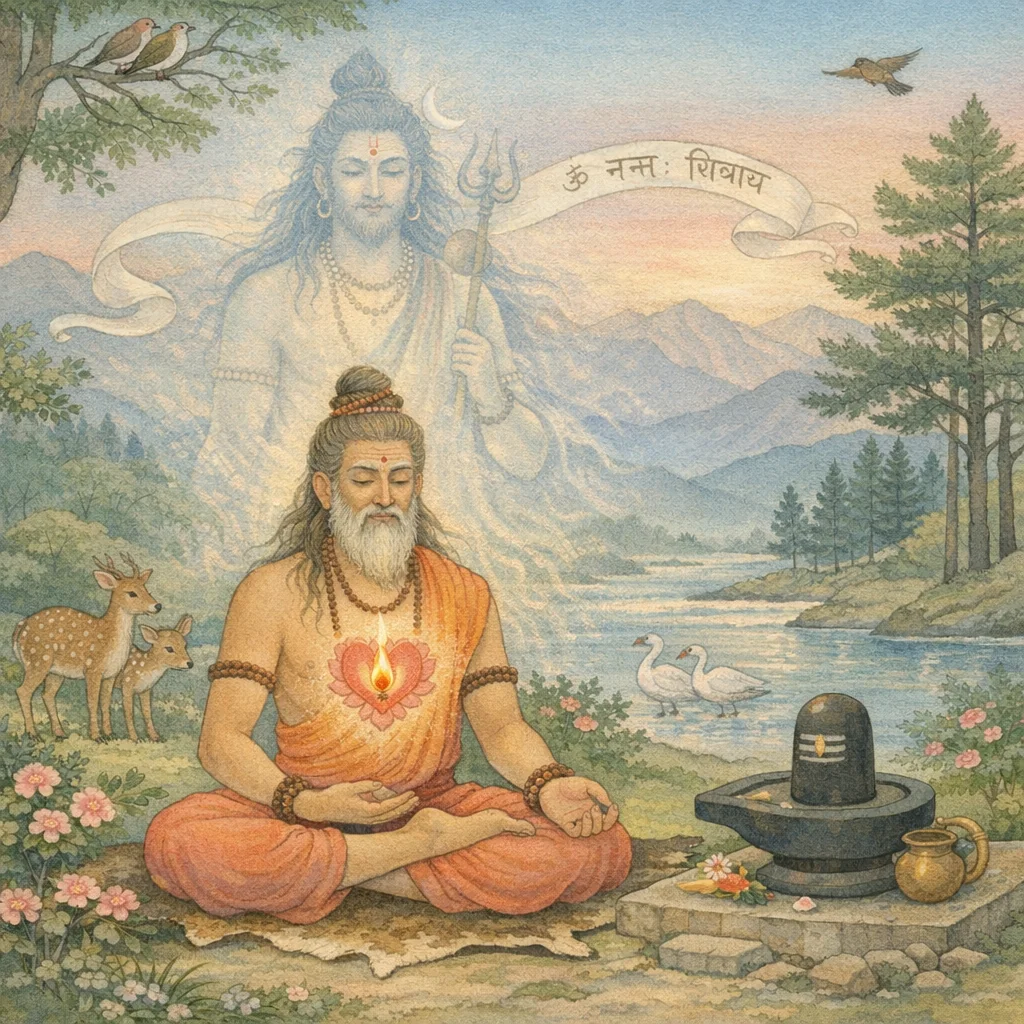
Katharudra
تُعَدّ كثارودرا أوبانيشاد، المرتبطة بالأثرفافيدا، من الأوبانيشاد الصغرى ذات النزعة الشيفية. فهي تُقدِّم رُدرا لا بوصفه إلهاً ويدياً فحسب، بل بوصفه برهمن—الحقيقة المطلقة التي هي في آنٍ واحدٍ محايثة للعالم ومتجاوزة له. وتُعيد قراءة عناصر المديح والطقس بوصفها معرفة باطنية (vidyā) غايتها التحرر (mokṣa). تعليمها المحوري هو عدم الثنائية بين الآتمان ورُدرا بوصفه «الحاكم الباطن» (antaryāmin). فالوعي الشاهد لحالات اليقظة والحلم والنوم العميق يُفهم على أنه رُدرا؛ وعالم الأسماء والأشكال يظهر ويضمحل في ذلك الأساس. وتبرز ممارسات مثل تأمل أوم (Oṃ)، وتكرار المانترا (japa)، و«الذبيحة الداخلية» أي تقديم الأنا والرغبات قرباناً في الداخل، كوسائل للتطهير وتحقيق الإدراك غير الثنائي. تاريخياً تعكس الأوبانيشاد مسار دمج اللاهوت الشيفي ضمن سلطة الفيدا، عبر تثبيت رُدرا/شيفا بوصفه برهمن وبوصفه الذات الأعمق لجميع الكائنات. وتكمن أهميتها الفلسفية في الجمع بين المعرفة (jñāna) والتعبد (bhakti) وفي تأكيد رؤية لا ثنائية للذات والعالم والتحرر.
Key Teachings
• Rudra as Brahman: Rudra/Śiva is affirmed as the supreme
all-pervading reality and the source
sustenance
and dissolution of the cosmos.
• Ātman–Rudra identity: liberation arises from realizing the non-difference of one’s inner self and Rudra as the indwelling witness (antaryāmin).
• Inner sacrifice (antar-yajña): external ritual is reinterpreted as inward offering—ego
desire
and ignorance are “sacrificed” in knowledge.
• Oṃ and mantra as contemplative supports: sacred sound functions as a means to steady the mind and disclose the non-dual ground of consciousness.
• Three states and the witness: waking
dream
and deep sleep are transcended by recognizing the witnessing consciousness as Rudra.
• Grace and purification: Rudra’s fierce power is also compassionate purification
removing fear and granting spiritual clarity.
• Renunciation and discipline: restraint
truth
and dispassion are presented as prerequisites for stable realization.
• Unity-in-diversity: the many names and forms are expressions of the one Rudra; plurality is not denied but grounded in non-dual reality.
Verses of the Katharudra
Explore the verses of this Upanishad.
No verses available for this Upanishad yet.