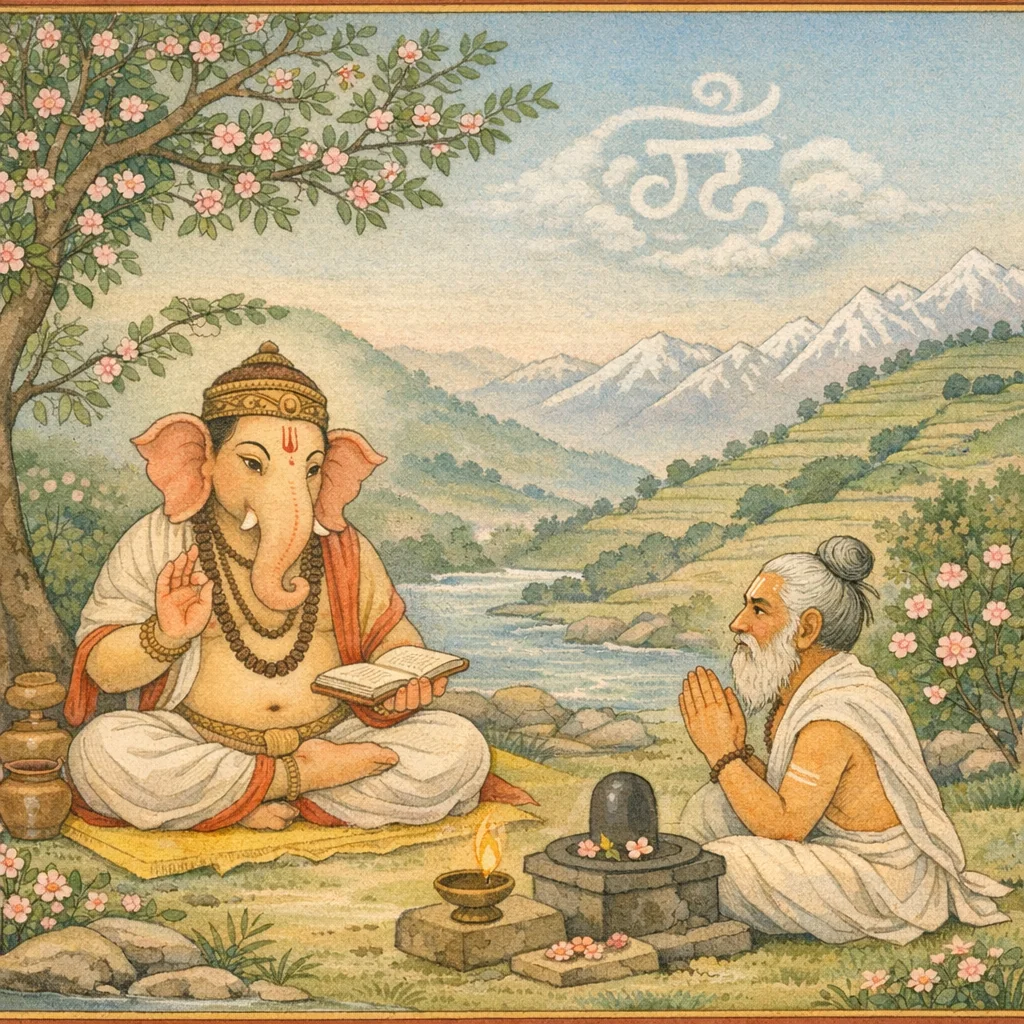
Ganapati
أوبانيشاد غاناباتي (Ganapati Upanishad / Ganapatyatharvashirsha) نصٌّ أوبانيشادي قصير مرتبط بالأتهرفافيدا، لكنه ذو دلالة فلسفية كبيرة. يرفع هذا النص غانيشا من كونه إله البدايات المباركة في العبادة الشعبية إلى مقام «البرهمن الأعلى» (Parabrahman) وإلى كونه «الآتمن» الباطن في جميع الكائنات. وبأسلوب أوبانيشادي مألوف تُقرأ الصورة الإلهية بوصفها رمزًا وتجليًا للحقيقة اللاثنائية. تاريخيًا يُعد من الأوبانيشادات المتأخرة، وقد حظي بمكانة خاصة في تقاليد الغاناباتيّا، مع إمكان قراءته ضمن إطار شيفي أيضًا: غانيشا بوصفه «الأول في العبادة» وبوابةً إلى عبادة شيفا. لغته ذات نبرة شروتي، وتصريحاته بالهوية (tādātmya)، وتركيزه على ممارسة المانترا تكشف التقاء الفيدانتا بالتأمل القائم على الصوت المقدس. تعليمه المركزي أن غاناباتي هو أساس الخلق–الحفظ–الانحلال، ودعامة الظاهر وغير الظاهر. ويُقدَّم ترديد/تأمل «أوم» والبِيجا «غَم» وسيلةً لمعرفة الذات. أما «العائق» الأعمق فليس خارجيًا فحسب، بل هو الأڤيديا (الجهل)؛ وإزالة العوائق تعني زوال الجهل وانكشاف وحدة الآتمن والبرهمن.
Key Teachings
- Gaṇapati as Brahman: the deity is identified with the supreme
all-pervading reality (parama-brahman).
- Gaṇapati as Ātman: the inner Self of all beings; realization is self-knowledge.
- Non-dual vision: the manifest (vyakta) and unmanifest (avyakta) are expressions of one reality.
- Cosmogonic sovereignty: Gaṇapati as source
sustainer
and dissolver of the cosmos.
- Mantra as upāya (means): praṇava (Oṁ) and bīja (gaṁ) as contemplative instruments for realization.
- Removal of obstacles as removal of avidyā: the deepest “vighna” is ignorance; liberation is its cessation.
- Unity of bhakti and jñāna: devotion to form leads to insight into formless reality.
- Sacred speech (vāk) and sound-symbolism: phonemes and mantra encode metaphysical truth.
- Iconography as philosophy: tusk
trunk
and belly interpreted as signs of non-dual fullness and discriminative power.
Verses of the Ganapati
Explore the verses of this Upanishad.
No verses available for this Upanishad yet.