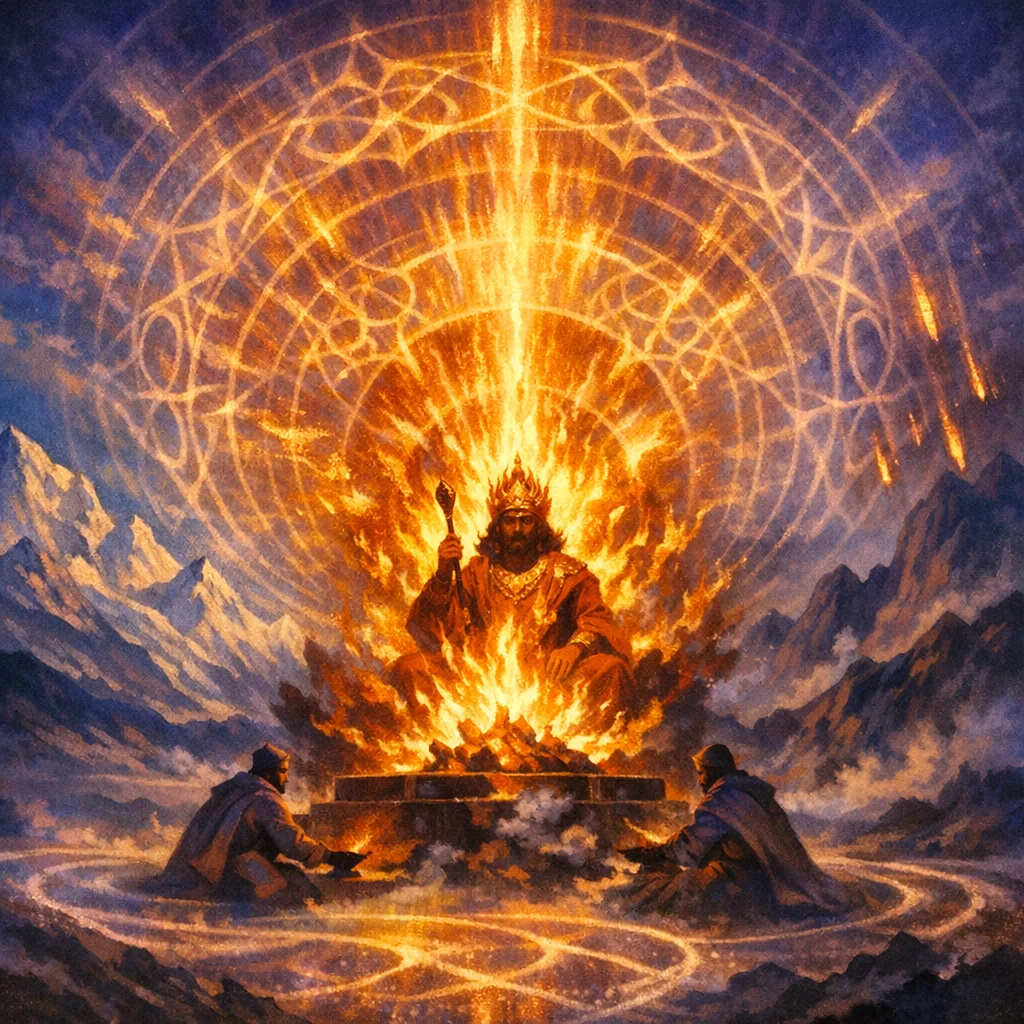
Dashati 4
Agni’s radiant ignition and protective power within the sacrifice
Agni
Bright forceful and protective—moving from ignition-praise to martial safeguarding
R̥gvedic concordance not provided in the input; seer attribution remains uncertain at dashati level until RV mapping is established.
يمجّد موضوع هذه الدَّشَتي إيقاد أَغني المتلألئ وقدرته الحامية في الذبيحة: أَغني بوصفه كَڤيًّا، العارف بأسرار الطقس، والحامل السريع للقرابين. وتبرز صور التطهير والإشراق (pavate، śukra، vi rājati)، ثم يُقرَن نوره بنصيب إندرا في القربان. وبمعونة الماروت يُستدعى أَغني ليحرس الشعيرة، فيُغشي القوى المعادية ويُوقعها في حيرةٍ بـ«تَمَس» حتى تُصان ṛta ويُقمع الاضطراب.
Mantras
Mantra 1
अग्निरिन्द्राय पवते दिवि शुक्रो वि राजति महिषीव वि जायते
أَغْنِي، لأجلِ إندرا، يُنقّى؛ لامعًا في السماء يتألّق؛ وكأنّه بقرةٌ جليلةُ القوّة يولدُ في فيضٍ ووفرة.
Mantra 2
अस्माकमिन्द्रः समृतेषु ध्वजेष्वस्माकं या इषवस्ता जयन्तु अस्माकं वीरा उत्तरे भवन्त्वस्मां उ देवा अवता हवेषु
في اللقاءات وعند الرايات، ليكن إندرا لنا؛ ولتَغْلِبْ سهامُنا؛ وليكن أبطالُنا هم الأعلون؛ يا أيها الدِّيفا، احمونا حقًّا في نداءاتنا وابتهالاتنا.
Mantra 3
असौ या सेना मरुतः परेषामभ्येति न ओजसा स्पर्धमाना तां गूहत तमसापव्रतेन यथैतेषामन्यो अन्यं न जानात्
يا مَرُوت، إنَّ جيشَ الآخرينَ ذاكَ الذي يَتقدَّمُ علينا مُنازِعًا بقوَّةٍ—فاستُروهُ بالظُّلمةِ، وبغَسَقٍ غيرِ مُقدَّسٍ، لكيلا يَعرِفَ منهم أحدٌ أحدًا.
Frequently Asked Questions
In Sāmavedic usage the Soma-style diction can be applied to Agni to express ritual brightening and purification through kindling and oblations—Agni becomes ‘clarified’ as he blazes.
Indra is invoked as the chief recipient of a share in the sacrifice; Agni’s purified brilliance is presented as serving Indra’s portion and strengthening the rite’s efficacy.
The prayer seeks divine bewilderment over hostile forces—an obscuring confusion that breaks their coordination (“so that one may not know another”), functioning as protective magic within the hymn.