Dashati 3
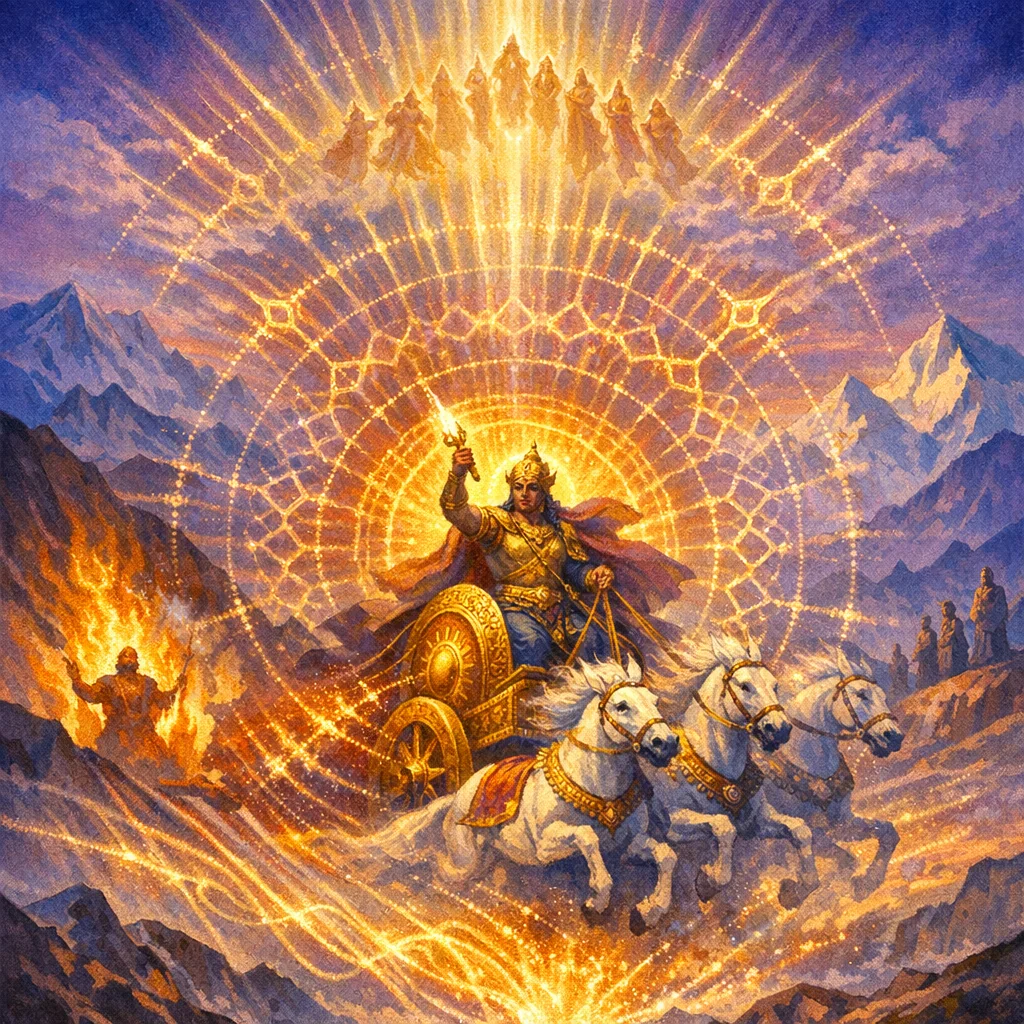
Aindra victory-invocation: summoning Indra’s power to remove obstacles and secure success for the rite
Indra
Uplifting martial-triumphal and propulsive (victory-shout energy)
R̥ṣi attributions are not supplied; the verses reflect mainstream RV Indra/Agni hymn traditions rather than a clearly marked single family in the given data.
ابتهالٌ أَيْندريٌّ للنصر: استدعاءُ قوّةِ إندرا لإزالةِ العوائق وضمانِ نجاحِ الشعيرة. وبالستوترا/السّامان يُستجلبُ «الرَّثا» الإلهيّ، ويُمجَّدُ إندرا بوصفه السَّتْپَتي القويّ و«مْرِتِيصَهَ» قاهرَ الهلاك، مانحَ العونِ والفضلِ والغَلَبة، وحاميَ القُربان من الأنتَرَايَا (الموانع). ويُستحضَرُ أَغْنِي بوصفه نارَ القربان الدائمةَ الولادة، الكامنةَ في النباتِ والمياه، التي تُقيمُ القُدْمة وتُسندُ نظامَ الكون. وتُدعى الآلهةُ الحليفة—ڤَرُونَة، والآدِتْيَات، والمَرُوت، وجماعةُ الدِّڤا—لتكثيفِ القوّةِ الواقيةِ والغَالِبة حولَ الذبيحة، حتى تبلغَ الذروةَ في «غهوṣa»؛ هتافٍ مسموعٍ لانتصارِ الآلهة جماعةً.
Mantras
Mantra 1
अभि गोत्राणि सहसा गाहमानो ऽदयो वीरः शतमन्युरिन्द्रः दुश्च्यवनः पृतनाषाडयुध्यो3 ऽस्माकं सेना अवतु प्र युत्सु
يهاجمُ حظائرَ الأبقارِ بقوّة، ويقتحمُها غائصًا؛ لا يُقهر، البطلُ إندرا ذو المئةِ طاقة؛ عسيرُ الزعزعة، قاهرُ المعارك، لا يُغلَب—فليحمِ جندَنا في مقدّمةِ القتال.
Mantra 2
इन्द्र आसां नेता बृहस्पतिर्दक्षिणा यज्ञः पुर एतु सोमः देवसेनानामभिभञ्जतीनां जयन्तीनां मरुतो यन्त्वग्रम्
إندرا قائدُ هؤلاء؛ وبْرِهَسْپَتِي هاديهم. فلتتقدّم الدَّكْشِنَا، واليَجْنَا، والسُّوما أمامًا؛ ومن جموعِ الآلهةِ الظافرةِ التي تَخترقُ (العدوَّ)، فلتسرِ الماروتُ في المقدّمة.
Mantra 3
इन्द्रस्य वृष्णो वरुणस्य राज्ञ आदित्यानां मरुतां शर्ध उग्रम् महामनसां भुवनच्यवानां घोषो देवानां जयतामुदस्थात्
ارتفعَ هتافُ الآلهة—هتافُ إندرا الجبّار، والملكِ ڤَرُونَا، والآدِتْيَات، وجماعةِ الماروتِ العاتية؛ ذوي العقولِ العظيمة، مُزلزِلي العوالم، الظافرين.
Frequently Asked Questions
It is a victory-oriented invocation: the chant ‘turns’ or brings Indra’s chariot through praise, asking him to remove obstacles and secure aid and favour for the sacrifice.
Because Soma-ritual success depends on Agni as the ever-present ritual fire; recalling Agni’s latent, continual birth in nature reinforces that the rite is cosmically supported and continuously sustained.
It signifies triumphant, conquering resonance—both the mythic victory-cry of the deities and, liturgically, the heightened sonic power of the chant reaching its climactic point.