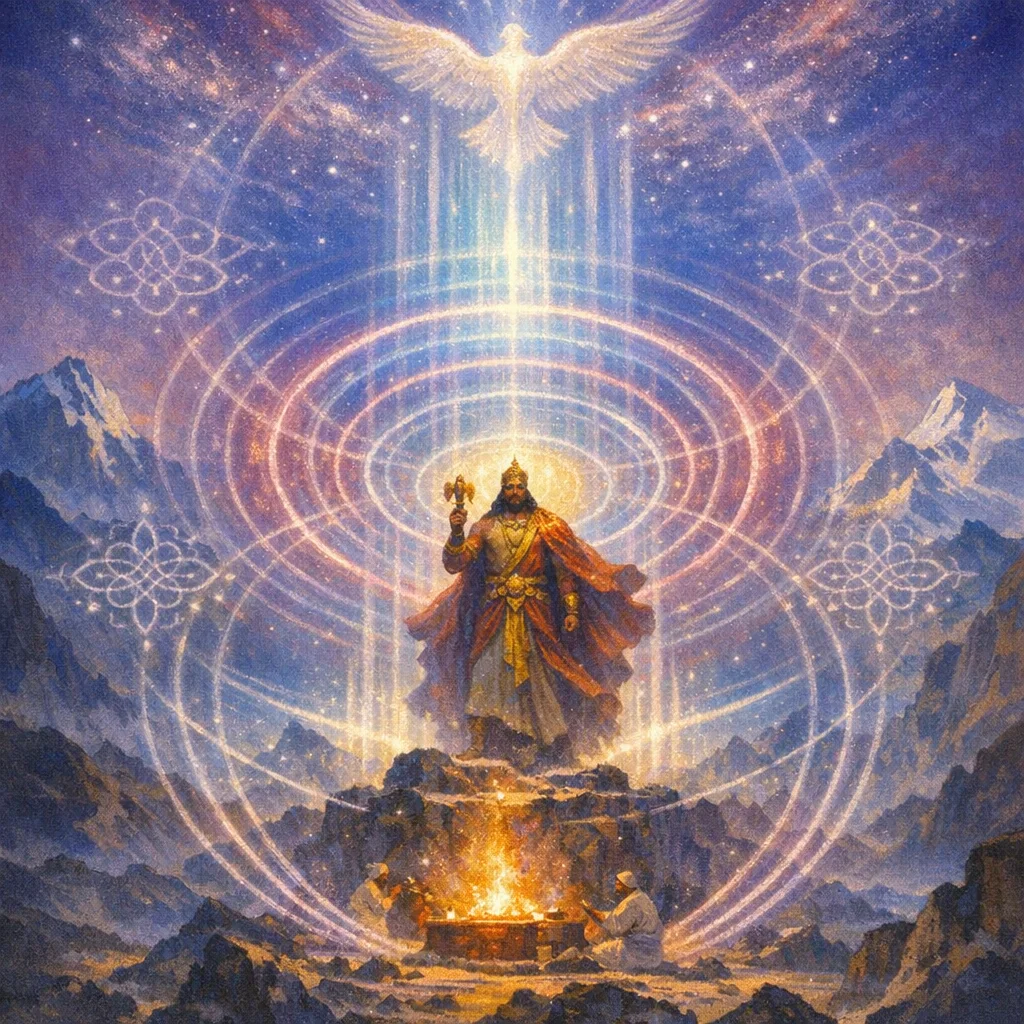
Dashati 13
Aindra stotra as a plea to Indra to hear the Soma-pressing call and unite with perfected praise, framed by cosmic messenger imagery (suparṇa/drapsa) that upholds ṛta.
Indra
Urgent summoning and luminous—an audible ‘call’ that intensifies into visionary/cosmic description.
Rṣi not specified in the provided data; the diction is Rigvedic in style and the dashati appears as a Samaveda gāna selection rather than a clearly marked single-family hymn set in this input.
هذا النشيد الأيندريّ يتوسّل إلى إندرا أن يُصغي لنداء عصر السُّوما وأن يُقبل متّحدًا بالمديح المُحكَم. فصوت حجارة العصر (أدري/غْرافان) هو الاستدعاء المسموع، ومانيشا الكهنة وأفعال العبادة (دُفامسي) تُصاغ لتبلغ غاية الإتقان. ثم تنفتح الأبيات على تصوير كونيّ: سوبَرْنا والدْرَبْسا—إشعاع السُّوما/الشمس—كَرَسولٍ ذي جناحين ذهبيّين يجوب الدوائر الكونيّة، حاملًا نظام فَرونا عبر العوالم إلى مجال يَما، مُقيمًا الرِّتا (الناموس الحقّ) ومُدرِجًا الطقس ضمن إدارةٍ كونيّة أوسع. وهكذا يغدو القولُ والإنشادُ الطقسيّ، إذا وافق الرِّتا، فعّالًا: يُستدعى إندرا ليُجيب لقربان السُّوما، ويمنح البَرَكات المرغوبة (برياني)، ويُثبّت النظام القويم.
Mantras
Mantra 1
श्रुधी हवं विपिपानस्याद्रेर्बोधा विप्रस्यार्चतो मनीषाम् कृष्वा दुवांस्यन्तमा सचेमा
اِسْمَعْ نداءَ مَن يَتَوَقُ إلى الشُّرْب، الآتي من حجرِ عَصْرِ السُّوما؛ وانظُرْ إلى قَصْدِ التَّرْنيمِ عندَ الـ«ڤِپْرَ» المُنْشِدِ، وإلى «مَنِيصَا» فِكْرِه؛ فإذا جَعَلْنا تَعَبُّداتِنا أسمى، فَلْنَتَّحِدْ بكَ.
Mantra 2
ऊर्ध्वो गन्धर्वो अधि नाके अस्थात्प्रत्यञ्चित्रा बिभ्रदस्यायुधानि वसानो अत्कं सुरभिं दृशे कं स्व3र्ण नाम जनत प्रियाणि
في العُلى من السماء قام الغندرفا، حامِلًا قواه المتلألئة كأنها أسلحة. لابسًا أَتْكَةً عَطِرَةً تُرى، وهو المسمّى «سُفَرْنَة» (الذهبي)، يُنْشِئ ويُظْهِر الأشياءَ المحبوبة.
Mantra 3
द्रप्सः समुद्रमभि यज्जिगाति पश्यन्गृध्रस्य चक्षसा विधर्मन् भानुः शुक्रेण शोचिषा चकानस्तृतीये चक्रे रजसि प्रियाणि
الدَّرَبْسَةُ اللامعةُ تُسارِعُ نحوَ البحر؛ تُبصِرُ بعينِ الطائرِ الحادّة، وتُقيمُ السُّنَنَ (vidharma). والشعاعُ (bhānu) المتألّقُ بوهجٍ طاهرٍ (śukra śociṣ) يتهلّل؛ وفي الدورةِ الثالثة، في الفضاءِ (rajas)، يُثبّتُ الأشياءَ المحبوبة.
Frequently Asked Questions
It urges Indra to hear the sound and intention of the Soma-pressing and the priest’s praise, so that worship becomes ‘most excellent’ and the sacrificer is united with Indra’s power, all within a vision of cosmic order.
They supply a cosmic frame: the golden-winged messenger (suparṇa) moves within Varuṇa’s ordinance and near Yama’s realm, showing that the ritual invocation participates in a wider, law-governed universe, not only a single deity’s domain.
Traditional interpretation can take it either way: as the pressed Soma-drop rushing toward its ‘ocean’ (goal) or as solar/fiery radiance moving through cosmic circuits; both readings reinforce that ritual offering and cosmic light follow ṛta (right order).