Dashati 12
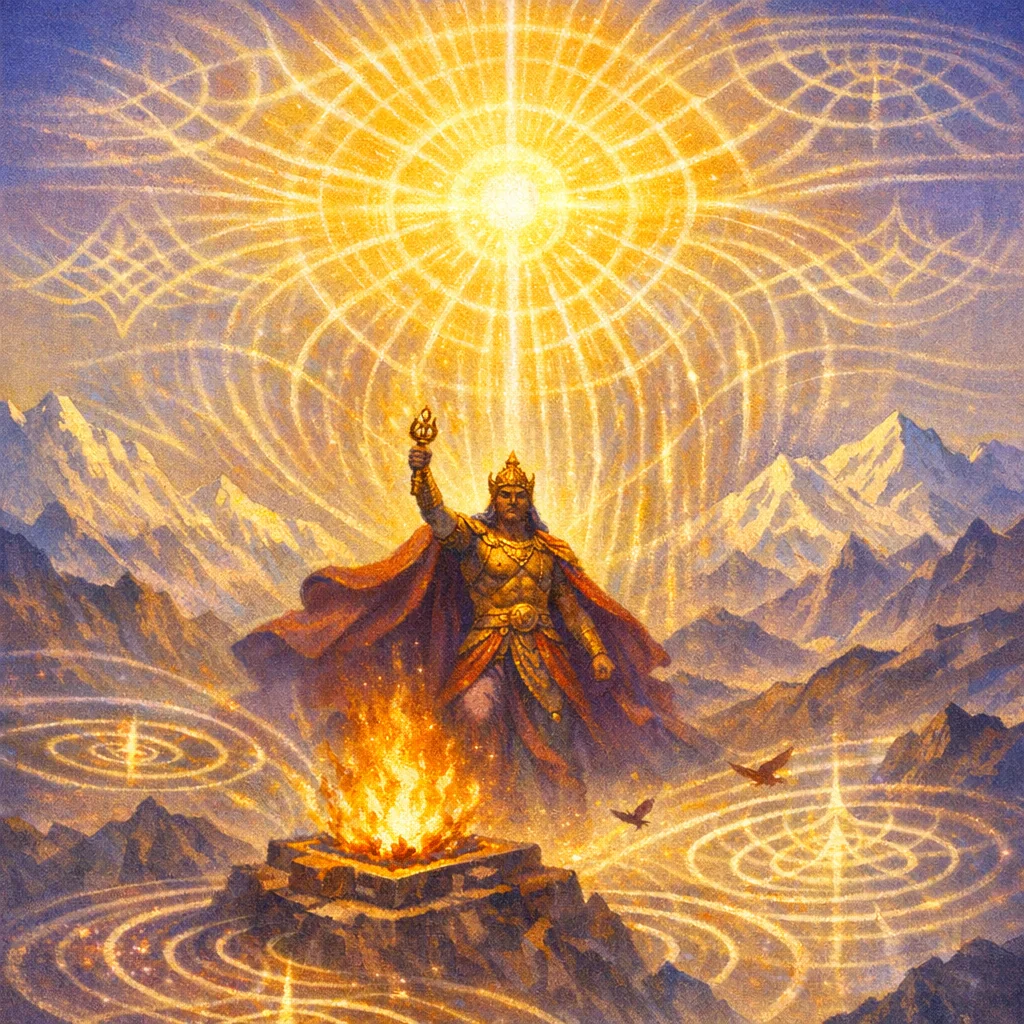
Aindra stuti: Indra’s empowerment of the singer and the yajña’s solar splendor as the vehicle of prosperity and ṛta
Indra
Uplifting forceful and expansive—suited to Aindra praise with a bright solar sheen in the middle verses
R̥ṣi not specified in the input; the diction aligns with common Ṛgvedic Aindra praise and later Sāmavedic selection for Udgītha performance rather than a single explicit family attribution here.
مديح أَيْندرا: يُستدعى إندرا، واهب الثروة (رادافاسو)، ليمنح المُنشد القدرة ويُقيم الستوترِ ليُحسن إنشاد الستوترا؛ مع طهارة الطقس ورفض الخطيئة (بابا) شرطًا لفاعلية الثناء. وفي الوسط تتألّق صورٌ شمسية—سوريا/سوبرنا، البهانو اللامع و«المذهَّب» (هِرَنيَاتْكا)—لتُظهر قوةً نورانية تُنظّم الفصول (رتو) وتُثبّت الرِّتا. ثم يُمجَّد اليَجْنَ المُشخَّص بوصفه حامل الكون (دهرتṛ) وسيّد الشعوب (فِشْپَتي)، ومن نوره المنضبط تنشأ المِدها، أي الذكاء المُتمِّم للشعيرة، وتتحقق البركة والوفرة.
Mantras
Mantra 1
अभि वाजी विश्वरूपो जनित्रं हिरण्ययं बिभ्रदत्कं सुपर्णः सूर्यस्य भानुमृतुथा वसानः परि स्वयं मेधमृज्रो जजान
السُّوبَرْنَةُ القويُّ، ذو الأشكالِ كلِّها، حامِلٌ لِلباسٍ ذهبيّ؛ وقد تَسَرْبَلَ في أوانهِ ببهاءِ سُورْيَا؛ فأحاطَ بنفسِه بالـ«جَنِتْرَمْ» مَنبَعِ التوليد؛ والـمُحْمَرُّ وَلَدَ «مِدْهَا»، فِطْنَةَ اليَجْنَا.
Mantra 2
शिक्षेयमिन्महयते दिवेदिवे राय आ कुहचिद्विदे न हि त्वदन्यन्मघवन्न आप्यं वस्यो अस्ति पिता च न
لَعَلِّي، يومًا بعد يوم، أتعَلَّمُ أن أظفَرَ بـ«رَايَهْ» الثروةِ من الذي يُعَظِّمُ ويُكَبِّر؛ لا أعرِفُ إلى أينَ سِواه: فإِنَّهُ، يا مَغْهَفَنْ، ليسَ لنا دونَكَ عطاءٌ أفضَلُ يُنال، ولا أبٌ.
Mantra 3
अयं सहस्रा परि युक्ता वसानः सूर्यस्य भानुं यज्ञो दाधार सहस्रदाः शतदा भूरिदावा धर्त्ता दिवो भुवनस्य विश्पतिः
هذا اليَجْنَا، مُتَسَرْبِلٌ بقُوًى مُسَخَّرَةٍ أَلْفِيَّةٍ، قد أسندَ شُعاعَ سُورْيَا؛ يُعْطِي أُلُوفًا، ويُعْطِي مِئَاتٍ، ويُغْدِقُ عَطَاءً—هو حامِلُ السَّماءِ، وسَيِّدُ العالَمِ، ورَبُّ الشَّعْبِ.
Frequently Asked Questions
It teaches that effective praise is enabled by Indra and must be joined with moral restraint; when performed in right order, the yajña shines with solar power and brings abundance.
The solar imagery expresses the luminous, seasonally ordered power (ṛtu/ṛta) that the ritual channels; it magnifies the stotra’s efficacy while Indra remains the chief giver of strength and reward.
In this ritual context, medhā is not just intellect but the rite-perfecting, sacrifice-accomplishing faculty—clarity and capacity that makes the offering succeed and bear fruit.