Adhyaya 7
Bṛhaspati Rejects the Demigods: The Root of Deva Weakness and the Need for Humility
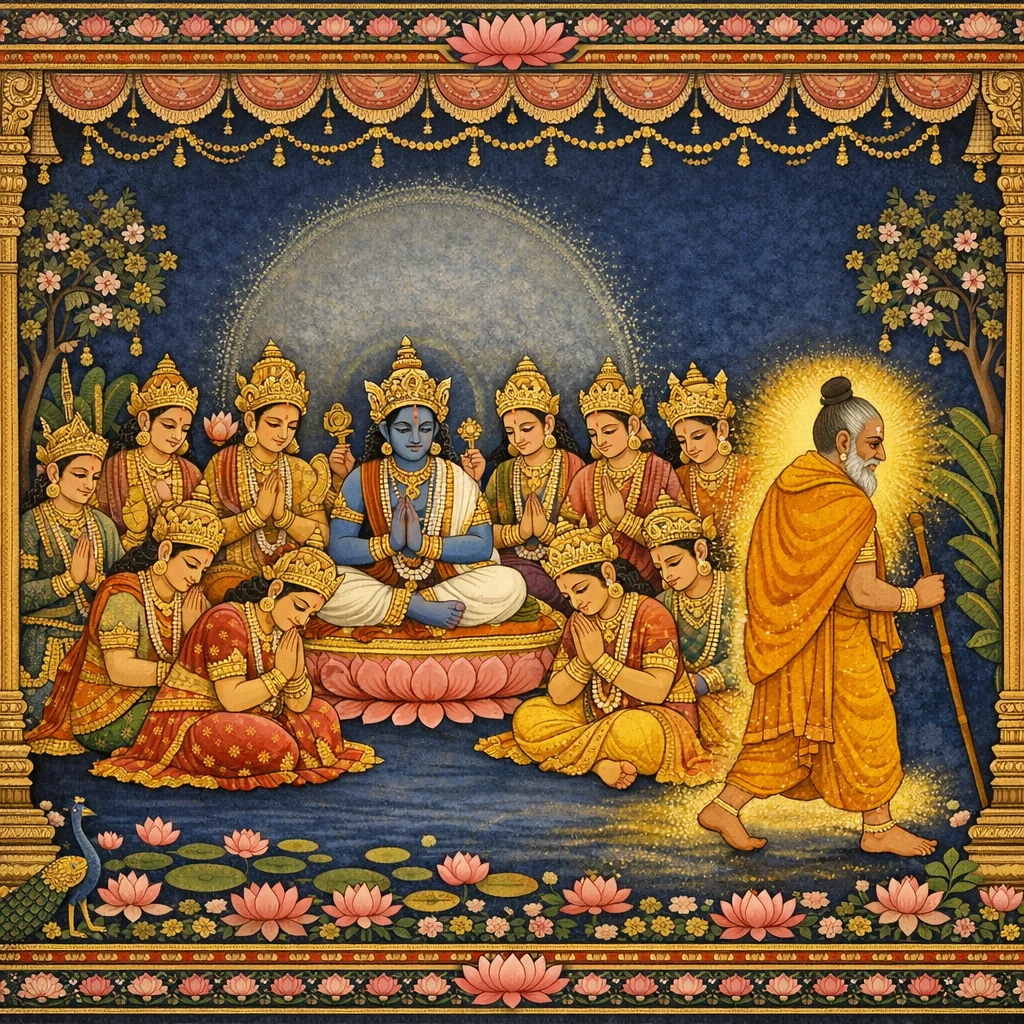
عقب تطوّرات صراع الدِّيفات مع الأسورات، ومع تركيز السِّكنده السادسة على الاستحقاق الباطني فوق المنزلة الظاهرية، يسأل مهاراجا باريكشيت شُكاديفا غوسوامي عن منعطف حاسم: لماذا انسحب بْرِهَسْبَتي، مُعلّم الدِّيفات، من تلاميذه. يفتتح هذا الفصل بتحديد ذنب الدِّيفات بأنه تقصير في الإكرام والانتباه اللائقين للغورو الروحي—وهو guru-aparādha نشأ من الكِبر بالمقام والانشغال بالسلطة السياسية. ومع رحيل بْرِهَسْبَتي يضعف السند الروحي للدِّيفات، فتتهيأ أسباب الاضطراب في الرأي والخطة، والالتباس الأخلاقي في صراعهم مع الأسورات. وهكذا يربط السرد بين تعاليم الكفّارة والتطهير وبين تدبير الحكم في السماء: فإذا أُهمِل أصل الدَّهارما—تعظيم الغورو والاعتماد على بهاجافان—اختلّ النظام الكوني. وتمضي وجهة الفصل إلى أن الدِّيفات سيطلبون مشورة بديلة، ثم يُساقون في النهاية إلى تواضع صادق واعتمادٍ متمحور حول فيشنو ضمن تطوّر قصة فْرِتْرَاسورا.
Shlokas
Frequently Asked Questions
Because the devas failed in proper guru-sevā and respect—an offense rooted in pride and neglect. In Bhāgavata theology, the guru is not merely an advisor but the channel of dharma and divine favor; when disciples disregard him, their spiritual potency and right judgment diminish, and their worldly power becomes unreliable.
They violated appropriate etiquette and honor toward him—treating the guru as secondary to courtly and political concerns. Such disrespect constitutes guru-aparādha, which is portrayed as spiritually corrosive: it blocks blessings, weakens protection (poṣaṇa), and invites disorder even among the devas.
Bṛhaspati’s withdrawal explains the devas’ ensuing vulnerability and missteps, preparing the ground for the larger lesson that victory depends on humility, proper shelter, and Viṣṇu’s will—not merely celestial weaponry. This moral causality culminates in the Vṛtrāsura episodes, where devotion and surrender overturn simplistic labels of ‘deva’ and ‘asura.’