
Shloka 12
Vibhuti Yoga — Vibhuti Yoga
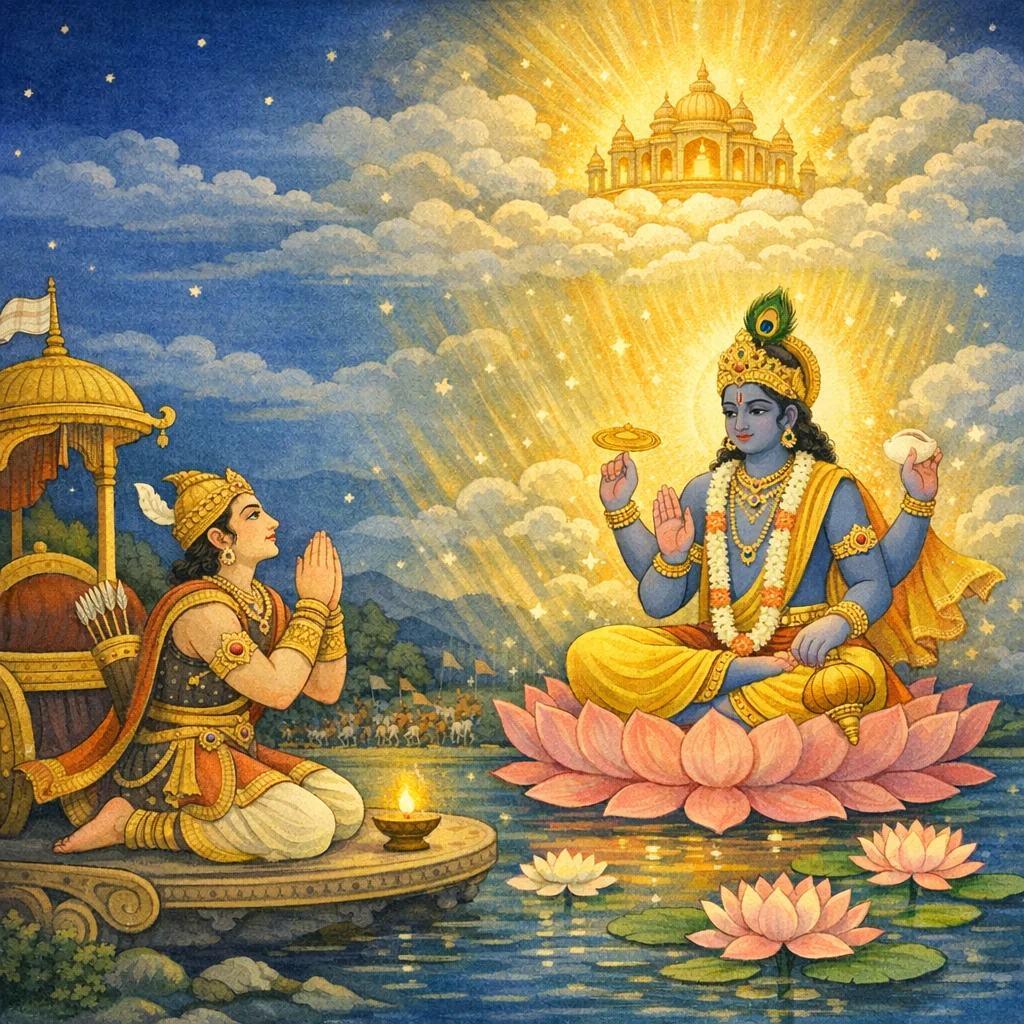
अर्जुन उवाच । परं ब्रह्म परं धाम पवित्रं परमं भवान् पुरुषं शाश्र्वतं दिव्यमादिदेवमजं विभुम् ॥ १०.१२ ॥
arjuna uvāca | paraṁ brahma paraṁ dhāma pavitraṁ paramaṁ bhavān | puruṣaṁ śāśvataṁ divyam ādidevam ajaṁ vibhum || 10.12 ||

Arjuna said: You are the Supreme Brahman, the supreme abode, the supremely pure; the eternal Divine Person, the primal God, unborn, all-pervading.
Arjuna said: You are the Supreme Brahman, the supreme abode, the supremely pure; the eternal divine Person, the primal God, unborn, all-pervading.
Arjuna said: You are the highest Brahman, the highest dwelling/place, the highest purity; the eternal divine Person—primeval deity, unborn, pervasive/powerful.
Interpretive differences concern theological emphasis: ‘Brahman’ can be read as impersonal absolute or as a supreme divine reality identified with Krishna. Vibhu is variously ‘all-pervading,’ ‘mighty,’ or ‘sovereign.’
FAQs
The verse exemplifies a shift from doubt to conviction: articulating a clear ‘highest value’ can consolidate purpose and reduce ambivalence in ethical action.
Arjuna identifies Krishna with the highest reality (Brahman) while also naming personal attributes (Puruṣa, ādideva), supporting a synthesis of absolute and personal conceptions of the divine.
Arjuna responds to Krishna’s teaching on divine manifestations by explicitly affirming Krishna’s supreme status, preparing for the detailed catalog of vibhūtis that follows.
As a reflective exercise, it can be used to clarify one’s conception of the ultimate (truth, goodness, or the divine), which can guide consistent decision-making and long-term commitments.