
Shloka 37
Sankhya Yoga — The Yoga of Knowledge
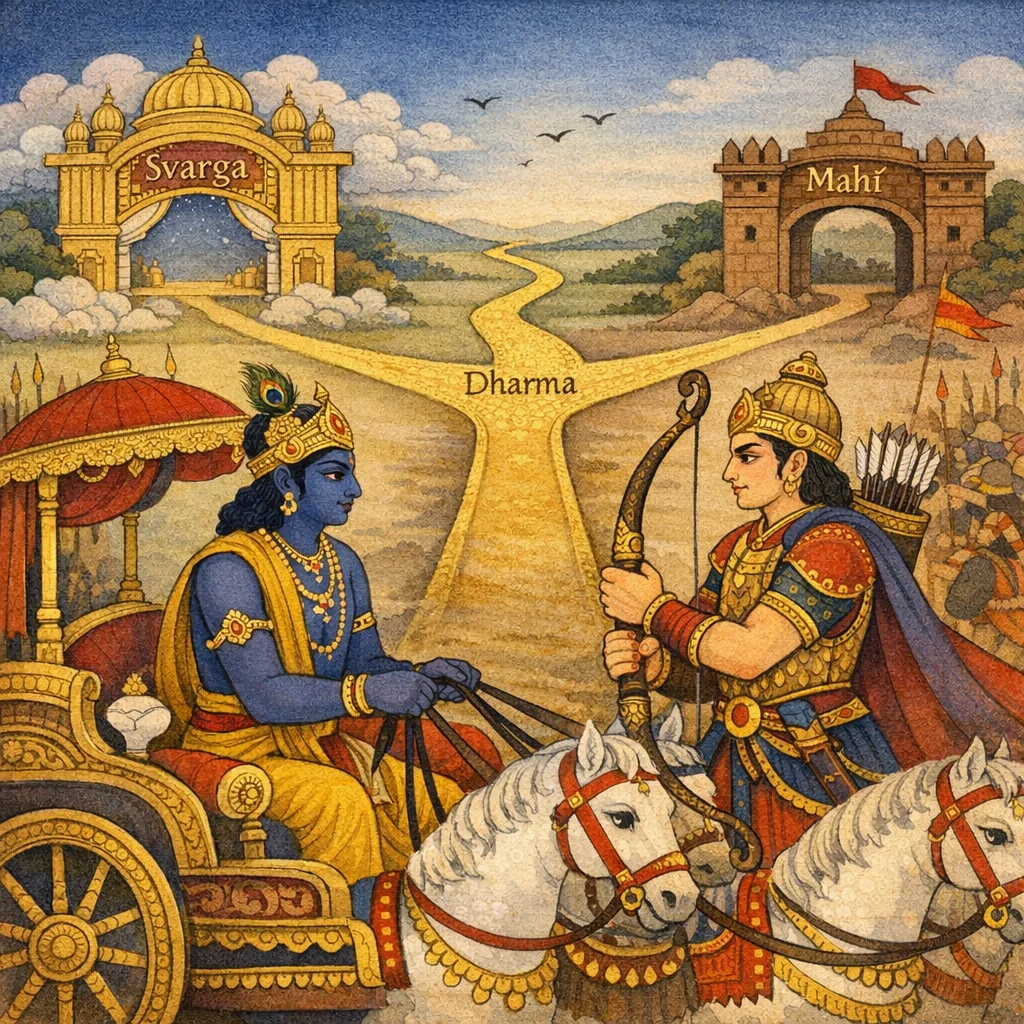
हतो वा प्राप्स्यसि स्वर्गं जित्वा वा भोक्ष्यसे महीम् । तस्मादुत्तिष्ठ कौन्तेय युद्धाय कृतनिश्चयः ॥
hato vā prāpsyasi svargaṁ jitvā vā bhokṣyase mahīm | tasmād uttiṣṭha kaunteya yuddhāya kṛta-niścayaḥ || 2.37 ||

If you are slain, you will attain heaven; if you conquer, you will enjoy the earth. Therefore arise, O son of Kuntī, with firm resolve for battle.
If you fall, you will attain heaven; if you prevail, you will enjoy the earth. Therefore, arise, O son of Kuntī, resolved for battle.
Whether slain you will reach heaven, or having prevailed you will enjoy the earth; therefore stand up, Kaunteya, with determination for the contest.
The verse employs a binary motivational structure common to epic exhortation: either outcome is presented as meaningful within the prevailing dharma framework (posthumous merit vs. worldly sovereignty). Interpreted metaphorically, it can signify commitment to one’s disciplined struggle regardless of outcome.
FAQs
It reduces paralysis by reframing outcomes: when both possible results are given meaning, anxiety about choosing diminishes and resolve becomes easier.
It presupposes a moral cosmos where actions bear results beyond a single lifetime (svarga as a reward framework), though later verses shift emphasis toward yoga and liberation beyond reward.
Krishna continues persuading Arjuna to act according to his social-religious duty as a warrior, presenting the decision as rational within the epic’s value system.
It can be read as commitment to a principled task despite uncertainty—focusing on disciplined effort rather than trying to guarantee a particular external result.