
Shloka 15
Purushottama Yoga — Purushottama Yoga
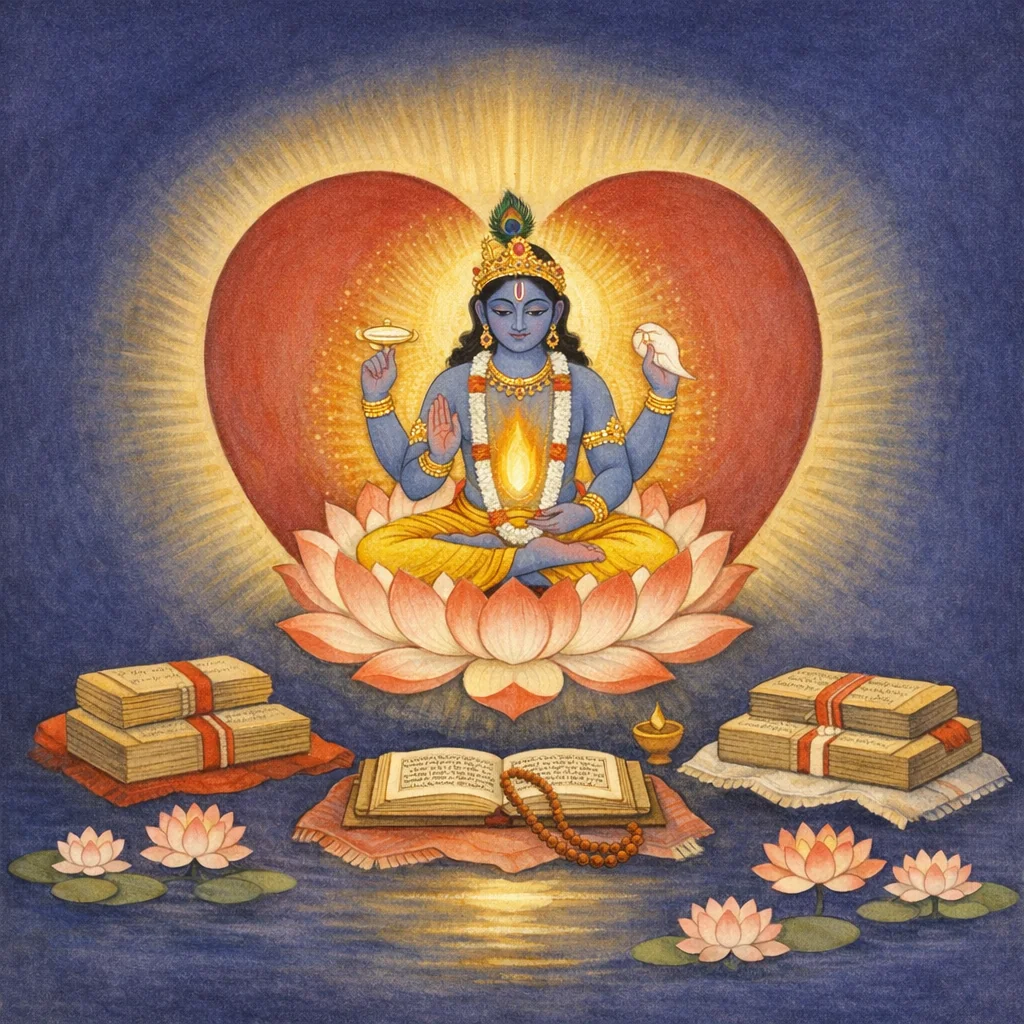
सर्वस्य चाहं हृदि संनिविष्टो मत्तः स्मृतिर्ज्ञानमपोहनं च ।
वेदैश्च सर्वैरहमेव वेद्यो वेदान्तकृद्वेदविदेव चाहम् ॥ १५.१५ ॥
sarvasya cāhaṃ hṛdi saṃniviṣṭo mattaḥ smṛtir jñānam apohanaṃ ca |
vedaiś ca sarvair aham eva vedyo vedānta-kṛd veda-vid eva cāham || 15.15 ||

I am seated in the heart of all; from Me arise memory, knowledge, and their loss. By all the Vedas I alone am to be known; I am the author of Vedānta and the knower of the Vedas as well.
मैं ही सबके हृदय में स्थित हूँ; मुझसे ही स्मृति, ज्ञान और विस्मृति होती है। समस्त वेदों द्वारा मैं ही जानने योग्य हूँ; मैं वेदान्त का कर्ता तथा वेदों का जानने वाला भी हूँ।
I am established in the heart of all; from me arise memory, knowledge, and also forgetting. By all the Vedas I alone am to be known; I am the maker of Vedānta and the knower of the Veda.
Some interpret ‘from me’ as divine causality over cognitive functions; others (especially in non-dualist readings) see it as the self as the condition for cognition. ‘Vedānta-kṛt’ can mean ‘composer/authoritative source of the end (purport) of the Veda’ rather than literal authorship.
FAQs
It frames cognition as conditioned: recall, understanding, and even lapses depend on deeper factors, encouraging humility and attentiveness in learning.
The verse presents the supreme as the inner ground enabling mental functions and as the ultimate object of Vedic knowing, linking inner experience with scriptural purpose.
It bridges cosmological immanence (15.12–14) with epistemic authority: the same principle sustaining the world also underwrites knowledge and the meaning of the Vedas.
It can be used to motivate reflective study: treat knowledge as ethically charged and aim learning toward integrative understanding rather than mere accumulation.