
Bhagavad Gita — Karma Sannyasa Yoga, Shloka 27
Karma Sannyasa Yoga
स्पर्शान्कृत्वा बहिर्बाह्यांश्चक्षुश्चैवान्तरे भ्रुवोः । प्राणापानौ समौ कृत्वा नासाभ्यन्तरचारिणौ ॥
sparśān kṛtvā bahir bāhyāṁś cakṣuś caivāntare bhruvoḥ | prāṇāpānau samau kṛtvā nāsābhyantara-cāriṇau ||

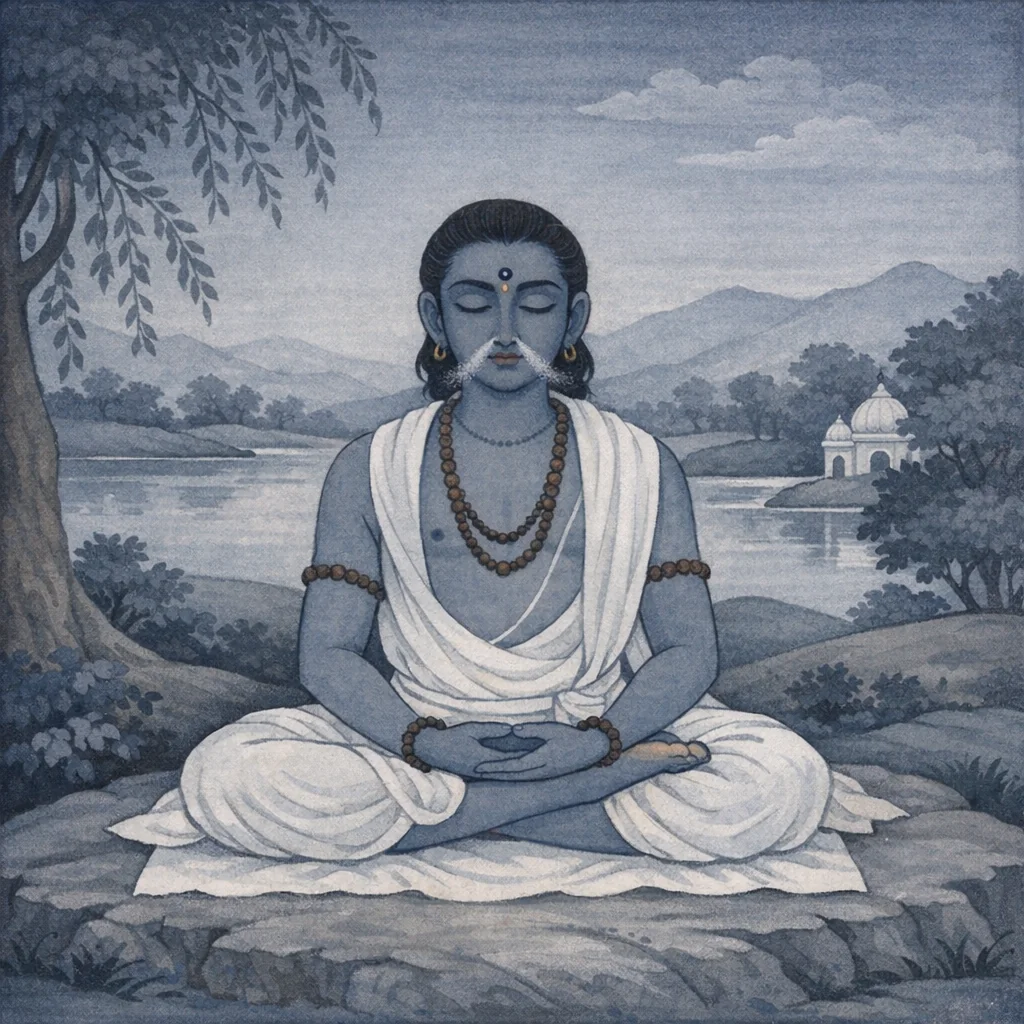
Having set aside external contacts—keeping the outer objects outside—fixing the gaze between the eyebrows, and making the in-breath and out-breath moving within the nostrils equal (he practices meditation-yoga).
बाह्य विषय-स्पर्शों को बाहर रखकर, दृष्टि को दोनों भौंहों के बीच स्थिर करके तथा नासिका के भीतर विचरने वाले प्राण और अपान को सम करके (ध्यान-योग का अभ्यास करता है)।
External sensory contacts having set aside, and the gaze fixed within between the eyebrows, making the in-breath and out-breath equal as they move within the nostrils.
This verse is largely stable across editions; interpretive differences mainly concern whether the instruction implies a specific yogic technique (e.g., breath retention) or a general meditative stabilization of attention and respiration.
FAQs
The verse describes attentional regulation: reducing reactivity to sensory stimuli and stabilizing gaze and breathing to support calm, sustained focus.
It functions as a practical bridge to liberation-oriented knowledge: by quieting sensory and respiratory fluctuations, the mind becomes fit for insight into the self (ātman) and detachment.
Placed at the end of Chapter 5, it complements the theme that inner renunciation can coexist with action; meditative discipline is presented as a means to peace.
It can be read as guidance for mindfulness practice: limit distractions, adopt a steady visual focus, and use even breathing to reduce stress and improve concentration.