
Bhagavad Gita — Gunatraya Vibhaga Yoga, Shloka 9
Gunatraya Vibhaga Yoga
सत्त्वं सुखे संजयति रजः कर्मणि भारत । ज्ञानमावृत्य तु तमः प्रमादे संजयत्युत ॥ १४.९ ॥
sattvaṁ sukhe sañjayati rajaḥ karmaṇi bhārata | jñānam āvṛtya tu tamaḥ pramāde sañjayaty uta || 14.9 ||

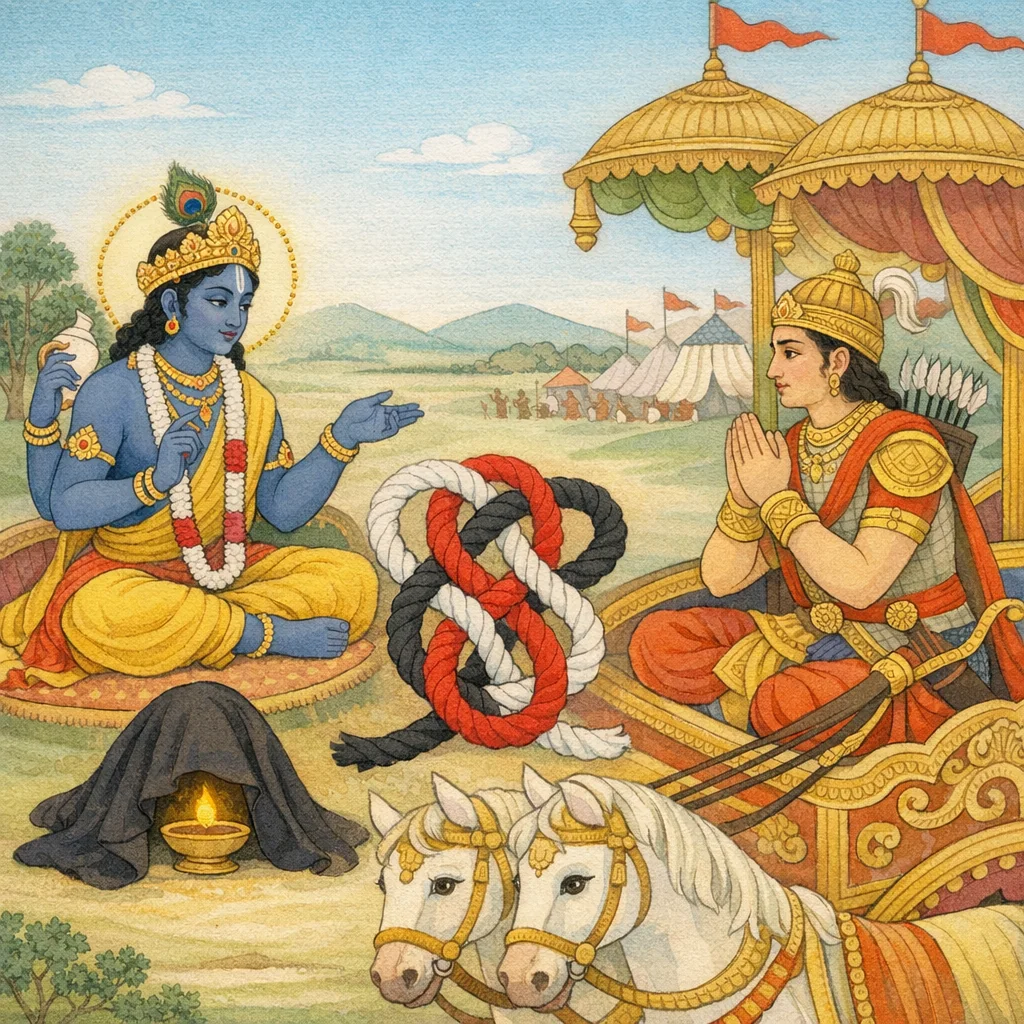
Sattva binds one to happiness, rajas to action, O Bhārata; but tamas, veiling knowledge, binds indeed to negligence.
Sattva binds one to happiness, rajas to action, O Bhārata; but tamas, veiling knowledge, binds to negligence.
Sattva fastens (the embodied being) to well-being/pleasure; rajas to activity; but tamas, after covering discernment/knowledge, fastens to heedlessness.
Key variation is whether sukha is ‘happiness’ (ethical-psychological) or ‘pleasure/well-being’ (phenomenological). ‘Jñāna’ can mean spiritual knowledge or cognitive clarity; most academic renderings keep it broad as ‘knowledge/discernment’.
FAQs
The verse distinguishes three habitual ‘anchors’: comfort-seeking (sattva), busyness/achievement orientation (rajas), and avoidance through inattentiveness (tamas).
Guṇas are presented as conditioning forces that ‘bind’ by making certain experiences and behaviors feel compelling, thereby sustaining identification with prakṛti.
It summarizes the functional effects of each guṇa, preparing for later verses that describe their signs, dominance, and post-mortem trajectories.
As a reflective tool, it helps identify whether one’s choices are driven primarily by comfort, compulsion to act, or diminished clarity and responsibility.