
Shloka 7
Dhyana Yoga — Atma Samyama Yoga
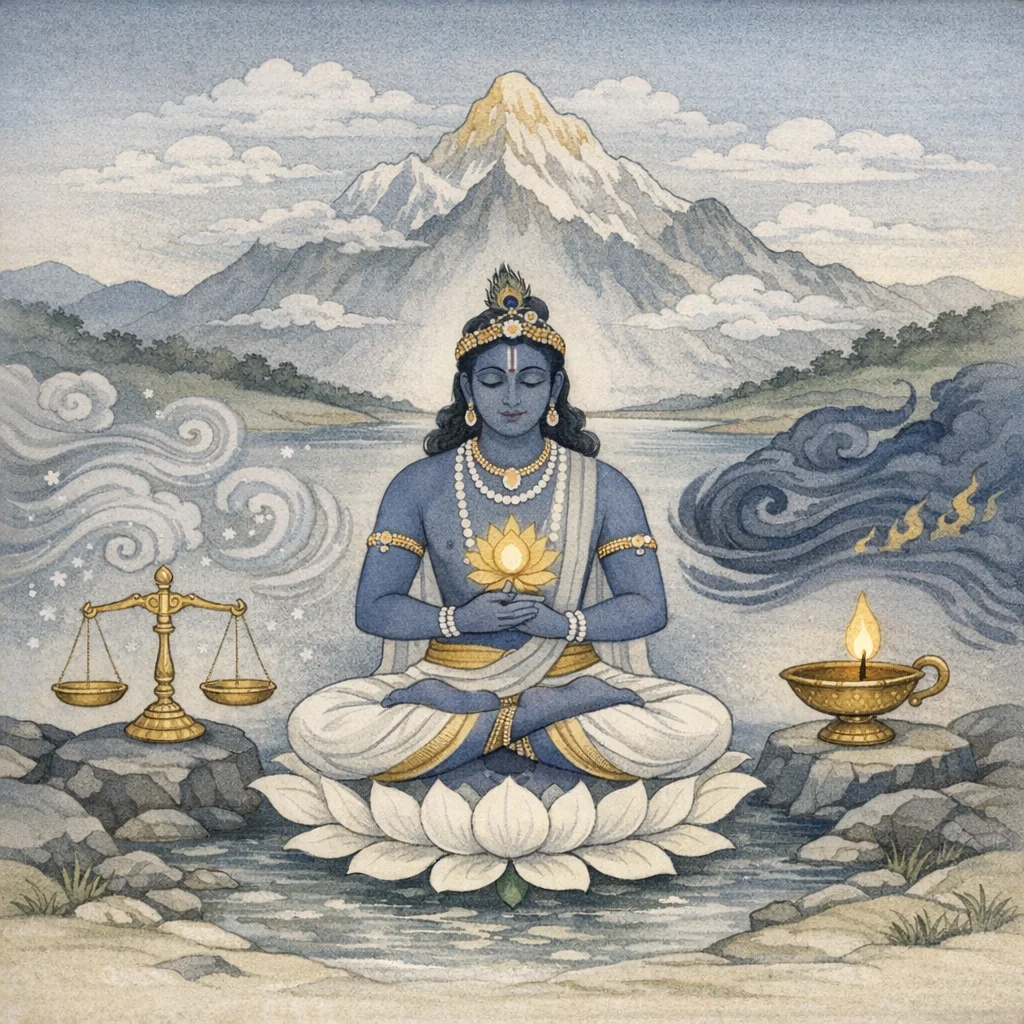
जितात्मनः प्रशान्तस्य परमात्मा समाहितः । शीतोष्णसुखदुःखेषु तथा मानापमानयोः ॥ ६.७ ॥
jitātmanaḥ praśāntasya paramātmā samāhitaḥ | śītoṣṇa-sukha-duḥkheṣu tathā mānāpamānayoḥ || 6.7 ||

For the self-controlled and tranquil one, the Supreme Self is firmly established; one remains even-minded amid cold and heat, pleasure and pain, and honor and dishonor.
जिसने अपने मन को जीत लिया है और जो शान्त है, उसका परमात्मा समाहित रहता है; (वह) शीत-उष्ण, सुख-दुःख तथा मान-अपमान में सम रहता है।
For one who has mastered oneself and is tranquil, the supreme self (paramātman) is firmly established; (he remains steady) amid cold and heat, pleasure and pain, and honor and dishonor.
“Paramātman” is read theistically (God present/established in the yogin) in some traditions, and as the highest self/ultimate reality realized in samādhi in others; the verse also functions ethically, describing equanimity under changing conditions.
FAQs
It portrays emotional resilience: the person remains balanced despite sensory discomforts and social evaluation, indicating reduced dependence on external validation.
The verse links inner tranquility with the presence/realization of the highest principle (paramātman), suggesting that steady consciousness is both a sign and support of realization.
Early in Chapter 6, it defines the yogin’s stable state, preparing for the detailed meditation instructions that follow.
Encourages cultivating steadiness amid discomfort and criticism/praise—useful for stress management, ethical consistency, and maintaining focus in demanding environments.