
Shloka 26
Dhyana Yoga — Atma Samyama Yoga
यतो यतो निश्चरति मनश्चञ्चलमस्थिरम् । ततस्ततो नियम्यैतदात्मन्येव वशं नयेत् ॥ ६.२६ ॥
yato yato niścarati manaś cañcalam asthiram | tatas tato niyamyaitad ātmany eva vaśaṁ nayet || 6.26 ||

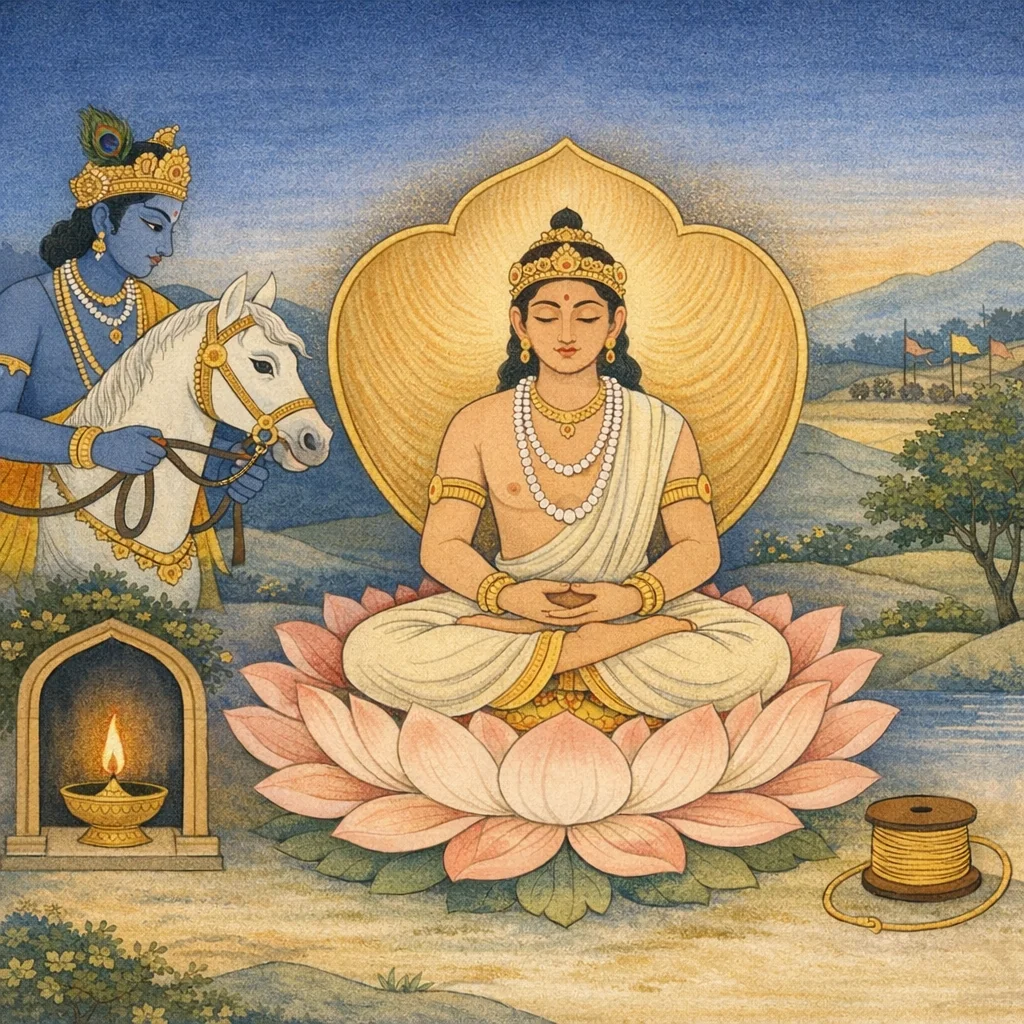
Wherever the restless and unsteady mind wanders, from there and there let him restrain it and bring it under control in the Self alone.
यह चंचल और अस्थिर मन जहाँ-जहाँ भटकता है, वहाँ-वहाँ से इसे रोककर केवल आत्मा में ही वश में करे।
From whatever direction the restless, unsteady mind wanders, from that very direction one should restrain it and bring it under control in the Self alone.
The verse emphasizes iterative redirection (‘tatas tato’). Some commentarial traditions read this as compassionate training (repeated return) rather than punitive control; ‘vaśaṁ nayet’ indicates mastery via habituation.
FAQs
It offers a realistic model of attention: distraction is expected, and progress is made through repeated, non-dramatic redirection back to the chosen center.
The ‘Self’ functions as the stable ground against which mental movement is noticed; returning to it supports recognition of a non-fluctuating basis of awareness.
This complements 6.25’s ‘gradual quieting’ by giving the operational instruction for moments when the mind inevitably strays.
In practice: label distraction, release it, and return. The verse supports a training loop rather than a perfectionist demand for uninterrupted focus.