
Shloka 23
Dhyana Yoga — Atma Samyama Yoga
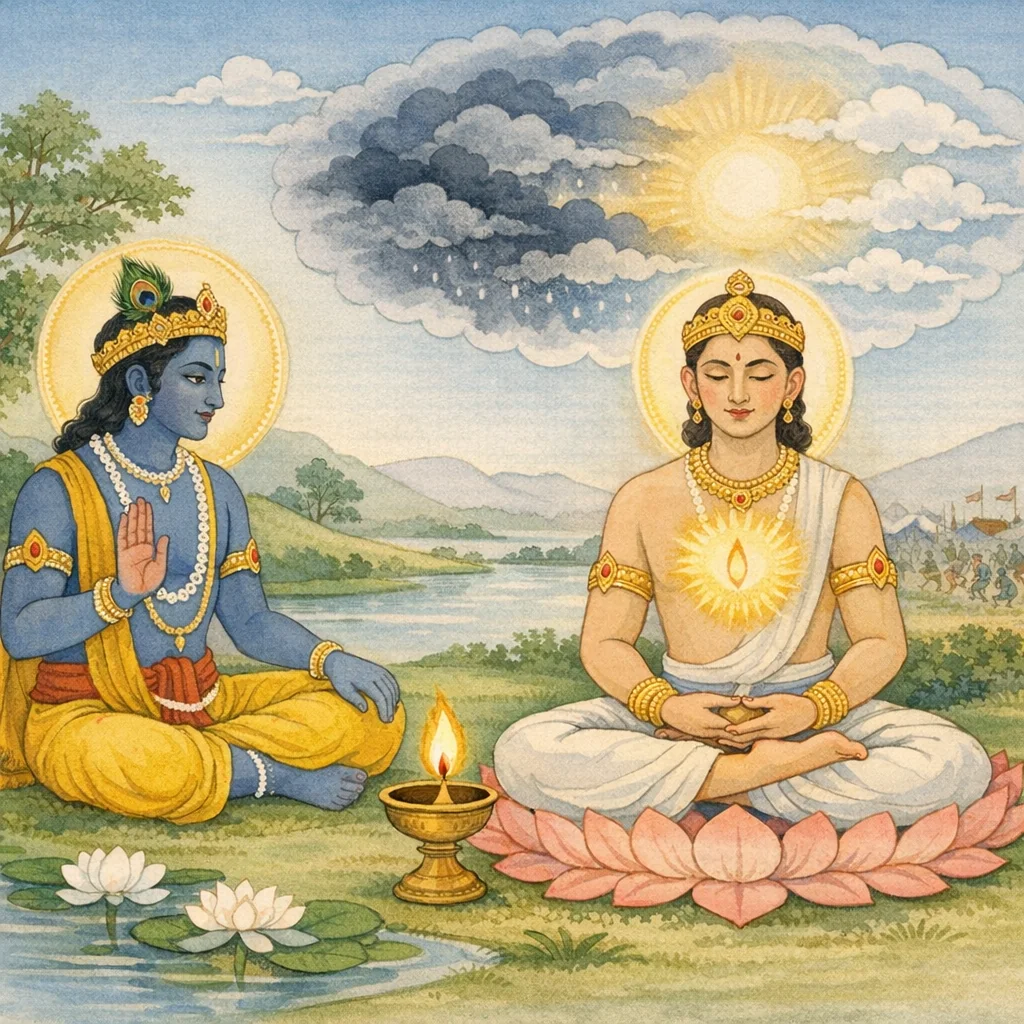
तं विद्यात् दुःखसंयोगवियोगं योगसंज्ञितम् ॥ ६.२३ ॥
taṁ vidyāt duḥkhasaṁyogaviyogaṁ yogasaṁjñitam || 6.23 ||

Know that to be Yoga—the disunion from the union with sorrow.
उस (अवस्था) को दुःख के संयोग से वियोग—‘योग’ नाम से जानना चाहिए।
One should know that (state) as ‘yoga’: the disconnection from the conjunction with suffering.
The compound ‘दुःखसंयोगवियोग’ is interpreted as a technical redefinition: yoga is not merely union but also ‘severance’ from the linkage to suffering. Some translators stress ‘freedom from suffering’ while others stress ‘freedom from the causes/attachments that bind one to suffering’.
FAQs
It reframes liberation as changing one’s relationship to distress: reducing the mental ‘bond’ that turns difficult experiences into pervasive suffering.
The verse implies that suffering is linked to misidentification and attachment (saṁyoga). Yoga is the undoing of that linkage through insight and disciplined practice.
After describing the stable meditative state (6.20–22), Krishna names it: yoga, understood as freedom from the binding connection to suffering.
Treat yoga as a method for weakening compulsive identification with thoughts and emotions—via meditation, ethical disciplines, and reflective inquiry.