
Shloka 15
Bhakti Yoga — Bhakti Yoga
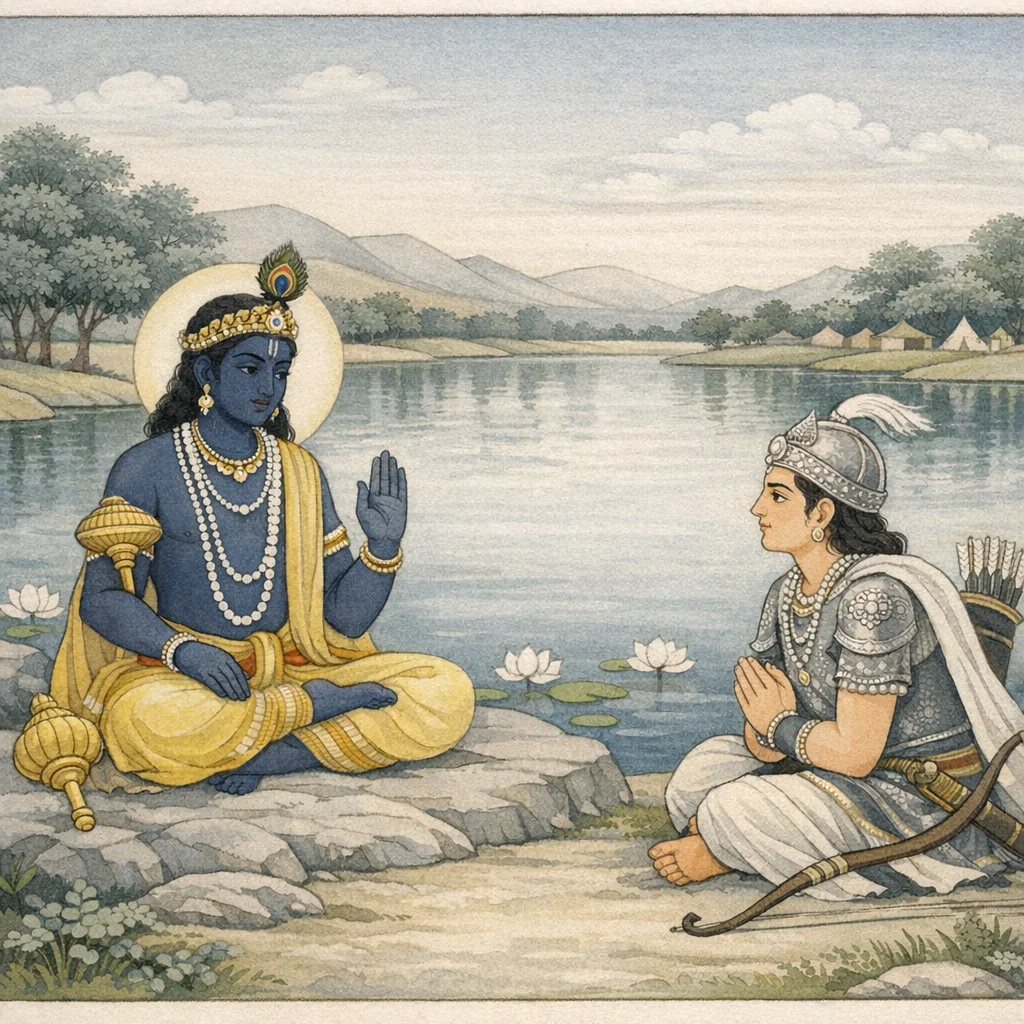
यस्मान्नोद्विजते लोको लोकान्नोद्विजते च यः । हर्षामर्षभयोद्वेगैर्मुक्तो यः स च मे प्रियः ॥ १२.१५ ॥
yasmān nodvijate loko lokān nodvijate ca yaḥ | harṣāmarṣa-bhayodvegair mukto yaḥ sa ca me priyaḥ || 12.15 ||

He by whom the world is not disturbed, and who is not disturbed by the world; who is free from exultation, resentment, fear, and agitation—he is dear to Me.
He from whom the world does not feel disturbed, and who is not disturbed by the world; who is free from elation, irritation, fear, and agitation—he is dear to Me.
One by whom people are not unsettled, and who is not unsettled by people; one freed from exhilaration, resentment, fear, and agitation—he too is dear to Me.
‘Loka’ can mean ‘people’ or ‘world’ broadly. ‘Amarṣa’ ranges from ‘impatience/irritation’ to ‘resentment’; translations vary in intensity. The emphasis is on non-reactivity and social non-disruptiveness rather than withdrawal.
FAQs
The verse describes a stable temperament: not provoking others and not being easily provoked, with reduced swings of excitement and agitation.
Freedom from fear and agitation is linked to diminished ego-attachment, a recurring Gītā motif for inner steadiness.
It refines the portrait of the devotee by emphasizing interpersonal impact and internal emotional freedom.
Develop non-reactive communication and stress-management skills so that social feedback does not dictate mood or behavior.