Adhyaya 23: Kuru’s Consecration and the Sanctification of Samantapañcaka (Kurukshetra)
समन्तपञ्चक-क्षेत्रमाहात्म्यं (Samantapañcaka-Kṣetra-Māhātmyam)
Sanctification of Samantapanchaka
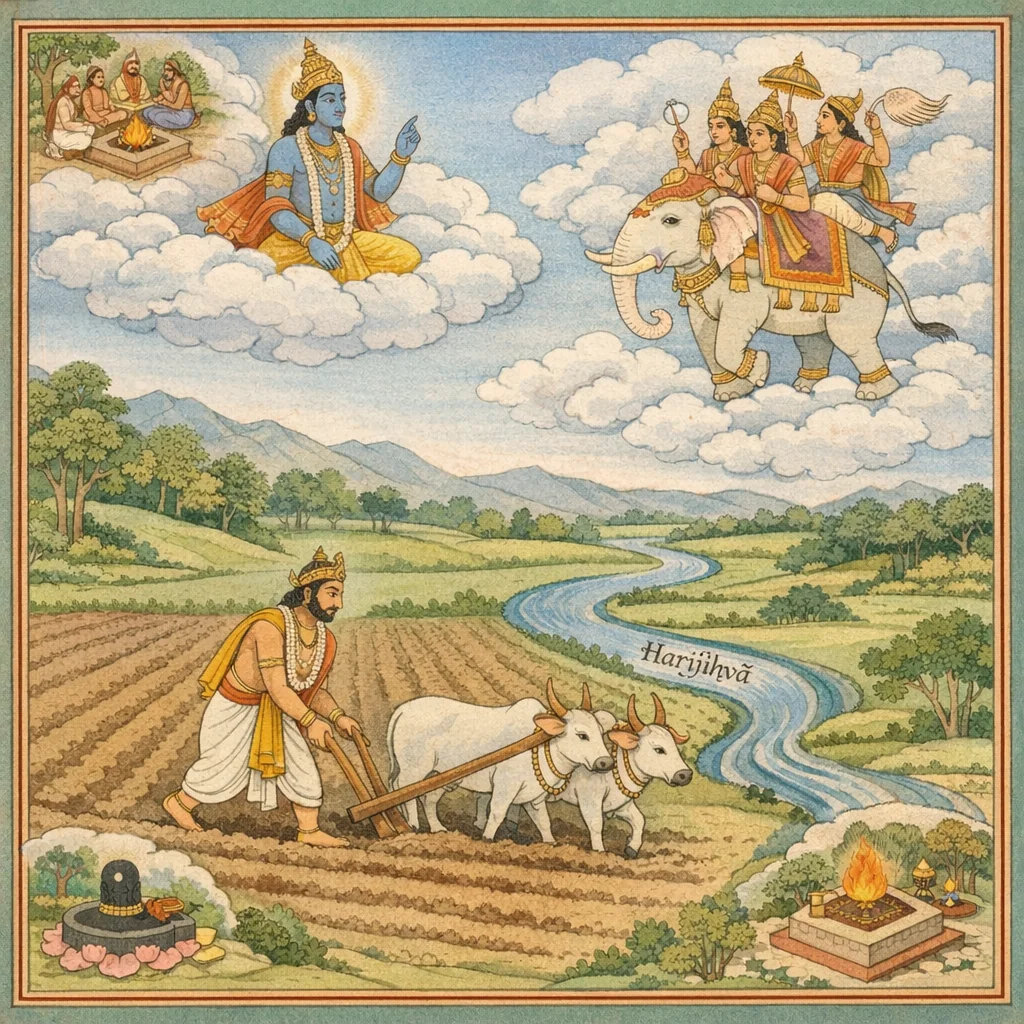
Within the Pulastya–Nārada narrative frame, this Adhyāya presents a paradigmatic act of topographical sanctification centered on Kurukṣetra, especially Samantapañcaka. The royal figure Kuru—born with ideal kṣatriya marks, ritually refined through saṃskāras, and installed as yuvarāja—embodies dharmic kingship as pastoral and agrarian guardianship (kṣetrapāla, paśupāla, prajā-pāla). His pilgrimage to Dvaitavana and encounter with the purifying Sarasvatī (Harijihvā) shifts the narrative from personal merit to landscape theology. The text then enumerates Brahmā’s five “vedīs” as dharma-setus, culminating in the northern, imperishable Samantapañcaka. In a striking syncretic theology, Indra’s intervention and Hari’s discourse frame Kuru’s ‘ploughing’ as the cultivation of aṣṭāṅga-dharma (tapas, satya, kṣamā, dayā, śauca, dāna, yoga, brahmacarya). Hari grants boons of akṣaya-phala, divine proximity, and enduring kīrti, while appointing powerful guardians and describing Pṛthūdaka as a central, sin-destroying tirtha—thereby fusing Vaiṣṇava grace with a broader, pan-deva sacred geography.
Divine Beings
Sacred Geography
Mortal & Asura Figures
Key Content Points
- Kuru’s life-cycle rites, education, marriage, and coronation establish the iconography of the ideal dharmic king who protects land, cattle, and subjects.
- Pilgrimage geography: Dvaitavana and the Sarasvatī (Harijihvā) are introduced as purificatory nodes leading into the Kurukṣetra complex.
- Brahmā’s five vedīs (dharma-setus) are enumerated; Samantapañcaka is identified as the northern, imperishable vedi and supreme dharma-sthāna.
- Kuru’s symbolic ‘ploughing’ of the field is reinterpreted as cultivating aṣṭāṅga-dharma; Hari grants akṣaya merit for rites (snāna, dāna, upavāsa, japa, homa/yajña) performed there.
- Institutionalization of the tirtha: appointment of guardians (yakṣa, nāga, vidyādhara, rākṣasa, etc.) and the centrality of Pṛthūdaka as pāpahara and śiva-puṇya waters.
Shlokas in Adhyaya 23
Verse 1
देवदेव उवाच तस्यां तपत्यां नरसत्तमेन जातः सुतः पार्थिवलक्षणस्तु स जातकर्मादिभिरेव संस्कृतो विवर्द्धताज्येन हुतो यथाग्निः
Devadeva said: In that (lady) Tapatī, by the best of men, a son was born, bearing the marks of a king. He was duly refined by the birth-rites beginning with the jāta-karma; and he grew, like fire that is fed with increasing ghee.
Verse 2
कृतो ऽस्य चूडाकरणश्च देवा विप्रण मित्रावरुणात्मजेन नवाब्दिकस्य व्रतबन्धनं च वेदे च शास्त्रे विधिपारगो ऽबूत्
O gods, his tonsure (cūḍākaraṇa) was performed by a brāhmaṇa, the son of Mitra and Varuṇa. When he was nine years old, his initiation into the vow (upanayana / vrata-bandhana) was also done; and he became one who had crossed to the far shore of proper procedure in the Veda and in the śāstras.
Verse 3
ततश्चतुःपड्भिरपीह वर्षैः सर्वज्ञतामभ्यगमत ततो ऽसौ ख्यातः पृथिव्यां पुरुषोत्तमो ऽसौ नाम्ना कुरुः संवरणस्य पुत्रः
Then, even within four or five years here, he attained omniscience (i.e., comprehensive knowledge). Thereafter he became renowned on earth as an excellent man; by name he was Kuru, the son of Saṃvaraṇa.
Verse 4
ततो नरपतिर्दृष्ट्वा धर्मिकं तनयं शुभम् दारक्रियार्थमकरोद् यत्नं शुभकुले ततः
Then the king, seeing his auspicious and righteous son, made an effort for the purpose of arranging his marriage, seeking a noble family.
Verse 5
सोदामिनीं सुदाम्नस्तु सुतां रूपाधिकां नपः कुरोरर्थाय वतवान् स प्रादात् कुरवे ऽपि ताम्
That king, having resolved (so), gave to Kuru as well Sūdāman’s daughter Sūdāminī, who was of surpassing beauty, for Kuru’s sake (as a marriage alliance).
Verse 6
स तां नृपसुतां लब्ध्वा धर्मार्थावविरोधयन् रेमे तन्व्या सह तया पौलोम्या मघवानिव
Having obtained that princess, he delighted with her—slender of form—without setting dharma and artha at odds, like Maghavān (Indra) with Paulomī (Śacī).
Verse 7
ततो नरपतिः पुत्रं राज्यभारक्षमं बली विदित्वा योवराज्याय विधानेनाभ्यषेचयत्
Then the king, recognizing his son Bali as capable of bearing the burden of the kingdom, duly anointed him to the position of heir-apparent (crown prince) according to prescribed rites.
Verse 8
ततो राज्ये ऽभिषिक्तस्तु कुरुः पित्रा निजे पदे पालयामास स महीं पुत्रवच्च स्वयं प्रजाः
Then Kuru, having been anointed to kingship by his father in his own rightful position, protected the earth and personally cared for the subjects as if they were his own children.
Verse 9
स एव क्षेत्रपालो ऽभूत् पशुपालः स एव हि स सर्वपालकश्चासीत् प्रजापालो महाबलः
He alone became the protector of the territory; he indeed was the protector of cattle as well. He was a guardian of all, a protector of the people, endowed with great strength.
Verse 10
ततो ऽस्य बुद्धिरुपन्ना कीर्तिर्लोके गरीयसी यावत्कीर्तिः सुसंस्था हि तावद्वासः सुरैः सह
Then his resolve became firm, and his fame in the world grew weighty. For as long as fame remains well-established, so long is one’s dwelling (as if) together with the gods.
Verse 11
स त्वेवं नृपतिश्रेष्ठो याथातथ्यमवेक्ष्य च विचचार महीं सर्वां कीर्त्यर्थं तु नराधिपः
Thus that best of kings, having examined matters as they truly were, the ruler roamed over the entire earth for the sake of renown.
Verse 12
ततो द्वैतवनं नाम पुण्यं लोकेश्वरो बली/ तदासाद्य सुसंतुष्टो विवेशाभ्यान्तरं ततः
Then the powerful lord of the people reached the holy place called Dvaitavana; having arrived there and becoming well-pleased, he entered its inner region.
Verse 13
तत्र देवीं ददर्शाथ पुण्यां पापविमोचनीम् प्लक्षजां ब्रह्मणः पुत्रीं हरिजिह्वां सरस्वतीम्
There he then beheld the Goddess Sarasvatī—holy, the remover of sins—born of the plakṣa (tree), the daughter of Brahmā, and famed as “Hari’s tongue.”
Verse 14
सुदर्शनस्य जननीं ह्वन्दं कृत्वा सुविस्तरम् स्थितां भगवतीं कूले तीर्थकोटिभिराप्लुताम्
He beheld the Blessed Goddess, the mother of Sudarśana, having formed a broad expanse (of water), standing upon the bank, flooded/filled with crores of tīrthas.
Verse 15
तस्यास्तज्जलमीक्ष्यैव स्नात्वा प्रीतो ऽभवन्नृपः समाजगाम च पुनः ब्रह्मणो वेदिमुत्तराम्
On merely seeing her water, the king bathed and became pleased; and then he went again to the northern altar of Brahmā.
Verse 16
समन्तपञ्चकं नाम धर्मस्थानमनुत्तमम् आकमन्ताद् योजनानि पञ्च च सर्वतः
There is an unsurpassed holy seat of Dharma called Samantapañcaka; from Ākamanta it extends five yojanas in every direction.
Verse 17
देवा ऊचुः कियन्त्यो वेदयः सन्ति ब्रह्मणः पुरुषोत्तम येनोत्तरतया वेदिर्गादिता सर्वपञ्चका
The Devas said: “O Puruṣottama, how many altars (vedis) belonging to Brahmā are there—by which the northern altar is proclaimed as ‘all-five-fold’ (sarvapañcakā)?”
Verse 18
देवदेव उवाच/ वेदयो लोकनाथस्य पञ्च धर्मस्य सेतवः यासु यष्टं सुरेशेन लोकनाथेन शंभुना
The Lord of gods said: “The altars of the Lord of the world are five—bridges (supports) of Dharma—upon which sacrifice was performed by Śaṃbhu, the Lord of the world, the ruler of the gods.”
Verse 19
प्रयागो मध्यमा वेदिः पूर्वा वेदिर्गयाशिरः विरजा दक्षिणा वेदिरनन्तफलदायिनी
Prayāga is the central vedi. The eastern vedi is (called) Gayāśiras. The southern vedi is Virajā, the bestower of endless fruits (merits).
Verse 20
प्रतीची पुष्करा वेदिस्त्रिभिः कुण्डैरलङ्कृता समन्तपञ्चका चोक्ता वेदिरेवोत्तराव्यया
The western vedi is Puṣkarā, adorned with three kuṇḍas (sacred pools). The northern vedi is indeed called Samantapañcakā, imperishable (ever-abiding).
Verse 21
तममन्यत राजर्षिरिदं क्षेत्रं महाफलम् करिष्यामि कृषिष्यामि सर्वान् कामान् यथेप्सितान्
Then the royal sage thought: ‘This sacred field yields great fruit. I shall work it; I shall cultivate it, (thereby attaining) all desires as wished.’
Verse 22
कृत्वा सीरं स सौवर्णं गह्य रुद्रवृषं प्रभुः पौण्ड्रकं याम्यमहिषं स्वयं कर्षितुमुद्यतः
He had a golden plough made; taking (yoking) the bull named Rudravṛṣa and the buffalo of Yama named Pauṇḍraka, the lord/king set out to plough by himself.
Verse 23
तं कर्षन्तं नरवरं समभ्येत्य तक्रतुः प्रोवाच राजन् किमिदं भवान् कर्तुमिहोद्यतः
Approaching that foremost of men as he was ploughing, Takratu said: ‘O king, what is it that you are intent on doing here?’
Verse 24
तं कर्षन्तं नरवरं समभ्येत्य शतक्रतुः प्रोवाच राजन् किमिदं भवान् कर्तुमिहोद्यतः
Seeing that best of men engaged in ploughing/dragging (the field), Śatakratu (Indra) approached him and said: “O King, what is this that you are intent on doing here?”
Verse 25
राजाब्रवीत् सुरवरं तपः सत्यं क्षमां दयाम् कृषामि शौचं दानं च योगं च ब्रह्मचारिताम्
The king said to the best of the gods: “I cultivate (as if ploughing) austerity, truth, forgiveness, and compassion; purity, charity, yoga, and the practice of brahmacarya.”
Verse 26
तस्योवाच हरिर्देवः कस्माद्बीजो नरेश्वर लब्धो ऽष्टाङ्गेति सहसा अवहस्य गतस्ततः
Then Hari, the Lord, said to him: “O king, from where did you obtain the ‘seed’ called the eightfold (aṣṭāṅga)?” Having spoken, he suddenly laughed (or smiled derisively) and departed from there.
Verse 27
गते ऽपि शक्र राजर्षिरहन्यहनि सीरधृक् कृषते ऽन्यान् समन्ताच्च सप्तक्रोशान् महीपतिः
Even after Śakra (Indra) had departed, the royal sage—the king—bearing the plough, day after day continued to till other tracts of land all around, extending to seven krośas in every direction.
Verse 28
ततो ऽहमब्रुवं गत्वा कुरो किमिदमित्यथ तदाष्टाङ्गं महाधर्मं समाख्यातं नृपेण हि
Then I went and asked, ‘O Kuru, what is this?’ Thereupon, indeed, the king explained to me the great dharma consisting of eight limbs.
Verse 29
ततो मयास्य गदितं नृप बीजं क्व तिष्ठति स चाह मम देहस्थं बीजं तमहमब्रुवम् देह्यहं वापयिष्यामि सीरं कृषतु वै भवान्
Then I said to him, ‘O king, where is the seed kept?’ He replied, ‘The seed is within my body.’ Then I said to him, ‘Give it; I shall sow it—do you indeed plough with the plough.’
Verse 30
ततो नृपतिना बाहुर्दक्षिणः प्रसृतः कतः प्रसृतं तं भुजं दृष्ट्वा मया चक्रेण वेगतः
Then the king extended his right arm. Seeing that arm stretched out, I swiftly struck it with the discus (cakra).
Verse 31
सहस्रधा ततश्छिद्य दत्तो युष्माकमेव हि ततः सव्यो भुजो राज्ञा दत्तश् छिन्नो ऽप्यसौ मया
Then, having cut it into a thousand pieces, it was indeed given to you. Thereafter the king gave his left arm as well—though that too was cut off by me.
Verse 32
तथैवोरुयुगं प्रादान्मया छिन्नौ च तावुभौ ततः स मे शिरः प्रादात् तेन प्रीते ऽस्मि तस्य च वरदो ऽस्मीत्यथेत्युक्ते कुरुर्वरमयाचत
In the same way he offered the pair of thighs, and I cut both of them off. Then he offered me his head; by that I was pleased with him. When it was said, ‘I am a giver of boons,’ the Kuru (king) asked for a boon.
Verse 33
यावदेतन्मया कृष्टं धर्मक्षेत्रं तदस्तु च स्नातानां च मृतानां च महापुण्यफलं त्विह
“So long as this (land) has been ploughed by me, let it indeed be a field of dharma. For those who bathe here, and even for those who die here, there is the fruit of great merit.”
Verse 34
उपवासं च दानं च स्नानं जप्यं च माधव होमयज्ञादिकं चान्यच्छुभं वाप्यशुभं विभो
“O Mādhava, fasting, gifting, bathing, and recitation; and also other acts such as homa and yajña—whether auspicious or even inauspicious, O Lord—(are all considered in relation to this sacred context).”
Verse 35
त्वत्प्रसाद्धृषीकेश शङ्खचक्रगदाधर अक्षयं प्रवरे क्षेत्रे भवत्वत्र महाफलम्
“By your grace, O Hṛṣīkeśa, bearer of conch, discus, and mace—may there be, in this excellent sacred field, an imperishable (akṣaya) great fruit.”
Verse 36
तथा भवान् सुरैः सार्धं समं देवेन शलिना वस त्वं पुण्डरीकाक्ष मन्नामव्यञ्जके ऽच्युत इत्येवमुक्तस्तेनाहं राज्ञा बाढमुवाच तम्
“So too may you, together with the gods, dwell equally with that glorious Deity. O lotus-eyed (Lord), O Acyuta, dwell in the place that bears my name.” Thus addressed by that king, I replied to him: “So be it.”
Verse 37
तथा च त्वं दिव्यवपुर्भव भूयो महीपते तथान्तकाले मामेव लयटमेष्यसि सुव्रत
“And so, O lord of the earth, become again possessed of a divine body. And likewise, at the time of death, O you of good vows, you shall come to absorption in Me alone.”
Verse 38
कीर्तिश्च शाश्वती तुभ्यं भविष्यति न संशयः तत्रैव याजका यज्ञान् यजिष्यन्ति सहस्रशः
“And for you there will be everlasting fame—no doubt. And there itself, officiating priests will perform sacrifices by the thousands.”
Verse 39
तस्य क्षेत्रस्य रक्षार्थं ददौ स पुरुषोत्तमः यक्षं च चन्द्रनामानं वासुकिं चापि पन्नगम्
For the protection of that sacred region (kṣetra), that Supreme Person appointed (as guardians) the Yakṣa named Candra and also Vāsuki, the serpent (pannaga).
Verse 40
विद्याधरं शङ्कुकर्णं सुकेशिं राक्षसेश्वरम् अजावनं च नृपतिं महोदेवं च पावकम्
(He appointed as guardians) the Vidyādhara named Śaṅkukarṇa, Sukeśin the lord of the Rākṣasas, and also Ajāvana the king, and Mahodeva, and Pāvaka (Fire).
Verse 41
एतानि सर्वतो ऽभ्येत्य रक्षन्ति कुरुजाङ्गलम् अमीषां बलिनो ऽन्ये च भृत्याश्चैवानुयायिनः
Approaching it from all sides, these (guardians) protect Kurujāṅgala; and others too—strong attendants and followers of theirs—(also protect it).
Verse 42
अष्टौ सहस्राणि धरनुर्धराणां ये वारयन्तीह सुदुष्कृतान् वै स्नातुं न यच्छन्ति महोग्ररूपास्तवन्यस्य भूताः सचराचराणाम्
Here there are eight thousand mighty bearers of the earth (guardian beings) who restrain the truly wicked; of exceedingly terrible form, they do not allow them to bathe—these beings belonging to that Lord, (protecting) all creatures, moving and unmoving.
Verse 43
तस्यैव मध्ये बहुपुण्य उक्तः पृथूदकः पापहरः शिवश्च पुण्या नदी प्राङ्मुखतां प्रयाता यत्रौघयुक्तस्य शुभा जताढ्या
In the very midst of that (sacred region), Pṛthūdaka is declared to be of great merit—sin-destroying and auspicious. A holy river there flows facing east; (it is) of auspicious current and rich with matted locks (i.e., associated with ascetic/Śaiva sanctity).
Verse 44
पूर्वं प्रजेयं प्रपितामहेन सृष्टा समं भूतगणैः समस्तैः मही जलं वह्निसमीरमेव खं त्वेवमादौ विबभौ पृथूदकः
Formerly, by the Grandsire (Brahmā), creation was brought forth along with all the hosts of beings; earth, water, fire, wind, and space—thus, in the beginning, Pṛthūdaka came into manifestation.
Verse 45
तथा च सर्वाणा महार्णवानि तीर्थानि नद्यः स्त्रवणाः सरांसि संनिर्मितानीह महाभुजेन तच्चैक्यमागात् सलिलं महीषु
“Thus, all the great oceans, the sacred fords (tīrthas), rivers, flowing streams, and lakes were fashioned here by the Mighty-armed One; and that water came to be gathered into a single unity upon the earth.”
Frequently Asked Questions
Hari/Viṣṇu functions as the ultimate grantor of boons (akṣaya-phala, divine proximity, final laya into Hari), yet the chapter simultaneously frames the landscape through Brahmā’s vedīs (dharma-setus) and Indra’s presence, and it labels Pṛthūdaka as both pāpahara and śiva-puṇya. The result is a pan-deva sacred geography anchored by Vaiṣṇava grace rather than sectarian exclusion.
Samantapañcaka is identified as the northern, imperishable vedi and anuttama dharma-sthāna within Kurukṣetra. Pṛthūdaka is described as a central, highly meritorious water-body (bahu-puṇya), explicitly pāpahara and auspicious; rites such as snāna, upavāsa, dāna, japa, and homa/yajña performed in this ‘pravara kṣetra’ are declared to yield akṣaya results, extending even to the merit of those who die there.
Kuru’s agricultural act is allegorized as the cultivation of aṣṭāṅga-dharma—tapas, satya, kṣamā, dayā, śauca, dāna, yoga, and brahmacarya—thereby converting land-clearing into moral-ritual labor. Hari’s response universalizes the field as a merit-engine: any auspicious practice performed there becomes enduring (akṣaya), and Kuru’s fame is promised as śāśvatī.