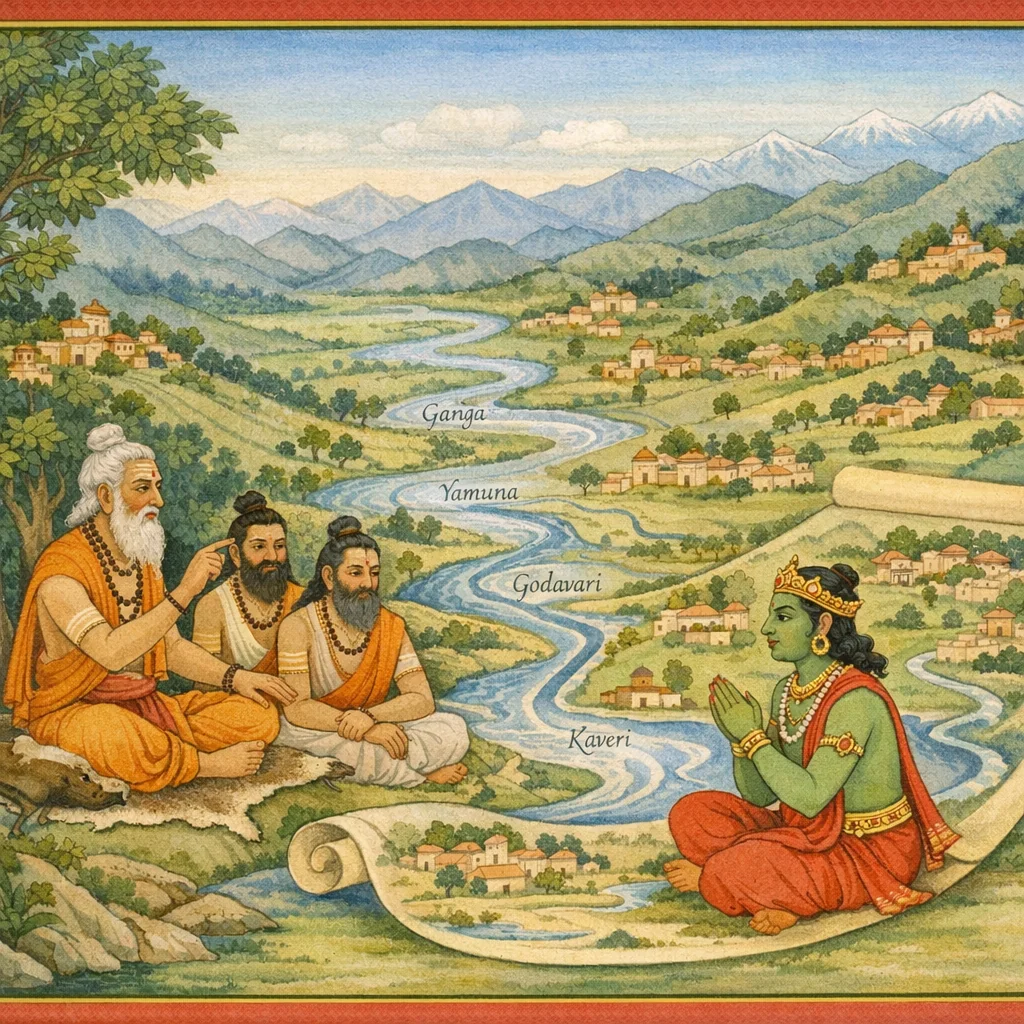
Adhyaya 13: The Structure of Jambudvipa: Nine Varshas, Navadvipa Bharata, Mountains, Rivers, and Peoples
जम्बूद्वीप-वर्ष-नदी-जनपद-वर्णन (Jambūdvīpa–Varṣa–Nadī–Janapada–Varṇana)
Nine Varshas and Sacred Geography
Within the Purāṇic dialogue-frame traditionally attributed to the Pulastya–Nārada transmission, this Adhyāya shifts from the prior account of Puṣkaradvīpa to a systematic topographical sanctification of Jambūdvīpa. The sages answer Sukeśi by mapping the nine varṣas (Ilāvṛta at the center, with Bhārata in the south) and by distinguishing Bhārata as the karmabhūmi where puṇya–pāpa, varṇāśrama duties, and the pursuit of svarga and apavarga operate. In contrast, the other varṣas are portrayed as free from yuga-conditions, aging, and death, indicating a cosmographic hierarchy of realms. The chapter then narrows to Bhārata as navadvīpa, bounded by seas and populated by diverse janapadas, including frontier and mleccha groups, thereby preserving an ethnographic memory alongside sacred cartography. Finally, it enumerates kulaparvatas and extensive river systems—many explicitly sourced from Himavat, Vindhya, and Sahya—presenting rivers as purifying “mothers of the world.” Though not a Harihara episode, the syncretic theology appears structurally: cosmic order, ritual action, and liberation are integrated through geography, where pilgrimage and dharma become mutually reinforcing pathways.
Sacred Geography
Mortal & Asura Figures
Key Content Points
- Cosmographic schema of Jambūdvīpa: nine varṣas with Ilāvṛta at the center and Bhārata as the southern karmabhūmi.
- Doctrinal contrast between Bhārata (domain of puṇya–pāpa, svarga/apavarga via varṇa-based duties) and the other varṣas (absence of yuga-conditions, jarā, and mṛtyu).
- Sacred geography and ethnography of Bhārata: navadvīpa framing, boundary peoples, extensive lists of kulaparvatas, rivers, and janapadas tied to major mountain systems (Himavat, Vindhya, Sahya).
Shlokas in Adhyaya 13
Verse 1
इति श्रीवामनपुराणे द्वादशो ऽध्यायः सुकेशिरुवाच भवद्भिरुदिता घोरा पुष्करद्वीपसंस्थितिः जम्बूद्वीपस्य संस्थानं कथयन्तु महर्षयः
“Thus ends the twelfth chapter of the Śrī Vāmana Purāṇa. Sukeśi said: ‘You have described the formidable arrangement of Puṣkaradvīpa. Now, O great sages, please describe the layout/structure of Jambūdvīpa.’”
Verse 2
ऋषय ऊचुः जम्बूद्वीपस्य संस्थानं कथ्यमानं निसामय नवभेदं सुविस्तीर्णं स्वर्गसोक्षफलप्रदम्
“The sages said: ‘Listen to the description of Jambūdvīpa’s layout as it is being told—vastly extensive, divided into nine sections, and bestowing the fruits of heaven and liberation.’”
Verse 3
मध्ये त्विलावृतो वर्षो भद्रश्वः पूर्वतो ऽद्भुतः पूर्व उत्तरतश्चापि हिरण्यो राक्षसेश्वर
In the middle lies the Ilāvṛta region. To the east is the wondrous Bhadrāśva. To the north-east is Hiraṇya, the lord of the Rākṣasas.
Verse 4
पूर्वदक्षिणतश्चापि किंनरो वर्ष उच्यते भारतो दक्षिणे प्रोक्तो हरिर्दक्षिणपशचिमे
To the south-east is said to be the Kiṃnara region. To the south is declared Bhārata. To the south-west is Hari (a named region/quarter as given).
Verse 5
पश्चिमे केकुमालश्च रम्यकः पश्चिमोत्तरे उत्तरे च कुरुर्वर्षः कल्पवृक्षसमावृतः
To the west is Kekumāla, and to the north-west is Ramyaka. To the north is the Kuru region, covered with wish-fulfilling trees (kalpa-vṛkṣas).
Verse 6
पुण्या रम्या नवैवैते वर्षाः शालकटङ्कट इलावृताद्या ये चाष्टौ वर्षं मुक्त्वैव भारतम्
O Śālakaṭaṅkaṭa, these nine varṣas (regions) are holy and delightful. Of them, eight beginning with Ilāvṛta are (so called), excluding only the varṣa named Bhārata.
Verse 7
न तेष्वस्ति युगावस्था जरामृत्युभयं न च तेषां स्वाभाविकी सिद्धिः सुखप्राया ह्यत्नतः विपर्ययो न तेष्वस्ति नोत्तमाधममध्यमाः
In those (other varṣas) there is no succession of yugas, nor the fear of old age and death. Their attainments are natural (spontaneous), and happiness is predominant without strenuous effort. There is no reversal (misfortune/decline) there, nor are there divisions such as best, worst, or middling among people.
Verse 8
यदेतद् भारतं वर्षं नवद्वीपं निसाचर सागरान्तरिताः सर्वे अगम्याश्च परस्परम्
This Bhārata-varṣa is (composed of) nine islands (navadvīpa), O Niśācara; all of them are separated by the ocean and are not mutually accessible to one another.
Verse 9
इन्द्रीपः कसेरुमांस्ताम्रवर्णो गभस्तिमान् नागद्वीपः कटाहश्च सिंहलो वारुणस्तथा
Indrīpa, Kaserumān, Tāmravarṇa, Gabhastimān, Nāgadvīpa, Kaṭāha, Siṃhala, and likewise Vāruṇa—(these are) the named dvīpas.
Verse 10
अयं तु नवमस्तेषां द्वीपः सागरसंवृतः कुमाराख्यः परिख्यातो द्वीपो ऽयं दक्षिणोत्तरः
This, then, is the ninth among those dvīpas, encircled by the ocean. This dvīpa is well-known by the name ‘Kumāra’ and extends in a south–north orientation.
Verse 11
पूर्वे किराता यस्यान्ते पश्चिमे यवनाः स्थिताः आन्ध्रा दक्षिमते वीर तुरुष्कास्त्वपि चोत्तरे
On its eastern end are the Kirātas; on the western (end) dwell the Yavanas. To the south are the Āndhras, O hero, and to the north also are the Turuṣkas.
Verse 12
ब्राह्मणाः क्षत्रिया वैश्याः सूद्राश्चान्तरवासिनः इज्यायुद्धवणिज्याद्यैः कर्मभिः कृतपावनाः
Brahmins, Kshatriyas, Vaishyas, and Shudras—along with those dwelling in the interior regions—are made purified by their respective occupations such as sacrifice/worship, warfare, trade, and the like.
Verse 14
तेषां संव्यवहारश्च एभिः कर्मभिरिष्यते स्वर्गापवर्गप्राप्तिश्च पुण्यं पापं तथैव च / 13.13 महेन्द्रो मलयः सह्यः शुक्तिमान् ऋक्षपर्वतः विन्ध्यश्च पारियात्रश्च सप्तात्र कुलपर्वताः
Their social dealings are to be conducted through these very duties; and through them arise attainment of heaven and liberation, as well as merit and demerit.
Verse 15
तथान्ये शतसाहस्रा भूधरा मध्यवासिनाः विस्तारोच्छ्रायिणो रम्या विपुलाः शुभसानवः
Mahendra, Malaya, Sahya, Śuktimān, Ṛkṣa mountain, Vindhya, and Pāriyātra—these seven are the Kulaparvatas (principal mountains).
Verse 16
कोलाहलः सवैभ्राजो मन्दरो दुर्दराचलः वातन्धमो वैद्युतश्च मैनाकः सरसस्तथा
Kolāhala, Savaibhrāja, Mandara, Durdarācala, Vātandhama, Vaidyuta, Maināka, and likewise Sarasa—these are (among the) mountains (being enumerated).
Verse 17
तुङ्गप्रस्थो नागगिरिस्तथा गोवर्धनाचलः उज्जायनः पुष्पगिरिरर्बुदो रैवतस्तथा
Tuṅgaprastha, Nāgagiri, Govardhanācala, Ujjāyana, Puṣpagiri, Arbuda, and likewise Raivata—(these are) mountains (being listed).
Verse 18
ऋष्यमूकः सगोमन्तश्चित्रकूटः कृतस्मरः श्रीपर्वतः कोङ्गणश्च शतशऽन्ये ऽपि पर्वताः
Ṛṣyamūka, (Su)gomanta, Citrakūṭa, Kṛtasmara, Śrīparvata, and Koṅgaṇa—and hundreds of other mountains as well (are being mentioned).
Verse 19
तैर्विमिश्रा जनपदा म्लेच्छा आर्याश्च भागशः तैः पीयन्ते सरिच्छ्रेष्ठा यास्ताः सम्यङ् निशामयः
By them (those rivers) the countries are intermingled—partly of mlecchas and partly of āryas. By them the best of rivers are drunk (their waters are enjoyed). Listen properly to which they are.
Verse 20
सरस्वती पञ्चरूपा कालिन्दी सहिरण्वती शतद्रुश्चन्द्रिका नीला वितस्तैरावती कुहूः
Sarasvatī of five forms; Kālindī; Sahiraṇvatī; Śatadru; Candrikā; Nīlā; Vitastā; Airāvatī; and Kuhū.
Verse 21
मधुरा हाररावी च उशीरा धातुकी रसा गोमती धूतपापा च बाहुदा सदृषद्वती
Madhurā; Hārarāvī; Uśīrā; Dhātukī; Rasā; Gomatī; Dhūtapāpā; Bāhudā; and Sadṛṣadvatī.
Verse 22
निश्चिरा गण्डकी चित्रा कौशिकी च वधूसरा सरूश्च सलौहित्या हिमवत्पादनिःसृताः
Niścirā, Gaṇḍakī, Citrā, Kauśikī, and Vadhūsarā—as well as Sarū and Salauhityā—are said to issue forth from the foot of Himavat (the Himalaya).
Verse 23
वेदस्मृतिर्वेदसिनी वृत्रघ्नी सिन्धुरेव च पर्णाशा नन्दिनी चैव पावनी च मही तथा
Vedasṃṛti, Vedasinī, Vṛtraghnī, and also Sindhu; likewise Parṇāśā, Nandinī, Pāvanī, and Mahī (are rivers spoken of in this enumeration).
Verse 24
पारा चर्मण्वती लूपी विदिशा वेणुमत्यपि सिप्रा ह्यवन्ती च तथा पारियात्राश्रयाः स्मृताः
Pārā, Carmaṇvatī, Lūpī, Vidishā, and also Veṇumatī; likewise Siprā and Avantī—these are remembered as rivers associated with the Pāriyātra range/region.
Verse 25
शोणो महानदश्चैव नर्मदा सुरसा कृपा मन्दाकिनी दशार्णा च चित्रकूटापवाहिका
The rivers Śoṇa and Mahānadā, and also Narmadā, Surasā, Kṛpā, Mandākinī, Daśārṇā, and the river that flows from (or near) Citrakūṭa are (here) mentioned.
Verse 26
चित्रोत्पला वै तमसा करमोदा पिशाचिका तथान्या पिप्पलश्रोणी विपाशा वञ्जुलावती
Also (there are) Citrotpalā, Tamasā, Karamodā, Piśācikā; and other (rivers): Pippalaśroṇī, Vipāśā, and Vañjulāvatī.
Verse 27
सत्सन्तजा शुक्तिमती मञ्जिष्ठा कृत्तिसा वसुः ऋक्षपादप्रसूता च तथान्या बलवाहिनी
Satsantajā, Śuktimatī, Mañjiṣṭhā, Kṛttisā, Vasū; and also Ṛkṣapādaprasūtā, and another (river) Balavāhinī (are mentioned).
Verse 28
शिवा पयोष्णी निर्विन्ध्या तापी सनिषधावती वेण वैतरणी चैव सिनीवाहुः कुमुद्वती
The rivers (named) Śivā, Payoṣṇī, Nirvindhyā, Tāpī, Saniṣadhāvatī; and also Veṇā, Vaitaraṇī, Sinīvāhu, and Kumudvatī (are auspicious).
Verse 29
तोया चैव महागैरी दुर्गन्धा वाशिलाः तथा विन्ध्यपादप्रसूताश्च नद्यः पुण्यजलाः शुभाः
And (the rivers named) Toyā, Mahāgairī, Durgandhā, and likewise Vāśilā—these rivers, born from the feet of the Vindhya (mountains), have holy waters and are auspicious.
Verse 30
गोदावरी भीमरथी कृष्णा वेणा सरस्वती तुङ्गभद्रा सुप्रयोगा वाह्या कावेरिरेव च
Godāvarī, Bhīmarathī, Kṛṣṇā, Veṇā, Sarasvatī; Tuṅgabhadrā, Suprayogā, Vāhyā, and also Kāverī—(these are the holy rivers).
Verse 31
दुग्धोदा नलिनी रेव वारिसेना कलस्वना एतास्त्वपि महानद्यः सह्यपादविनिर्गताः
Dugdhodā, Nalinī, Revā, Vārisenā, and Kalasvanā—these too are great rivers that arise from the foothills of the Sahya mountain.
Verse 32
कृतमाला ताम्रर्णी वढ्जुला चोत्पलावती सिनी चैव सुदामा च शुक्तिमत्प्रभवास्त्विमाः
Kṛtamālā, Tāmrarṇī, Vaḍhjulā, and Utpalāvatī; and also Sinī and Sudāmā—these are said to arise from Śuktimat (Śuktimat mountain/region).
Verse 33
सर्वाः पुण्याः सरस्वत्यः पापप्रशमनास्तथा जगतो मातरः सर्वाः सर्वाः सागरयोषितः
All (these rivers) are holy—(like) Sarasvatīs; likewise they are removers of sin. All are mothers of the world; all are, as it were, the consorts of the ocean.
Verse 34
अन्याः सहस्रशश्चात्र क्षुद्रनद्यो हि राक्षस सदाकालवहाश्चान्याः प्रवृट्कालवहास्तथा उदङ्मध्योद्भवा देशाः पिबन्ति स्वेच्छया शुभाः
“And here there are thousands of other minor streams, O Rākṣasa. Some flow throughout the year; others flow only in the rainy season. The auspicious regions arising in the northern and central tracts drink (i.e., are watered) as they please.”
Verse 35
मत्स्याः कुशट्टाः कुणिकुण्डलाश्च पाञ्जालकाश्याः सह कोसलाभिः
“The Matsyas, the Kuśaṭṭas, the Kuṇikuṇḍalas, the Pāñjālas, and the Kāśyas—together with the Kosalas.”
Verse 36
वृकाः शबरकौवीराः सभूलिङ्गा जनास्त्विमे शकाश्चैव समशका मध्यदेश्य जनास्त्विमे
“These peoples are the Vṛkas, the Śabaras, the Kauvīras, together with the Bhūliṅgas. And these are the Śakas and the Samaśakas—these are the peoples of the Middle Country (Madhyadeśa).”
Verse 37
वाह्लीका वाटधानाश्च आभीराः कालतोयकाः अपरान्तास्तथा शूद्राः पह्लावाश्च सखेटकाः
Also (are) the Vāhlīkas, the Vāṭadhānas, the Ābhīras, the Kālatoyakas; likewise the Aparāntas, the Śūdras, the Pahlavas, and the Sakheṭakas.
Verse 38
गान्धारा यवनाश्चैव सिन्धुसौवीरमद्रकाः शातद्रवा ललित्थाश्च पारावतसमूषकाः
The Gāndhāras and also the Yavanas; the Sindhus, the Sauvīras, and the Madrakas; the Śātadravas, the Lalitthas, and the Pārāvata-samūṣakas.
Verse 39
माठरोदकधाराश्चज कैकैया दशमास्तथा श्रत्रियाः प्रतिवैश्याश्च वैश्यशूद्रकुलानि च
The Māṭharodakadhāras, the Kaikaiyas, and likewise the Daśamās; the Śratriyas, the Prativaiśyas, and also the clans of Vaiśyas and Śūdras.
Verse 40
काम्बोजा दरदाश्चैव बर्बरा ह्यङ्गलौकिकाः चीनाश्चैव तुषाराश्च बहुधा बाह्यतोदराः
The Kāmbojas and the Daradas, and also the Barbarians (Barbaras) and the Aṅgalaukikas; likewise the Cīnas (Chinese) and the Tuṣāras—many kinds of peoples dwelling outside (the central lands).
Verse 41
आत्रेयाः सभरद्वाजाः प्रस्थलाश्च दशेरकाः लम्पकास्तावकारामाः शूलिकास्तङ्गणैः सहा
The Ātreyas, together with the Bhāradvājas; the Prasthalas and the Daśerakas; the Lampakas, the Tāvakārāmas, and the Śūlikas along with the Taṅgaṇas.
Verse 42
औरसाश्चालिमद्राश्च किरातानां च जातयः तामसाः क्रममासाश्च सुपार्श्वाः पुण्ड्रकास्तथा
The Aurasas and the Alimadras, and the various tribes of the Kirātas; the Tāmasas and the Kramamāsas; likewise the Supārśvas and the Puṇḍrakas.
Verse 43
कुलूताः कुहुका ऊर्णास्तूणीपादाः सुकुक्कुटाः माण्डव्या मालवीयाश्च उत्तरापथवासिनः
The Kulūtas, Kuhukas, Ūrṇas, Tūṇīpādas, and Sukukkuṭas; the Māṇḍavyas and the Mālavīyas—these are inhabitants of the northern route (Uttarāpatha).
Verse 44
अङ्गा वङ्गा मुद्गरवास्त्वन्तर्गिरिबहिर्गिराः तथा प्रवङ्गा वाङ्गेया मांसादा बलदन्तिकाः
The Aṅgas, Vaṅgas, and Mudgaravas; those dwelling in the inner mountains and outer mountains; likewise the Pravaṅgas, the Vāṅgeyas, the Māṃsādas, and the Baladantikas.
Verse 45
ब्रह्मोत्तरा प्राविजया भार्गवाः केशवर्राः प्रग्ज्योतिषाश्च शूद्रश्च विदेहास्ताम्रलिप्तकाः
The Brahmottaras, Prāvijayas, Bhārgavas, and Keśavar(r)as; the Prāgjyotiṣas and the Śūdras; the Videhas and the Tāmraliptakas.
Verse 46
माला मगधगोनन्दाः प्राच्य नजपदास्त्विमे पुण्ड्राश्च केरलाश्चैव चौडाः कुल्याश्च राक्षस
These are (the peoples/kingdoms): the Mālā, the Magadha and the Gonanda (people), the Prācya, and these Najapadas; also the Puṇḍras and the Keralas, the Cauḍas, the Kulyas, and the Rākṣasas.
Verse 47
जातुषा मूषिकादाश्च कुमारादा महाशकाः महाराष्ट्रा माहिषिकाः कालिङ्गाश्चैव सर्वशः
Also (are) the Jātuṣas, the Mūṣikādas, the Kumārādas, the great Śakas; the Mahārāṣṭras, the Māhiṣikas, and the Kāliṅgas in every way (i.e., all of them collectively).
Verse 48
आभीराः सह नैषीका आरण्याः शबराश्च ये वलिन्ध्या विन्ध्यमौलेया वैदर्भा दण्डकैः सह
The Ābhīras along with the Naiṣīkas; the forest-dwellers and those Śabaras; the Valindhyas, the Vindhya-mauleyas, and the Vaidarbhas together with the Daṇḍakas.
Verse 49
पौरिकः सौशिकाश्चैव अश्मका भोगवर्द्धनाः वैषिकाः कुन्दला अन्ध्रा उद्भिदा नलकारकाः दाक्षिणात्या जनपदास्त्विमे शालकटङ्कटः
These are the southern janapadas: the Paurikas and Sauśikas; the Aśmakas and the Bhogavarddhanas; the Vaiṣikas, Kuṇḍalas, Andhras, Udbhidas, and Nalakārakas; and also the Śālakaṭaṅkaṭas.
Verse 50
सूर्पारका कारिवना दुर्गास्तालीकटैः सह पुलीयाः ससिनीलाश्च तापसास्तामसास्तथा
Sūrpārakas, Kārivanās, and the Durgas along with the Tālīkaṭas; also the Pulīyas, the Sasinīlas, and likewise the Tāpasas and Tāmasas (are mentioned as groups/regions).
Verse 51
कारस्करास्तु रमिनो नासिक्यान्तरनर्मदाः भारकच्छाः समाहेयाः सह सारस्वतैरपि
The Kāraskaras and the Ramins; the Nāsikyas, the Antar-Narmadās; the Bhārakacchas and the Samāheyas—together with the Sārasvatas as well (are mentioned).
Verse 53
वात्सेयाश्च सुराष्ट्राश्च आवन्त्याश्चार्बुदैः सह इत्येते पश्चिमामाशां स्थिता जानपदा जनाः 13.52 कारुषाश्चैकलव्याश्च मेकलाश्चोत्कलैः सह उत्तमर्णा दशार्णाश्च भोजाः किङ्कवरैः सह
The Kāruṣas and the Ekalavyas; the Mekalas together with the Utkalas; the Uttamarṇas and the Daśārṇas; and the Bhojas together with the Kiṅkavaras—these are (among) the janapadas (named here).
Verse 54
तोशला कोशलाश्चैव त्रैपुराश्चैल्लिकास्तथा तुरुसास्तुम्बराश्चैव वहनाः नैषधैः सह
The Tośalas and the Kośalas; the Traipuras and likewise the Cailikas; the Turuṣas and the Tumbaras; and the Vahanas together with the Naiṣadhas—these are (among) the janapadas (named here).
Verse 55
अनूपास्तुण्डिकेराश्च वीतहोत्रास्त्ववन्तयः सुकेशे वन्ध्यमूलस्थस्त्विमे जनपदाः स्मृताः
The Anūpas, the Tuṇḍikeras, the Vītahotras, and the Avantayas; those in Sukeśa and those dwelling at the root of the Vindhya—these are remembered as janapadas.
Verse 56
अथो देशान् प्रवक्ष्यामः पर्वताश्रयिणस्तु ये निराहारा हंसमार्गाः कुपथास्तङ्गणाः खशाः
Now I shall describe the regions—those who dwell in mountain refuges: the Nirāhāras, Haṃsamārgas, Kupathas, Taṅgaṇas, and Khaśas.
Verse 57
कुथप्रावरणाश्चैव ऊर्णाः चपुण्याः सहूहुकाः त्रिगर्त्ताश्च किराताश्च तोमराः शिशिराद्रिकाः
Also (there are) the Kuthaprāvaraṇas, the Ūrṇas, the Capuṇyas, the Sahūhukas, the Trigarttas, the Kirātas, the Tomaras, and the Śiśirādrikas.
Verse 58
इमे तवोक्ता विषयाः सुविस्तराद् द्विपे कुमारे रजनीचरेश एतेषु देशेषु च देशधर्मान् संकीर्त्यमानाञ् शृणु तत्त्वातो हि
These provinces have been described to you at length in the Kumāra-dvīpa, O lord of the night-wanderers. Now hear, in truth, the regional customs and laws (deśa-dharmas) as they are being recounted for these lands.
Frequently Asked Questions
It synthesizes liberation-theology with sacred cartography: Bhārata is defined as karmabhūmi where ritual action (ijyā), social duty, and ethical causality (puṇya–pāpa) lead to svarga and apavarga. This structural integration—dharma, pilgrimage-space, and soteriology—functions as a shared Purāṇic framework that accommodates both Vaiṣṇava and Śaiva devotional economies within the same sanctified landscape.
Rivers are explicitly praised as purifying and as ‘mothers of the world,’ many traced to major mountain sources (Himavat, Vindhya, Sahya). The cataloging itself is a form of topographical sanctification: naming rivers and kulaparvatas authorizes them as pilgrimage-worthy loci where bathing, travel, and ritual observance are understood to mitigate pāpa and support merit-making.
Bhārata is singled out from the other varṣas as the realm where yuga-conditions and moral causality operate, making it uniquely suited for disciplined practice and social-religious duty. The chapter frames Bhārata as navadvīpa, sea-bounded and internally diverse, thereby linking cosmology to lived geography and to the ethical program of varṇa-based occupations and rites.