Sarga 95
युद्धकाण्डे पञ्चनवतितमः सर्गः (Sarga 95: Lamentation in Laṅkā and the Causal Chain of Enmity)
युद्धकाण्ड
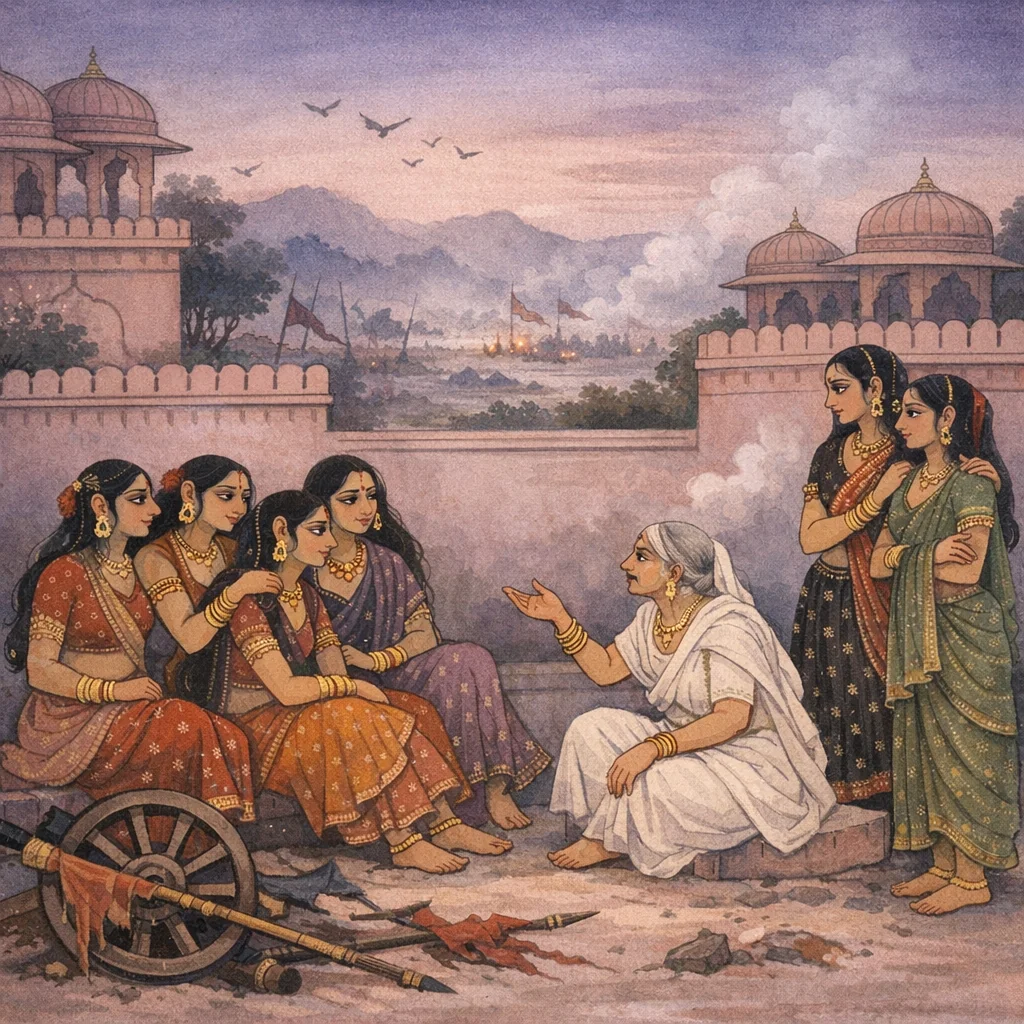
This chapter presents a wartime audit of devastation and a reflective diagnosis of its causes. It opens with a hyperbolic catalogue of Rāvaṇa’s dispatched forces—fire-colored horses, chariots with banners and golden ornamentation, iron-bar wielding fighters, and shape-shifting rākṣasas—now felled by Rāma’s sharp, glowing, gold-adorned arrows, emphasizing his tireless efficacy (akliṣṭa-karman). The narrative then pivots to interpretive lament: rākṣasī women and survivors gather, bewailing husbands, sons, and kin, while questioning how the chain began—specifically Surpaṇakhā’s ill-fated desire for Rāma and her condemned assault, which precipitated the destruction of Khara and Dūṣaṇa and ultimately the abduction of Sītā. A sequence of exempla is cited as “sufficient proof” of Rāma’s prowess: the slaying of Virādha, the Janasthāna campaign, the deaths of Khara, Dūṣaṇa, Triśiras, Kabandha, and Vāli, and Sugrīva’s restoration. Vibhīṣaṇa’s dharmic counsel is noted as rejected by Rāvaṇa, and the chapter intensifies into collective fear: Laṅkā is imagined as a cremation ground, omens rise, and Rāma is compared to Rudra, Viṣṇu, Indra, or even Antaka (Death). The theological-political backstory of Rāvaṇa’s boon from Brahmā—protection from devas, dānavas, and rākṣasas but not from humans—is recalled to explain why human-born Rāma becomes the instrument of downfall. The sarga closes with the women embracing one another in despondent cries, framing the war not only as military defeat but as a moral reckoning.
Shlokas
Verse 1
तानितानिसहस्राणिसारोहाणां च वाजिनाम् ।रथानांत्वग्निवर्णानांसध्वजानांसहस्रशः ।।।।राक्षसानांसहस्राणिगदापरिघयोधिनाम् ।काञ्चनध्वजचित्राणांशूराणांकामरूपिणाम् ।।।।निहतानिशरैर्दीस्तीक्ष्णैस्तप्तकाञ्चनभूषणैः ।रावणेनप्रयुक्तानिरामेणाक्लिष्टकर्मणा ।।।।
Thousands upon thousands of chariots—bannered and yoked to horses the color of fire—along with thousands of rākṣasa warriors who fought with maces and iron bars, whose banners gleamed with gold, heroic and able to assume forms at will, were slain by Rama of untiring action, with blazing, sharp arrows adorned with heated gold—forces that had been deployed by Rāvaṇa.
Verse 2
तानितानिसहस्राणिसारोहाणां च वाजिनाम् ।रथानांत्वग्निवर्णानांसध्वजानांसहस्रशः ।।6.95.1।।राक्षसानांसहस्राणिगदापरिघयोधिनाम् ।काञ्चनध्वजचित्राणांशूराणांकामरूपिणाम् ।।6.95.2।।निहतानिशरैर्दीस्तीक्ष्णैस्तप्तकाञ्चनभूषणैः ।रावणेनप्रयुक्तानिरामेणाक्लिष्टकर्मणा ।।6.95.3।।
Thousands of Rākṣasa warriors—fighters wielding maces and iron bars, splendid with golden banners and ornamented emblems—those brave ones, able to assume forms at will, were struck down in the battle.
Verse 3
तानितानिसहस्राणिसारोहाणां च वाजिनाम् ।रथानांत्वग्निवर्णानांसध्वजानांसहस्रशः ।।6.95.1।।राक्षसानांसहस्राणिगदापरिघयोधिनाम् ।काञ्चनध्वजचित्राणांशूराणांकामरूपिणाम् ।।6.95.2।।निहतानिशरैर्दीस्तीक्ष्णैस्तप्तकाञ्चनभूषणैः ।रावणेनप्रयुक्तानिरामेणाक्लिष्टकर्मणा ।।6.95.3।।
Those forces dispatched by Rāvaṇa were cut down by Rāma—unceasing in action—using blazing, razor-sharp arrows adorned with heated gold.
Verse 4
दृष्टवाश्रुत्वा च सम्भ्रान्ताहतशेषानिशाचराः ।राक्षसीश्चसमागम्यदीनाश्चिन्तापरिप्लुताः ।।।।विधवाहतपुत्राश्चक्रोशन्त्योहतबान्दवाः ।राक्षस्यःसहसङ्गम्यदुःखार्ताःपर्यदेवयन् ।।।।
Seeing and hearing what had happened, the surviving night-rangers were shaken. The rākṣasī women gathered together—wretched and flooded with anguish. Widowed, with sons and kinsmen slain, they cried out and, assembling in groups, lamented in grief.
Verse 5
दृष्टवाश्रुत्वा च सम्भ्रान्ताहतशेषानिशाचराः ।राक्षसीश्चसमागम्यदीनाश्चिन्तापरिप्लुताः ।।6.95.4।।विधवाहतपुत्राश्चक्रोशन्त्योहतबान्दवाः ।राक्षस्यःसहसङ्गम्यदुःखार्ताःपर्यदेवयन् ।।6.95.5।।
How did the aged Śūrpaṇakhā—dreadful and hideous—approach Rāma in the forest, he whose beauty was like Kāma himself?
Verse 6
कथंशूर्पणखावृद्धाकरालानिर्णतोदरी ।आससादवनेरामंकन्दर्पमिवरूपिणम् ।।।।
How did the aged Śūrpaṇakhā—dreadful and hideous—approach Rāma in the forest, he whose beauty was like Kāma himself?
Verse 7
सुकुमारंमहासत्त्वंसर्वभूतहितेरतम् ।तंदृष्टवालोकनिन्द्यासाहीनरूपाप्रकामिता ।।।।
Seeing him—gentle, noble in spirit, and devoted to the welfare of all beings—that ugly woman, blameworthy in the eyes of the world, was inflamed with passion.
Verse 8
कथंसर्वगुणैर्हीनागुणवन्तंमहौजसम् ।सुमुखंदुर्मुखीरामंकामयामासराक्षसी ।।।।
How did that rākṣasī—bereft of virtues and foul-faced—dare to desire Rāma, who was virtuous, mighty in splendor, and fair of countenance?
Verse 9
जनस्यास्याल्पभाग्यत्वाद्वलिनीश्वेतमूर्धजा ।अकार्यमपहास्यं च सर्वलोकविगर्हितम् ।।।।राक्षसानांविनाशायदूषणस्यखरस्य च ।चकाराप्रतिरूपासाराघवस्यप्रधर्षणम् ।।।।
Because this people’s fortune was small, that wrinkled, grey-haired, misshapen woman committed a wrongful act—ridiculous and condemned by all. By assaulting Rāghava, she became the cause of destruction for the rākṣasas, and for Dūṣaṇa and Khara as well.
Verse 10
जनस्यास्याल्पभाग्यत्वाद्वलिनीश्वेतमूर्धजा ।अकार्यमपहास्यं च सर्वलोकविगर्हितम् ।।6.95.9।।राक्षसानांविनाशायदूषणस्यखरस्य च ।चकाराप्रतिरूपासाराघवस्यप्रधर्षणम् ।।6.95.10।।
That misshapen (Śūrpaṇakhā), by her reckless assault on Rāghava, became the very cause of the destruction of the rākṣasas—of Khara and Dūṣaṇa as well.
Verse 11
तन्निमित्तमिदंवैरंरावणेनकृतंमहत् ।वधायसीतासासीतादशग्रीवेणरक्षसा ।।।।
For that very reason, Rāvaṇa has brought about this great enmity; and that Sītā—Janaka’s daughter—was carried off by the ten-necked rākṣasa, sealing the way to his own destruction.
Verse 12
न च सीतांदशग्रीवःप्राप्नोतिजनकात्मजाम् ।बद्धंबलवतावैरमक्षयंराघवेण च ।।।।
And Daśagrīva shall not have Sītā, Janaka’s daughter; for by this forcible act an undying enmity has been bound fast with Rāghava.
Verse 13
वैदेहींप्रार्थयानंतंविराधंप्रेक्षयराक्षसम् ।हतमेकेनरामेणपर्याप्तंतन्निदर्शनम् ।।।।
Seeing that rākṣasa Virādha pursuing Vaidehī, Rāma slew him single-handed; that alone is proof enough (of his power).
Verse 14
चतुर्धशसहस्राणिरक्षसांभीमकर्मणाम् ।निहतानिजनस्थानेशरैरग्निशिखोपमैः ।।।।
At Janasthāna, fourteen thousand rākṣasas of dreadful deeds were destroyed by his arrows, like tongues of fire.
Verse 15
खरश्चनिहतःसङ्ख्येदूषणस्त्रिशिरास्तथा ।शरैरादितसङ्काशैःपर्याप्तंतन्निदर्शनम् ।।।।
In battle, Khara was slain—and so too Dūṣaṇa and Triśiras—by arrows radiant as the sun; that is proof enough.
Verse 16
हतोयोजनबाहुश्चकबन्दोरुदिराशनः ।क्रोधान्नादंनदन् सोऽथपर्याप्तंतन्निदर्शनम् ।।।।
And Kabandha too—blood-eating, with arms a yojana long—came roaring in wrath, yet was slain; that also is proof enough.
Verse 17
जघानबलिनंरामस्सहस्रनयनात्मजम् ।वालिनंमेरुसङ्काशंपर्याप्तंतन्निदर्शनम् ।।।।
Rāma slew the mighty Vālin, son of Sahasranayana (Indra), who was like Mount Meru; that is proof enough.
Verse 18
ऋष्यमूकेवसंश्चैवदीनोभग्नमनोरथः ।सुग्रीवःप्रापितोराज्यंपर्याप्तंतन्निदर्शनम् ।।।।
Sugrīva—dwelling on Ṛṣyamūka, dejected and with hopes shattered—was restored to his kingdom; that is proof enough.
Verse 19
धर्मार्थसहितंवाक्यंसर्वेषांरक्षसांहितम् ।युक्तंविभीषणेनोक्तंमोहत्तस्य न रोचते ।।।।
Though Vibhīṣaṇa spoke words grounded in dharma and sound policy—words beneficial to all the rākṣasas—Rāvaṇa, deluded, took no delight in them and would not accept them.
Verse 20
विभीषणवचःकुर्याद्यदिस्मधनदानुजः ।श्मशानभूतादुःखार्तानेयंलङ्काभविष्यति ।।।।
Had the younger brother of Kubera truly heeded Vibhīṣaṇa’s counsel, this Lanka would not have become a cremation-ground, afflicted with grief.
Verse 21
कुम्भकर्णंहतंश्रुत्वाराघवेणमहाबलम् ।अतिकायं च दुर्मर्षंलक्ष्मणेनहतंतदा ।।।।प्रियंचेन्द्रजितंपुत्रंरावणोनावबुध्यते ।
Even after hearing that mighty Kumbhakarṇa was slain by Rāghava, and that Atikāya—hard to withstand—was then killed by Lakṣmaṇa, and that his beloved son Indrajit too had fallen, Rāvaṇa still did not come to his senses.
Verse 22
ममपुत्रोममभ्राताममभर्तारणेहतः ।।।।इत्येषश्रूयतेशब्दोराक्षसीनांकुलेकुले ।
“My son is slain; my brother is slain; my husband is slain in battle”—such cries were heard, in family after family, among the Rākṣasa women.
Verse 23
रथश्चाश्वाश्चनागाश्चहताःशतसहस्रशः ।।।।रणेरामेणशूरेणहताश्चापिपदातयः ।
Chariots, horses, and elephants were destroyed in hundreds and thousands; and in that battle, even the foot-soldiers were slain by the heroic Rāma.
Verse 24
रुद्रोवायदिवाविष्णुर्महेन्द्रोवाशतक्रतुः ।।।।हन्तिनोरामरूपेणयदिवास्वयमन्तकः ।
Is it Rudra, or Viṣṇu, or great Indra of a hundred sacrifices—or is it Death itself—that, in the form of Rāma, is slaying us?
Verse 25
हतप्रवीरारामेणनिराशाजीवितेवयम् ।।।।अपश्य्नत्योभयस्यान्तमनाथाविलपामहे ।
With our foremost heroes slain by Rāma, we have lost hope of life; unable to see any end to this terror, we wail like the unprotected.
Verse 26
रामहस्ताद्धशग्रीवश्शूरोदत्तमहावरः ।।।।इदंभयंमहाघोरंसमुत्पन्नं न बुध्यते ।
Daśagrīva—though a famed warrior, though fortified by mighty boons—does not recognize the most dreadful danger that has arisen from the hand of Rāma.
Verse 27
तं न देवा न गन्धर्वा न पिशाचा न राक्षसाः ।।।।उपसृष्टंपरित्रातुंशक्तारामेणसम्युगे ।
When he is assailed by Rāma in battle, neither gods nor Gandharvas, neither Piśācas nor even Rākṣasas are able to protect him.
Verse 28
त्पताश्चापिदृश्यन्तेरावणस्यरणेरणे ।।।।कथयन्तिहिरामेणरावणस्यनिबर्हणम् ।
In battle after battle, ominous portents are seen for Rāvaṇa; indeed, they foretell Rāvaṇa’s destruction at the hands of Rāma.
Verse 29
पितामहेनप्रीतेनदेवदानवराक्षसैः ।।।।रावणस्याभयंदत्तंमनुष्येभ्यो न याचितम् ।
Brahmā, being pleased, granted Rāvaṇa immunity from the Devas, Dānavas, and Rākṣasas; but protection from human beings was not asked for.
Verse 30
तदिदंमानुषंमन्येप्राप्तंनिःसंशयंभयम् ।।।।जीवितान्तकंघोरंरक्षसांरावणस्य च ।
Therefore, I think this fear arising from a human has surely come—terrible, ending life—for the Rākṣasas and for Rāvaṇa as well.
Verse 31
पीड्यमानास्तुबलिनावरदानेनरक्षसा ।।।।दीप्स्सैस्तपोभिर्विबुधाःपितामहमपूजयन् ।
Oppressed by the mighty Rākṣasa empowered by a boon, the wise gods worshipped Brahmā with blazing austerities.
Verse 32
देवतानांहितार्थायमहात्मावैपितामहः ।।।।उवाचदेवताःसर्वाइदंतुष्टोमहद्वचः ।
For the welfare of the gods, the great-souled Brahmā—gratified—addressed all the deities with these weighty words.
Verse 33
अद्यप्रभृतिलोकांस्त्रीन् सर्वेदानवराक्षसाः ।।।।भयेनप्रावृतानित्यंविचरिष्यन्तिशाश्वतम् ।
From this day onward, all Dānavas and Rākṣasas will roam the three worlds, ever enveloped in fear, for a long time to come.
Verse 34
दैवतैस्तुसमागम्यसर्वैश्चेन्द्रपुरोगमैः ।।।।वृषध्वजस्त्रिपुरहामहादेवःप्रसादितः ।
Then all the gods, with Indra at their head, assembled and propitiated Mahādeva—bull-bannered, the slayer of Tripura.
Verse 35
प्रसन्नस्तुमहादेवोदेवानेतद्वचोऽब्रवीत् ।।।।उत्पत्स्यतिहितार्थंवोनारीरक्षःक्षयावहा ।
Pleased, Mahādeva spoke to the gods: “For your welfare, a woman will be born—one who will bring about the destruction of the Rākṣasas.”
Verse 36
एषादेवैःप्रयुक्तातुक्षुद्यथादानवान् पुरा ।।।।भक्षयिष्यतिनःसीताराक्षसघ्नीसरावणान् ।
This Sītā—set in motion by the gods—will consume the Rākṣasas along with Rāvaṇa, just as hunger once consumed the Dānavas.
Verse 37
रावणस्यापनीतेनदुर्विनीतस्यदुर्मतेः ।।।।अयंनिष्टानकोघोरंशोकेनसमभिप्लुतः ।
Because of the wicked deed of Rāvaṇa—ill-disciplined and evil-minded—this dreadful catastrophe, flooded with grief, now looms upon us.
Verse 38
तंन पश्यामहेलोकेयोनःशरणदोभवेत् ।।।।राघवेणोपसृष्टानां कालेनेव युगक्षये ।
Assailed by Rāghava, we see no one in this world who could now grant us refuge—just as, at the end of an age, beings are overwhelmed by Time itself.
Verse 39
नास्तिनःशरणंकश्चिद्भयेमहतितिष्ठताम् ।।।।दावाग्निवेष्टितानांहिकरेणूनांयथावने ।
For us who stand amid this great terror, there is truly no refuge—like female elephants in a forest surrounded by a raging wildfire.
Verse 40
प्राप्तकालंकृतंतेनपौलस्त्येनमहात्मना ।।।।यतएवंभयंदृष्टंतमेवशरणंगतः ।
That great-souled one of the Paulastya line, seeing fear in this form and judging the time to be ripe, went to him alone for refuge.
Verse 41
इतीवसर्वारजनीचरस्त्रियःपरस्परंसम्परिरभ्यबाहुभिः ।विषेदुरार्तातिभयाभिपीडिताविनेदुरुच्चैश्चतदासुदारुणम् ।।।।
Thus, all the women of the night-rangers, clasping one another in their arms, sank into despair; tormented by extreme fear, they then wailed loudly in a dreadsome manner.
Frequently Asked Questions
The chapter foregrounds the ethical failure of kingship: Rāvaṇa’s refusal to heed Vibhīṣaṇa’s dharmic counsel and his continuation of adharma (notably Sītā’s abduction) despite clear evidence of Rāma’s capacity, thereby converting a preventable conflict into collective catastrophe.
The sarga teaches that adharma generates a chain of consequences that expands from individual misconduct to societal ruin; counsel aligned with dharma is a stabilizing force, while moha (delusion) in leadership magnifies suffering and accelerates downfall.
Laṅkā is depicted as the war’s social center of mourning and fear; Janasthāna and Ṛṣyamūka are recalled as earlier theatres of Rāma’s decisive actions, used as cultural-memory landmarks to interpret present events and validate Rāma’s prowess.