Sarga 9
विभीषणोपदेशः — Vibhishana’s Counsel to Ravana
युद्धकाण्ड
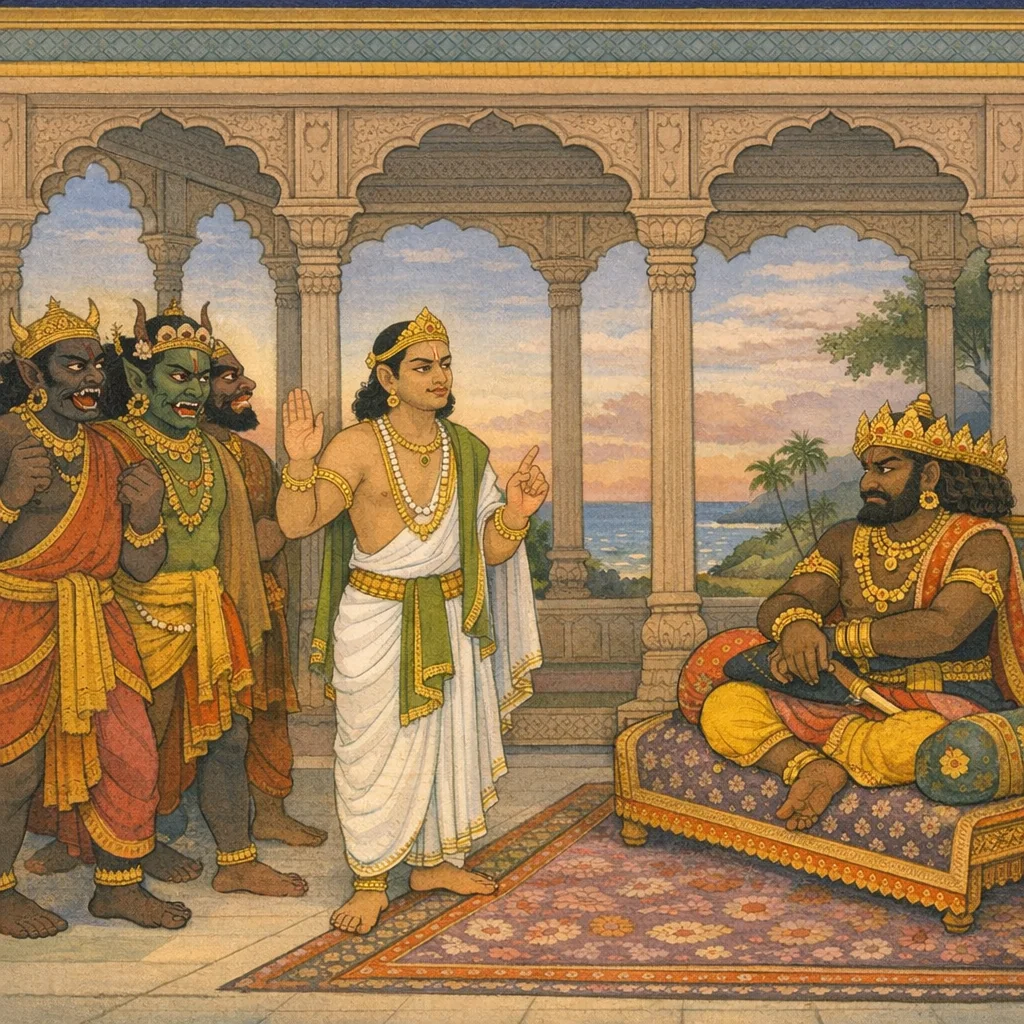
This sarga opens with a catalogue-like mobilization: prominent rākṣasa leaders (including Indrajit and other named commanders) rise in fury, armed with heavy weapons—parigha (iron club), paṭṭiśa, prāsa, śakti, śūla, paraśu, bows, arrows, and sharp swords—declaring intent to kill Rāma, Lakṣmaṇa, Sugrīva, and Hanumān. Vibhīṣaṇa intervenes, halts the armed assembly, and delivers a structured nīti discourse: acts unattainable through the three diplomatic means (sāma, dāna, bheda) must be pursued only after due consideration and by valor; success depends on methodical assessment rather than rash contempt. He then reframes the conflict ethically and strategically—warning against underestimating the enemy, citing Hanumān’s ocean-crossing as evidence of extraordinary capability, and questioning the justice of Rāvaṇa’s original offence (the abduction of Sītā). Vibhīṣaṇa urges de-escalation: relinquish anger, avoid purposeless enmity with a dharma-aligned, steadfast Rāma, and restore Maithilī/Sītā before Laṅkā and its rākṣasas face ruin. Rāvaṇa hears the counsel, dismisses the assembly, and withdraws into his palace, leaving the warning unheeded in spirit though formally concluded.
Shlokas
Verse 1
ततोनिकुम्भोरभसस्सूर्यशत्रुर्महाबलः ।सुप्तघ्नोयज्ञहारक्षोमहापार्श्वमहोदरौ ।।।।अग्निकेतुश्चदुर्धर्षोरश्मिकेतुश्चराक्षस: ।इन्द्रजिच्चमहातेजाबलवान्रावणात्मजः ।।।।प्रहस्तोऽथविरूपाक्षोवज्रदंष्ट्रोमहाबलः ।धूम्राक्षश्चातिकायश्चदुर्मुखश्चैवराक्षसः ।।।।परिघान्पट्टिशान्प्रासान्शक्तिशूलपरश्वधान् ।चापानिचसबाणानिखङ्गांश्चविपुलान्शितान् ।।।।प्रगृह्यपरमक्रुद्धास्समुत्पत्यचराक्षसाः ।अब्रुवन्रावणंसर्वेप्रदीप्ताइवतेजसा ।।।।
Then Nikumbha, Rabhasa, the mighty Sūryaśatru, Suptaghna, the yajña-plundering demon, Mahāpārśva and Mahodara; Agniketu and the unassailable Raśmiketu; and Indrajit, the powerful and radiant son of Rāvaṇa; then Prahasta, Virūpākṣa, the strong Vajradaṃṣṭra, Dhūmrākṣa, Atikāya, and Durmukha—these rākṣasas, seizing clubs, iron maces, spears, śaktis, tridents, axes, bows with arrows, and broad sharp swords, sprang up in furious rage and, blazing as if with fire, addressed Rāvaṇa.
Verse 2
ततोनिकुम्भोरभसस्सूर्यशत्रुर्महाबलः ।सुप्तघ्नोयज्ञहारक्षोमहापार्श्वमहोदरौ ।।6.9.1।।अग्निकेतुश्चदुर्धर्षोरश्मिकेतुश्चराक्षस: ।इन्द्रजिच्चमहातेजाबलवान्रावणात्मजः ।।6.9.2।।प्रहस्तोऽथविरूपाक्षोवज्रदंष्ट्रोमहाबलः ।धूम्राक्षश्चातिकायश्चदुर्मुखश्चैवराक्षसः ।।6.9.3।।परिघान्पट्टिशान्प्रासान्शक्तिशूलपरश्वधान् ।चापानिचसबाणानिखङ्गांश्चविपुलान्शितान् ।।6.9.4।।प्रगृह्यपरमक्रुद्धास्समुत्पत्यचराक्षसाः ।अब्रुवन्रावणंसर्वेप्रदीप्ताइवतेजसा ।।6.9.5।।
Agniketu and the unassailable Raśmiketu rose up; and Indrajit too—of immense splendor and strength, Rāvaṇa’s own son.
Verse 3
ततोनिकुम्भोरभसस्सूर्यशत्रुर्महाबलः ।सुप्तघ्नोयज्ञहारक्षोमहापार्श्वमहोदरौ ।।6.9.1।।अग्निकेतुश्चदुर्धर्षोरश्मिकेतुश्चराक्षस: ।इन्द्रजिच्चमहातेजाबलवान्रावणात्मजः ।।6.9.2।।प्रहस्तोऽथविरूपाक्षोवज्रदंष्ट्रोमहाबलः ।धूम्राक्षश्चातिकायश्चदुर्मुखश्चैवराक्षसः ।।6.9.3।।परिघान्पट्टिशान्प्रासान्शक्तिशूलपरश्वधान् ।चापानिचसबाणानिखङ्गांश्चविपुलान्शितान् ।।6.9.4।।प्रगृह्यपरमक्रुद्धास्समुत्पत्यचराक्षसाः ।अब्रुवन्रावणंसर्वेप्रदीप्ताइवतेजसा ।।6.9.5।।
Today we will slay Rāma, Sugrīva, and Lakṣmaṇa—and that wretched Hanūmān too, because of whom Laṅkā has been assaulted.
Verse 4
ततोनिकुम्भोरभसस्सूर्यशत्रुर्महाबलः ।सुप्तघ्नोयज्ञहारक्षोमहापार्श्वमहोदरौ ।।6.9.1।।अग्निकेतुश्चदुर्धर्षोरश्मिकेतुश्चराक्षस: ।इन्द्रजिच्चमहातेजाबलवान्रावणात्मजः ।।6.9.2।।प्रहस्तोऽथविरूपाक्षोवज्रदंष्ट्रोमहाबलः ।धूम्राक्षश्चातिकायश्चदुर्मुखश्चैवराक्षसः ।।6.9.3।।परिघान्पट्टिशान्प्रासान्शक्तिशूलपरश्वधान् ।चापानिचसबाणानिखङ्गांश्चविपुलान्शितान् ।।6.9.4।।प्रगृह्यपरमक्रुद्धास्समुत्पत्यचराक्षसाः ।अब्रुवन्रावणंसर्वेप्रदीप्ताइवतेजसा ।।6.9.5।।
They seized clubs, spears, javelins, śakti-darts, tridents, and axes—along with bows and arrows, and broad, keen-edged swords.
Verse 5
ततोनिकुम्भोरभसस्सूर्यशत्रुर्महाबलः ।सुप्तघ्नोयज्ञहारक्षोमहापार्श्वमहोदरौ ।।6.9.1।।अग्निकेतुश्चदुर्धर्षोरश्मिकेतुश्चराक्षस: ।इन्द्रजिच्चमहातेजाबलवान्रावणात्मजः ।।6.9.2।।प्रहस्तोऽथविरूपाक्षोवज्रदंष्ट्रोमहाबलः ।धूम्राक्षश्चातिकायश्चदुर्मुखश्चैवराक्षसः ।।6.9.3।।परिघान्पट्टिशान्प्रासान्शक्तिशूलपरश्वधान् ।चापानिचसबाणानिखङ्गांश्चविपुलान्शितान् ।।6.9.4।।प्रगृह्यपरमक्रुद्धास्समुत्पत्यचराक्षसाः ।अब्रुवन्रावणंसर्वेप्रदीप्ताइवतेजसा ।।6.9.5।।
Seizing their weapons and rising up, those rākṣasas—furious to the utmost—shone as if aflame with their own might, and all together addressed Rāvaṇa.
Verse 6
अद्यरामंवधिष्यामस्सुग्रीवंसचलक्ष्मणम् ।कृपणंचहनूमन्तंलङ्कायेनप्रधर्षिता ।।।।
Today we will slay Rāma, Sugrīva, and Lakṣmaṇa—and that wretched Hanūmān too, because of whom Laṅkā has been assaulted.
Verse 7
तान्गृहीतायुधान् सर्वान्वारयित्वाविभीषणः ।अब्रवीत्प्राञ्जलिर्वाक्यंपुनःप्रत्युपवेश्यतान् ।।।।
Vibhīṣaṇa restrained all those who had taken up weapons, had them seated again, and—joining his palms in humility—spoke words (of counsel) to Rāvaṇa.
Verse 8
अप्युपायैस्त्रिभिस्तातयोऽर्थःप्राप्तुंनशक्यते ।तस्यविक्रमकालांस्तान्युक्तानाहुर्मनीषिणः ।।।।
“Dear father, if an aim cannot be achieved even by the three policy-means, then the wise say that only then is the time for disciplined valor—heroic action undertaken with due effort.”
Verse 9
प्रमत्तेष्यभियुक्तेषुदैवेनप्रहतेषुच ।विक्रमास्तातसिध्यन्तिपरीक्ष्यविधिनाकृताः ।।।।
“Dear father, valor succeeds against those who are careless, those already hard-pressed, and those struck by fate—when one has examined the situation and acted according to proper method.”
Verse 10
अप्रमत्तंकथंतंतुविजिगीषुंबलेस्थितम् ।जितरोषंदुराधर्षतंप्रधर्षयितुमिच्छथ ।।।।
How do you intend to overpower him—ever vigilant, intent on victory, firm in strength, master of his anger, and impossible to assail?
Verse 11
समुद्रंलङ्घयित्वातुघोरंनदनदीपतिम् ।गतिंहनूमतोलोकेकोविद्यात्तर्कयेतवा ।।।।
Hanumān has leapt across the dreadful ocean, lord of rivers and streams—who in this world could have known, or even imagined, such a feat?
Verse 12
बलान्यपरिमेयानिवीर्याणिचनिशाचराः ।परेषांसहसाऽवज्ञानकर्तव्याकथञ्चन ।।।।
O night-roamers, the enemy’s strength and valor are beyond measure; never, in any way, should you contemptuously dismiss them in haste.
Verse 13
किंचराक्षसराजस्यरामेणापकृतंपुरा ।आजहारजनस्थानाद्यस्यभार्यांयशस्विनः ।।।।
And what wrong had Rāma ever done to the rākṣasa-king before, that he abducted the illustrious man’s wife from Jana-sthāna?
Verse 14
खरोयद्यतिवृत्तस्तुरामेणनिहतोरणे ।अवश्यंप्राणिनांप्राणारक्षितव्यायथाबलम् ।।।।
If Khara, having overstepped his bounds, was slain by Rāma in battle, that is only fitting—for every living being must, according to their strength, protect their own life.
Verse 15
एतन्निमित्तंवैदेहीभयंनस्सुमहद्भवेत् ।आहृतासापरित्याज्याकलहार्थेकृतेनकिम् ।।।।
For this very reason, Vaidehī is a great danger to us; since she was brought here, she should be handed back—what is gained by clinging to an act that only breeds strife?
Verse 16
नतुक्षमंवीर्यवतातेनधर्मानुवर्तिना ।वैरंनिरर्थकंकर्तुंदीयतामस्यमैथिली ।।।।
It is not fitting to maintain a pointless enmity with that valorous one who follows dharma; let Maithilī be given back to him.
Verse 17
यावन्नसगजांसाश्वांबहुरत्नसमाकुलाम् ।पुरींदारयतेबाणैर्दीयतामस्यमैथिली ।।।।
Before he tears apart this city—rich with many jewels, filled with elephants and horses—with his arrows, let Maithilī be returned to him.
Verse 18
यावत्सुघोरामहतीदुर्धर्षाहरिवाहिनी ।नावस्कन्दतिनोलङ्कांतावत्सीताप्रदीयताम् ।।।।
Before the vast, terrifying, and irresistible army of monkeys overruns our Laṅkā, let Sītā be handed back.
Verse 19
विनश्येद्धिपुरीलङ्काशूरास्सर्वेचराक्षसाः ।रामस्यदयितापत्नीनस्वयंनयदिदीयते ।।।।
If Rāma’s beloved wife is not restored of your own accord, then the city of Laṅkā will surely perish—along with all the rākṣasas, even the mighty ones.
Verse 20
प्रसादयेत्वांबन्धुत्वात्कुरुष्यवचनंमम ।हितंतथ्यमहंब्रूमिदीयतामस्यमैथिली ।।।।
Because of our kinship, I appeal to you—do as I say. I speak what is both true and beneficial: let Maithilī be given back to him.
Verse 21
पुराशरत्सूर्यमरीचिसन्निभान्नवाग्रपुङ्खान् सुदृढान्नृपात्मजः ।सृजत्यमोघान्विशिखान्वधायतेप्रदीयतांदशरधायमैथिली ।।।।
Before the prince releases upon you his unfailing arrows—firm, newly-fletched, and radiant like the sun’s rays in autumn—let Maithilī be restored to Daśaratha’s son.
Verse 22
त्वजस्वकोपंसुखधर्मनाशनंभजस्वधर्मंरतिकीर्तिवर्धनम् ।प्रसीदजीवेमसपुत्रबान्धवाःप्रदीयतांदाशरथायमैथिली ।।।।
Abandon anger, which destroys both happiness and dharma; take refuge in dharma, which increases rightful joy and lasting fame. Be at peace—so that we may live, with sons and kinsmen—by restoring Maithilī to the son of Daśaratha.
Verse 23
विभीषणवच्शुत्वारावणोराक्षसेश्वराः ।विसर्जयित्वातान्सर्वान्प्रविवेशस्वकंगृहम् ।।।।
Having heard Vibhīṣaṇa’s words, Rāvaṇa—the lord of the rākṣasas—dismissed them all and entered his own residence.
Frequently Asked Questions
The dilemma is whether Laṅkā should escalate into total war or pursue restitution by returning Sītā: Vibhīṣaṇa argues that Rāvaṇa’s initial act (abduction) is the true provocation, and that continuing enmity against a dharma-aligned opponent is strategically and ethically ruinous.
Upadeśa centers on nīti guided by dharma: do not disregard an enemy’s capacities, attempt recognized diplomatic means before force, abandon anger that destroys virtue, and choose actions that preserve life, kinship, and civic stability through just repair rather than pride.
Laṅkā functions as the threatened polity; the ocean (samudra) is referenced through Hanumān’s unprecedented crossing as proof of extraordinary agency; Janasthāna appears as the remembered site tied to earlier conflict and the abduction narrative.