Sarga 85
निकुम्भिला-यज्ञविघ्नः — Vibhishana’s Counsel and Lakshmana’s March to Nikumbhila
युद्धकाण्ड
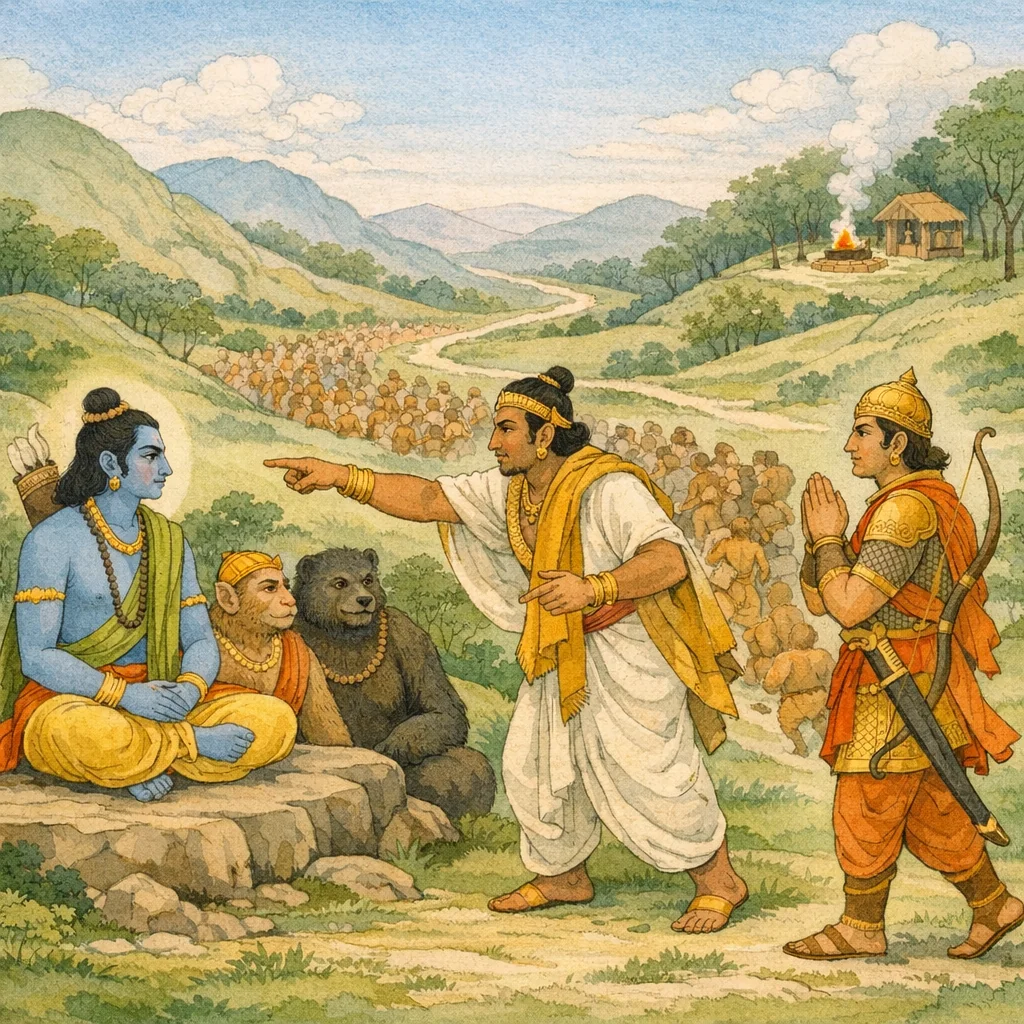
Sarga 85 frames a command-decision episode shaped by grief, intelligence, and time-critical strategy. Rāma, momentarily unable to grasp Vibhīṣaṇa’s words due to sorrow, regathers composure and requests a clear restatement. Vibhīṣaṇa reports that the Vānara forces have been properly divided and stationed, then urges Rāma to abandon debilitating anxiety because it amplifies enemy morale; he calls for renewed effort to recover Sītā and destroy the rākṣasas. He then delivers urgent operational intelligence: Indrajit (Rāvaṇi) has gone to Nikumbhilā to perform a sacrificial rite whose completion would render the coalition effectively doomed, due to a boon-structured vulnerability—Rāma can be slain if he does not reach and disrupt the rite. The counsel culminates in a directive: dispatch Lakṣmaṇa, supported by the full Vānara host under Hanumān and protected by Jāmbavān, with Vibhīṣaṇa following as māyā-specialist support. Rāma acknowledges Indrajit’s mastery of Brahmāstra and illusion, then orders the mission. Lakṣmaṇa arms himself, reverently salutes Rāma, vows immediate action, and advances swiftly toward the Nikumbhilā sanctuary, entering the formidable rākṣasa battle-array “like a veil of darkness.”
Shlokas
Verse 1
त्तस्यतद्वचनंश्रुत्वाराघवश्शोककर्शितः ।नोपधारयतेव्यक्तंयदुक्तंतेनरक्षसा ।।6.85.1।।
Having heard those words, Rāghava—worn down by grief—could not clearly comprehend what was spoken by that Rākṣasa.
Verse 2
ततोधैर्यमवष्टभ्यरामःपरपुरञ्जयः ।विभीषणमुपासीनमुवाचकपिसन्निधौ ।।6.85.2।।
Then Rāma, the conqueror of hostile strongholds, steadying his courage, addressed Vibhīṣaṇa who was seated nearby, in the presence of the Vānara leaders.
Verse 3
नैरृताधिपतेवाक्यंयदुक्तंतेविभीषण ।भूयस्तच्छ्रोतुमिच्छामिब्रूहियत्तेविवक्षितम् ।।6.85.3।।
O Vibhīṣaṇa, lord of the Rākṣasas—what you said, I wish to hear again. Speak once more what you intend to convey.
Verse 4
राघवस्यवचःश्रुत्वावाक्यंवाक्यविशारद. ।यत्तत्पुनरिदंवाक्यंबभाषे स विभीषणः ।।6.85.4।।
Having heard Rāghava’s words, Vibhīṣaṇa—skilled in well-chosen speech—again spoke these words in reply.
Verse 5
यथाज्ञप्तंमहाबाहोत्वयागुल्मनिवेशनम् ।तत्तथाऽनुष्ठितंवीरत्वद्वाक्यसमनन्तरम् ।।6.85.5।।
O mighty-armed hero, exactly as you commanded regarding the positioning of the troops, it has been carried out immediately upon your word.
Verse 6
तान्यनीकानिसर्वाणिविभग्नानिसमन्ततः ।विन्यस्तायूथपाश्चैवयथान्यायंविभागशः ।।6.85.6।।
All those divisions of the army have been separated and arranged on every side; and the troop-leaders too have been stationed, each in proper order, according to their respective assignments.
Verse 7
भूयस्तुममविज्ञाप्यंतच्छ्रुणुष्वमहायश: ।त्वय्यकारणसन्तप्तेसन्तप्तहृदयावयम् ।।6.85.7।।
Yet I have more to submit—listen, O greatly renowned one. Seeing you distressed without cause, we too are anguished at heart.
Verse 8
त्यजराजन्निमंशोकंमिथ्यासन्तापमागतम् ।तदियंत्यज्यतांचिन्ताशत्रुहर्षविवर्धिनी ।।6.85.8।।
O king, abandon this grief—this needless torment that has arisen. Let this anxiety be cast off, for it only increases the enemy’s delight.
Verse 9
उद्यमःक्रियतांवीरहर्षःसमुपसेव्यताम् ।प्राप्तव्यायदितेसीताहन्तव्याश्चनिशाचराः ।।6.85.9।।
O hero, let effort be undertaken and courage renewed. If Sītā is to be regained by you, then the night-roaming rākṣasas must also be struck down.
Verse 10
रघुनन्दनवक्ष्यामिश्रूयतांमेहितंवचः ।साध्वयंयातुसौमित्रिर्बलेनमहतावृतः ।।6.85.10।।निकुम्भिलायांसम्प्राप्यहन्तुंरावणिमाहवे ।धनुर्मण्डलनिर्मुक्तैराशीविषविषोपमैः ।।6.85.11।।
O delight of the Raghu line, hear my beneficial counsel. Let Saumitrī set out at once, surrounded by a great force. Reaching Nikumbhilā, let him slay Rāvaṇa’s son in battle, with arrows released in sweeping circles from the bow—deadly as the poison of venomous serpents.
Verse 11
रघुनन्दनवक्ष्यामिश्रूयतांमेहितंवचः ।साध्वयंयातुसौमित्रिर्बलेनमहतावृतः ।।6.85.10।।निकुम्भिलायांसम्प्राप्यहन्तुंरावणिमाहवे ।धनुर्मण्डलनिर्मुक्तैराशीविषविषोपमैः ।।6.85.11।।
By that heroic one, through austerity and by a boon from the Self-born Creator, the Brahmaśiras weapon was obtained—and also steeds that move at will.
Verse 12
तेनवीरेणतपसावरदानात्स्वयम्भुवः ।अस्त्रंब्रह्मशिरःप्राप्तंकामगाश्चतुरङ्गमाः ।।6.85.12।।
By that heroic one, through austerity and by a boon from the Self-born Creator, the Brahmaśiras weapon was obtained—and also steeds that move at will.
Verse 13
स एषसहसैन्येनप्राप्तःकिलनिकुम्भिलाम् ।यद्युततिष्ठेत्कृतंकर्महतान्सर्वांश्चविद्धिनः ।।6.85.13।।
He has indeed reached Nikumbhilā together with his forces. If he should rise up after completing that rite, know that all of us are as good as slain.
Verse 14
निकुम्भिलामसम्प्राप्तमहुताग्निं च योरिपुः ।त्वामातायिनंहन्यादिन्द्रशत्रोस्सतेवधः ।।6.85.14।।वरोदत्तोमहाबाहो सर्वलोकेश्वरेणवै ।इत्येवंविहितोराजन्वधस्तस्यैषधीमतः ।।6.85.15।।
So long as you have not reached Nikumbhilā and the fire-offering has not been made, that enemy—Indra’s foe—can strike you down. Such a boon, O mighty-armed king, was indeed granted to him by the Lord of all worlds; thus has the manner of that wise one’s slaying been ordained.
Verse 15
निकुम्भिलामसम्प्राप्तमहुताग्निं च योरिपुः ।त्वामातायिनंहन्यादिन्द्रशत्रोस्सतेवधः ।।6.85.14।।वरोदत्तोमहाबाहो सर्वलोकेश्वरेणवै ।इत्येवंविहितोराजन्वधस्तस्यैषधीमतः ।।6.85.15।।
Having heard Vibhīṣaṇa’s words, Rāma then replied: “I know the māyā of that fierce one”—Rāma, whose valor is founded on truth.
Verse 16
वधायेन्द्रजितोरामसन्दिशस्वमहाबल ।हतेतस्मिन्हतंविद्धिरावणंससुहृज्जनम् ।।6.85.16।।
O Rāma of great might, give the command for Indrajit’s destruction. Know that when he is slain, Rāvaṇa too—together with his supporters—stands as good as slain.
Verse 17
विभीषणवच्श्रुत्वारामोवाक्यमथाब्रवीत् ।जानामितस्यरौद्रस्यमायांसत्यपराक्रमः ।।6.85.17।।
Having heard Vibhīṣaṇa’s words, Rāma then replied: “I know the māyā of that fierce one”—Rāma, whose valor is founded on truth.
Verse 18
स हिब्रह्मास्त्रवित्प्राज्ञोमहामायोमहाबल. ।करोत्यसंज्ञान् सङ्ग्रामेदेवान्सवरुणानपि ।।6.85.18।।
For he is skilled in the Brahmā-weapon, wise, mighty in illusion, and of great strength; in battle he can even render unconscious the gods—Varuṇa and the rest.
Verse 19
तस्यान्तरिक्षेचरतःसरथस्यमहायशः ।न गतिर्ज्ञायतेवीरसूर्यस्येवाभ्रसम्ल्पवे ।।6.85.19।।
O hero, as he moves with his chariot through the sky, his course cannot be discerned—like the sun when it passes amid a surge of clouds.
Verse 20
राघवस्तुरिपोर्ज्ञात्वामायावीर्यंदुरात्मनः ।लक्ष्मणंकीर्तिसम्पन्नमिदंवचनमब्रवीत् ।।6.85.20।।
But Rāghava, knowing the wicked enemy’s prowess in illusion, spoke these words to Lakṣmaṇa, renowned for his fame and achievement.
Verse 21
यद्वानरेन्द्रस्यबलंतेनसर्वेणसम्वृतः ।हनूमत्प्रमुखैश्चवयूथपैस्सहलक्ष्मण ।।6.85.21।।जाम्बवेनार्क्षपतिनासहसैन्येनसम्वृतः ।जहितंराक्षससुतंमायाबलविशारदम् ।।6.85.22।।
O Lakṣmaṇa, surrounded by the entire force of the Vānara king, with Hanumān and the troop-commanders at your head, and protected along with the army by Jāmbavān, lord of the bears—slay that rākṣasa prince, expert in the power of illusion.
Verse 22
यद्वानरेन्द्रस्यबलंतेनसर्वेणसम्वृतः ।हनूमत्प्रमुखैश्चवयूथपैस्सहलक्ष्मण ।।6.85.21।।जाम्बवेनार्क्षपतिनासहसैन्येनसम्वृतः ।जहितंराक्षससुतंमायाबलविशारदम् ।।6.85.22।।
O Lakṣmaṇa, surrounded by the entire force of the Vānara king, with Hanumān and the troop-commanders at your head, and protected along with the army by Jāmbavān, lord of the bears—slay that rākṣasa prince, expert in the power of illusion.
Verse 23
अयंत्वांसचिवैःसार्थंमहात्मारजनीचरः ।अभिज्ञस्तस्यमायानांपृष्ठतोऽनुगमिष्यति ।।6.85.23।।
This noble night-roamer, well acquainted with his illusions, will follow behind you together with his ministers.
Verse 24
राघवस्यवच्श्रुत्वालक्ष्मणस्सविभीषणः ।जग्राहकार्मुकश्रेष्ठमत्यद्भुतपराक्रमः ।।6.85.24।।
Hearing Rāghava’s words, Lakṣmaṇa—accompanied by Vibhīṣaṇa—took up the finest bow, possessed of truly wondrous valor.
Verse 25
सन्नद्धःकवचीखङ्गीसशरोवामचापभृत् ।रामपादावुपस्पृश्यहृष्टःसौमित्रिरब्रवीत् ।।6.85.25।।
Fully equipped—armored, sword-bearing, and furnished with arrows, holding his bow—Saumitri joyfully touched Rāma’s feet in reverence and spoke.
Verse 26
अद्यमत्कार्मुकोन्मुक्ताश्शरानिर्भिद्यरावणिम् ।लङ्कामभितिष्यन्तिहंसाःपुष्करिणीमिव ।।6.85.26।।
Today, the arrows released from my bow will pierce Rāvaṇi and descend upon Laṅkā—like swans alighting upon a lotus-pond.
Verse 27
अद्यैवतस्यरौद्रस्यशरीरंमामकाश्शराः ।विधमिष्यन्तिभित्त्वातंमहाचापगुणच्युताः ।।6.85.27।।
This very day, my arrows—released from the string of my mighty bow—will cleave that fierce one’s body and strike him down.
Verse 28
एवमुक्त्वा स द्युतिमान् वचनंभ्रातुरग्रतः ।स रावणिवधाकाङ्क्षीलक्ष्मणस्त्वरितोययौ ।।6.85.28।।
Having spoken these words before his brother, radiant Lakṣmaṇa—intent on slaying Rāvaṇa’s son—set out at once in haste.
Verse 29
सोऽभिवाद्यगुरोःपादौकृत्वाचापिप्रदक्षिणम् ।निकुम्भिलामभिययौचैत्यंरावणिपालितम् ।।6.85.29।।
After saluting the feet of his revered elder and also circumambulating him in respect, he proceeded toward Nikumbhilā—the sanctuary associated with and guarded by Rāvaṇa’s son.
Verse 30
विभीषणेनसहितोराजपुत्रःप्रतापवान् ।कृतस्वस्त्ययनोभ्रात्रालक्ष्मणस्त्वरितोययौ ।।6.85.30।।
Valiant prince Lakṣmaṇa, having received auspicious blessings from his brother, set out swiftly accompanied by Vibhīṣaṇa.
Verse 31
वानराणांसहस्रैस्तुहनूमान् बहुभिर्वृतः ।विभीषणश्चसामात्योतदालक्ष्मणमन्वगात् ।।6.85.31।।
Then Hanumān, surrounded by many thousands of Vānaras, and Vibhīṣaṇa together with his ministers, followed after Lakṣmaṇa.
Verse 32
महताहरिसैन्येनसवेगमभिसंवृतः ।ऋक्षराजबलंचैवददर्शपथिविष्ठितम् ।।6.85.32।।
Moving swiftly while surrounded by a great Vānara host, he also saw the forces of the Bear-king stationed along the route.
Verse 33
स गत्वादूरमध्वानंसौमित्रिर्मित्रनन्दनः ।राक्षसेन्द्रबलंदूरादपश्यद्व्यूहमाश्रितम् ।।6.85.33।।
After traveling a long distance, Saumitrī—delight of his friends—saw from afar the Rākṣasa host drawn up in battle formation.
Verse 34
स तंप्राप्यधनुष्पाणिर्मायायोगमरिन्दमः ।तस्थौब्रह्मविधानेनविजेतुंरघुनन्दनः ।।6.85.34।।
Reaching that master of illusion, the enemy-tamer—Raghu’s delight—stood firm with bow in hand, resolved to conquer him by the ordained means (of right strategy and sacred order).
Verse 35
भीषणेनसहितोराजपुत्रःप्रतापवान् ।अङ्गदेन च वीरेणतथानिलसुतेन च ।।6.85.35।।
The valiant prince stood accompanied by Vibhīṣaṇa, by the hero Aṅgada, and likewise by the son of Nīla (i.e., Hanumān, the son of the Wind).
Verse 36
Lakṣmaṇa entered the enemy host—vast, bristling with standards, blazing with spotless weapons and great chariots—terrifying in aspect and of immeasurable speed, like one entering a mass of darkness.
Frequently Asked Questions
The pivotal action is choosing disciplined, time-bound intervention over passive grief: Rāma must convert sorrow into command, dispatching Lakṣmaṇa to disrupt Indrajit’s Nikumbhilā rite before its completion creates an existential threat to the dharmic coalition.
Vibhīṣaṇa’s upadeśa frames anxiety as strategically harmful and ethically unproductive; the chapter teaches that righteous leadership requires emotional regulation, reliance on truthful intelligence, and prompt execution of duty when adharma is fortified by deception and boon-based advantage.
Nikumbhilā is highlighted as a ritually charged battlefield landmark—its caitya/sanctuary and fire-sacrifice context establish it as a cultural-religious site whose ritual completion has direct military consequences in the narrative logic of boons and yājñika power.