Sarga 75
लङ्कादाह-प्रचोदनं तथा वानर-राक्षस-समरारम्भः (The Burning of Lanka and the Outbreak of Battle)
युद्धकाण्ड
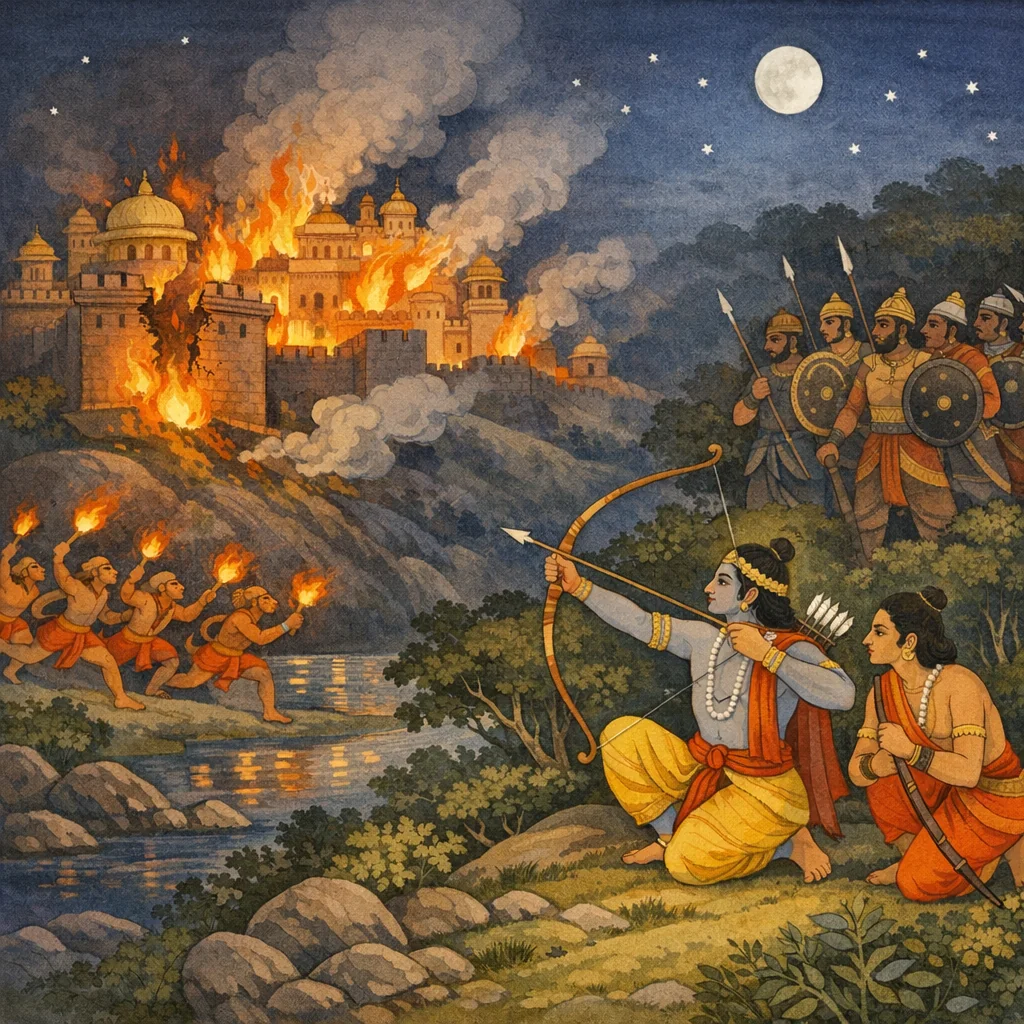
सर्गेऽस्मिन् सुग्रीवः हनूमन्तं तथा वानरवीरान् ‘कार्यस्य’ (उपनिर्हार-निवारणम्) विषये सूचयति—कुम्भकर्ण-वधात् तथा कुमार-नाशात् रावणस्य पुनः प्रतिरक्षा दुर्बला इति तर्कः प्रस्तुतः। सूर्यास्ते वानराः दीप्तोल्काभिः लङ्कामभिमुखाः प्रयान्ति; गोपुर-प्रतोली-प्रासादादिषु हुताशनं सृजन्ति। ततो बहूनि द्रव्याणि—अगुरु-हरिचन्दनम्, क्षौम-कौशेय-वस्त्राणि, मौक्तिक-मणि-वज्र-प्रवालकं, अश्व-गज-रथ-भाण्डानि, चर्म-तनुत्राणि, शस्त्रसमूहाः—अग्निना दह्यन्ते; भवनानि वज्राहत-गिरिशिखरवत् पतन्ति, तोरणानि विद्युदिव शोभन्ते, रात्रौ लङ्का किंशुक-पुष्पितेव दृश्यते। स्त्रीजनस्य आर्तस्वरः धूमेन सह दूरं श्रूयते; मुक्तहस्त्यश्वैः नगरं क्षोभित-सागर-प्रायं भवति। एतस्मिन्नन्तरे रामलक्ष्मणौ विशल्यौ धनुषी गृह्णीतः; रामस्य ज्याशब्दः वानर-राक्षस-नादान् अतिश्रूयते, तथा रामशरैः लङ्काद्वारगोपुरं भिन्नं पतति। राक्षसेन्द्राः सन्नाहं कुर्वन्ति; रावणः क्रुद्धः कुम्भकर्णात्मजौ कुम्भ-निकुम्भौ तथा यूपाक्ष-शोणिताक्ष-प्रजङ्घ-कम्पनादीन् प्रेषयति। उभयसेनयोः भूषण-दीप्ति-चन्द्रताराभा च व्योम प्रकाशयति; ततः घोरः वानर-राक्षस-समरः प्रवर्तते—तरु-शैल-मुष्टिभिः, असि-शूल-गदा-प्रास-तोमरैः, परस्पर-आक्रोशैः च; उभयपक्षे हानिः-लाभः ‘दश-सप्त’ इति अनुपातेन वर्ण्यते।
Shlokas
Verse 1
ततोऽब्रवीन्महातेजास्सुग्रीवोवानराधिपः ।अर्थ्यंविज्ञापयंश्चापिहनूमन्तमिदंवचः ।।।।
Then Sugrīva, the radiant lord of the Vānaras, called Hanumān to attention—wishing to communicate an important matter—and spoke these words.
Verse 2
यतोहतःकुम्भकर्णःकुमाराश्चनिषूदिताः ।नेदानीमुपनिर्हारंरावणोदातुमर्हति ।।।।
Since Kumbhakarṇa has been slain and his sons have been destroyed, Rāvaṇa can no longer mount an effective counter-defence now.
Verse 3
येयेमहाबलास्सन्तिलघवश्चप्लवङ्गमाः ।लङ्कामभ्युतन्त्याशुगृह्योल्काःप्लवगर्षभाः ।।।।हरयोहरिसङ्काशाःप्रदग्धुंरावणालयम् ।
“Let those vānara-bulls who are mighty and swift—taking torches in hand—rush quickly toward Laṅkā, to set fire to Rāvaṇa’s abode: those monkeys, formidable as lions.”
Verse 4
तोस्तंगतआदित्येरौद्रेतस्मिन्निशामुखे ।।।।लङ्कामभिमुखास्सोल्काजग्मुस्तेप्लवगर्षभाः ।
When the sun had set and that dreadful onset of night had come, those bull-like leaders among the monkeys advanced toward Laṅkā, carrying torches.
Verse 5
उल्काहस्सैर्हरिगणैस्सर्वतस्समभिद्रुताः ।।।।आरक्षस्थाविरूपाक्षास्सहसाविप्रदद्रुवुः ।
The Vānara troops, torches in hand, rushed in from all sides; and the misshapen-eyed Rākṣasas stationed as guards at the gates fled at once in panic.
Verse 6
गोपुराट्टप्रतोलीषुचर्यासुविविधासु च ।।।।प्रासादेषु च सम्हृष्टास्ससृजुस्तेहुताशनम् ।
Rejoicing, they set fire to the towering gateways, the attics and archways, the many streets, and the mansions—driving the conflict into the heart of the city.
Verse 7
तेषांगृहसहस्राणिददाहहुतभुक्तदा ।।।।प्रासादाःपर्वताकाराःपतन्तिधरणीतले ।
Then the fire consumed thousands of their houses, and mountain-like mansions came crashing down upon the earth.
Verse 8
अगुरुर्दह्यतेतत्रवरं च हरिचन्दनम् ।।।।मौक्तिकामणयस्स्निग्धावज्रंचापिप्रवालकम् ।
There in Laṅkā, aloe-wood incense and the finest sandalwood were burning; even lustrous pearls and gems, diamonds too, and coral were consumed by the flames.
Verse 9
क्षौमं च दह्यतेतत्रकौशेयंचापिशोभनं ।।।।आविकंविविधंचौर्णंकाञ्चनंभाण्डमायुधम् ।
There, linen and fine silks were burning; so too various woollens and blankets, golden stores and chests, and even weapons were consumed.
Verse 10
नानाविकृतसंस्थानंवाजिभाण्डपरिच्छदौ ।।।।गजग्रैवेयकक्ष्याश्चरथभाण्डाश्चसम्स्कृताः ।
There were many oddly fashioned ornaments and trappings—decorations for horses, neck-ornaments and girths for elephants, and finely prepared fittings for chariots.
Verse 11
नुत्राणि च योधानांहस्त्यश्वानां व चर्म च ।।।।खडगाधनूंषिज्वाबाणास्तोमराङ्कुशशक्तयः ।
There were armours for warriors, and leather protections for elephants and horses; swords, bows and bow-strings, arrows, as well as lances, goads, and javelins.
Verse 12
रोमजंवालजंचर्मव्याघ्रजंचण्डजंबहु ।।।।मुक्तामणिविचित्रांश्चप्रासादांश्चसमन्ततः ।विविधानस्त्रसंयोगानग्निर्दहतितत्रवै ।।।।
All around were many goods—hair-made rugs, fur-whisks, tiger-skins, musk, and mansions adorned with pearls and gems—caught up in the spreading blaze.
Verse 13
रोमजंवालजंचर्मव्याघ्रजंचण्डजंबहु ।।6.75.12।।मुक्तामणिविचित्रांश्चप्रासादांश्चसमन्ततः ।विविधानस्त्रसंयोगानग्निर्दहतितत्रवै ।।6.75.13।।
There, indeed, the fire burned up heaps and assemblages of many kinds of weapons.
Verse 14
नानाविधान्गृहच्छन्दान्धदाहहुतभुक्तदा ।आवासान्राक्षसानां च सर्वेषांगृहगर्थिनाम् ।।।।हेमचित्रतनुत्राणस्रग्दामाम्भरधारिणाम् ।शीधुपानचलाक्षाणांमद्विह्वलगामिनाम् ।।।।कान्तालम्बितवस्त्राणांशत्रुसञ्जातमन्युनाम् ।गदाशूलासिहस्तानांखादतांपिबतामपि ।।।।शयनेषुमहार्हेषुप्रसुप्तानांप्रियैस्सह ।त्रस्तानांगच्छतांतूर्णंपुत्रानादायसर्वतः ।।।।तेषांशतसहस्राणितदालङ्कानिवासिनाम् ।अदहत्पावकस्तत्रजज्वाल च पुनःपुनः ।।।।
Then the fire consumed houses of many designs—dwelling-places of the Rākṣasas, all those famed for their grand homes.
Verse 15
नानाविधान्गृहच्छन्दान्धदाहहुतभुक्तदा ।आवासान्राक्षसानां च सर्वेषांगृहगर्थिनाम् ।।6.75.14।।हेमचित्रतनुत्राणस्रग्दामाम्भरधारिणाम् ।शीधुपानचलाक्षाणांमद्विह्वलगामिनाम् ।।6.75.15।।कान्तालम्बितवस्त्राणांशत्रुसञ्जातमन्युनाम् ।गदाशूलासिहस्तानांखादतांपिबतामपि ।।6.75.16।।शयनेषुमहार्हेषुप्रसुप्तानांप्रियैस्सह ।त्रस्तानांगच्छतांतूर्णंपुत्रानादायसर्वतः ।।6.75.17।।तेषांशतसहस्राणितदालङ्कानिवासिनाम् ।अदहत्पावकस्तत्रजज्वाल च पुनःपुनः ।।6.75.18।।
It swept through those adorned in gold-wrought armour, garlands and fine garments—whose eyes wandered from drinking strong liquor, and who moved with the unsteady gait of intoxication.
Verse 16
नानाविधान्गृहच्छन्दान्धदाहहुतभुक्तदा ।आवासान्राक्षसानां च सर्वेषांगृहगर्थिनाम् ।।6.75.14।।हेमचित्रतनुत्राणस्रग्दामाम्भरधारिणाम् ।शीधुपानचलाक्षाणांमद्विह्वलगामिनाम् ।।6.75.15।।कान्तालम्बितवस्त्राणांशत्रुसञ्जातमन्युनाम् ।गदाशूलासिहस्तानांखादतांपिबतामपि ।।6.75.16।।शयनेषुमहार्हेषुप्रसुप्तानांप्रियैस्सह ।त्रस्तानांगच्छतांतूर्णंपुत्रानादायसर्वतः ।।6.75.17।।तेषांशतसहस्राणितदालङ्कानिवासिनाम् ।अदहत्पावकस्तत्रजज्वाल च पुनःपुनः ।।6.75.18।।
The fire seized even those rākṣasas who clung to their beloveds’ garments, who had risen in wrath against their foes, who held maces, tridents, and swords—and even those who were still eating and drinking.
Verse 17
नानाविधान्गृहच्छन्दान्धदाहहुतभुक्तदा ।आवासान्राक्षसानां च सर्वेषांगृहगर्थिनाम् ।।6.75.14।।हेमचित्रतनुत्राणस्रग्दामाम्भरधारिणाम् ।शीधुपानचलाक्षाणांमद्विह्वलगामिनाम् ।।6.75.15।।कान्तालम्बितवस्त्राणांशत्रुसञ्जातमन्युनाम् ।गदाशूलासिहस्तानांखादतांपिबतामपि ।।6.75.16।।शयनेषुमहार्हेषुप्रसुप्तानांप्रियैस्सह ।त्रस्तानांगच्छतांतूर्णंपुत्रानादायसर्वतः ।।6.75.17।।तेषांशतसहस्राणितदालङ्कानिवासिनाम् ।अदहत्पावकस्तत्रजज्वाल च पुनःपुनः ।।6.75.18।।
Some lay fast asleep with their loved ones on costly beds; others, terrified, fled in haste from every side, snatching up their children as they ran.
Verse 18
नानाविधान्गृहच्छन्दान्धदाहहुतभुक्तदा ।आवासान्राक्षसानां च सर्वेषांगृहगर्थिनाम् ।।6.75.14।।हेमचित्रतनुत्राणस्रग्दामाम्भरधारिणाम् ।शीधुपानचलाक्षाणांमद्विह्वलगामिनाम् ।।6.75.15।।कान्तालम्बितवस्त्राणांशत्रुसञ्जातमन्युनाम् ।गदाशूलासिहस्तानांखादतांपिबतामपि ।।6.75.16।।शयनेषुमहार्हेषुप्रसुप्तानांप्रियैस्सह ।त्रस्तानांगच्छतांतूर्णंपुत्रानादायसर्वतः ।।6.75.17।।तेषांशतसहस्राणितदालङ्कानिवासिनाम् ।अदहत्पावकस्तत्रजज्वाल च पुनःपुनः ।।6.75.18।।
Then, in Laṅkā, the fire burned down hundreds of thousands of dwellings and blazed there again and again.
Verse 19
सारवन्तिमहार्हाणिगम्भीरगुणवन्ति च ।हेमचन्द्रार्धचन्द्राणिचन्द्रशालोनतानि च ।।।।तत्रचित्रगवाक्षाणिसाधिष्ठानानिसर्वशः ।मणिविद्रुमचित्राणिस्पृशन्तीवदिवाकरम् ।।।।क्रौञ्चबर्हिबवीणानांभूषणानां च निस्स्वनैः ।नादितान्यचलाभानिवेश्मान्यग्निर्ददाह स ।।।।
The fire consumed mansions that were solid and precious, rich in imposing features—adorned with golden moon and half-moon motifs, with lofty moonlit terraces.
Verse 20
सारवन्तिमहार्हाणिगम्भीरगुणवन्ति च ।हेमचन्द्रार्धचन्द्राणिचन्द्रशालोनतानि च ।।6.75.19।।तत्रचित्रगवाक्षाणिसाधिष्ठानानिसर्वशः ।मणिविद्रुमचित्राणिस्पृशन्तीवदिवाकरम् ।।6.75.20।।क्रौञ्चबर्हिबवीणानांभूषणानां च निस्स्वनैः ।नादितान्यचलाभानिवेश्मान्यग्निर्ददाह स ।।6.75.21।।
There were wondrous painted windows everywhere, and lofty structures with upper chambers—decorated with gems and coral—as though they touched the sun itself.
Verse 21
सारवन्तिमहार्हाणिगम्भीरगुणवन्ति च ।हेमचन्द्रार्धचन्द्राणिचन्द्रशालोनतानि च ।।6.75.19।।तत्रचित्रगवाक्षाणिसाधिष्ठानानिसर्वशः ।मणिविद्रुमचित्राणिस्पृशन्तीवदिवाकरम् ।।6.75.20।।क्रौञ्चबर्हिबवीणानांभूषणानां च निस्स्वनैः ।नादितान्यचलाभानिवेश्मान्यग्निर्ददाह स ।।6.75.21।।
Resounding with the calls of herons and peacocks, with music of the vīṇā and the jingling of ornaments—those mountain-like palaces were burned by the fire.
Verse 22
ज्वलनेनपरीतानितोरणानिचकाशिरे ।विद्युद्भिरिवनद्धानिमेघजालानिघर्मगे ।।।।
Wrapped in flames, the archways shone like summer cloud-masses girdled with lightning.
Verse 23
ज्वलनेनपरीतानिनिपेतुर्भवनान्वथ ।वज्रिवज्रहतानीवशिखराणिमहागिरेः ।।।।
Then the mansions, engulfed in fire, collapsed—like the peaks of a great mountain shattered by Indra’s thunderbolt.
Verse 24
विमानेषुप्रसुस्ताश्चदह्यमानावराङ्गनाः ।त्यक्ताभरणसर्वाङ्गाहाहेत्युच्चैर्विचुक्रुशुः ।।।।
Lovely women, asleep in the upper chambers, were scorched by the flames; casting off their ornaments, they cried out loudly, “Alas! Alas!”
Verse 25
तत्रचाग्निपरीतानिनिपेतुर्भवनान्यपि ।वज्रिवज्रहतानीवशिखराणिमहागिरेः ।।।।
There, even the mansions—engulfed by fire—collapsed, like the peaks of a great mountain shattered by Indra’s thunderbolt.
Verse 26
तानिनिर्दह्यमानानिदूरतःप्रचकाशिरे ।हिमवच्छिखराणीवदीप्तौषदिवनानिच ।।।।
As those buildings burned, they gleamed from afar—like the snowy peaks of Himavat, and like herb-forests that shine with their own radiance.
Verse 27
हर्म्याग्रैर्दह्यमानैश्चज्वालाप्रज्वलितैरपि ।रात्रौसादृश्यतेलङ्कापुष्पितैरिवकिंशुकैः ।।।।
With the rooftops of palaces burning and blazing with flames, Laṅkā in the night looked as though it were covered with flowering kiṃśuka trees.
Verse 28
हस्त्यध्यक्षैर्गजैर्मुक्तेर्मुक्सैश्चैवतुरङ्गमैः ।बभूवलङ्कालोकान्तेभ्रान्तग्राहइवार्णवः ।।।।
With elephants released by their keepers and horses likewise set loose, Laṅkā became like an ocean at the world’s end—its sea-monsters wildly churned in confusion.
Verse 29
अश्वंमुक्तंगजोदृष्टवाक्वचिद्भीतोऽपसर्पति ।भीतोभीतंगजंदृष्टवाक्वचिदश्वोनिवर्तते ।।।।
In some places, a released horse, seeing an elephant, veered away in fear; elsewhere, an elephant—already frightened—seeing a horse would turn back.
Verse 30
लङ्कायांदह्यमानायांशुशुभे स महार्णवः ।छायासंसक्तसलिलोलोहितोदइवार्णवः ।।।।
As Laṅkā burned, the great ocean shone—its waters catching the city’s reflection—so that it looked like an ocean of red water.
Verse 31
साबभूवमुहूर्तेनहरिभिर्दीपितापुरी ।लोकस्यास्यक्ष्येघोरेप्रदीप्तेववसुन्दरा ।।।।
Set ablaze by the monkeys, in a very short time that city became like the earth itself blazing in the dreadful destruction of the world.
Verse 32
नारीजनस्यधूमेनव्याप्तस्योच्चैर्विनेदुषः ।स्वनोज्वलनतप्तस्यशुश्रुवेशतयोजनम् ।।।।
The cries of the women—choked amid spreading smoke and scorched by the fire—were heard for a hundred yojanas.
Verse 33
प्रदग्धकायानपरान् राक्षसान्निर्गतान् बहिः ।सहसाभ्युत्पतन्तिस्महरयोऽथयुयुत्सवः ।।।।
Then the monkeys, eager for battle, suddenly sprang upon the rākṣasas who—some with bodies burnt—came out into the open.
Verse 34
उद्घुष्टंवानराणां च राक्षसानां च निस्स्वनः ।दिशोदशसमुद्रं च पृथिवींचान्वनादयत् ।।।।
The monkeys’ roaring and the Rākṣasas’ cries rose up together, making the ten directions—along with the ocean and the very earth—resound.
Verse 35
विशल्यौतुमहात्मानौतावुभौरामलक्ष्मणौ ।असम्भ्रान्तौजगृहतुस्तदोभौधनुषीवरे ।।।।
Then the two great-souled brothers, Rāma and Lakṣmaṇa—now free from distress and unshaken—took up their excellent bows.
Verse 36
ततोविस्फारयानस्यरामस्यधनुरुत्तमम् ।बभूवतुमुलश्शब्दोराक्षसानांभयावहः ।।।।
As Rāma drew back his finest bow, a tumultuous sound arose—one that struck fear into the Rākṣasas.
Verse 37
अशोभततदारामोधनुर्विष्फारयन् महत् ।भगवानिवसङ्कृद्धोभवोवेदमयंधनुः ।।।।
At that moment Rāma shone as he strained his great bow—like the divine Bhava (Śiva) in wrath, drawing a bow imbued with the authority of the Vedas.
Verse 38
उद्घुष्टंवानराणां च राक्षसानां च निस्स्वनम् ।ज्याशब्दस्तावुभौशब्दावतिरामस्यशुश्रुवे ।।।।
Above both—the monkeys’ clamour and the Rākṣasas’ cries—the twang of Rāma’s bowstring was heard, surpassing them in force.
Verse 39
वानरोद्घुष्टघोषश्चराक्षसानां च निस्स्वनः ।ज्याशब्दश्चापिरामस्यत्रयंव्याप्यदिशोदश ।।।।
The monkeys’ shouts, the Rākṣasas’ cries, and the twang of Rāma’s bowstring—these three sounds spread through all ten directions.
Verse 40
तस्यकार्मुकमुक्सैश्चशरैस्तत्पुरगोपुरम् ।कैलासशृङ्गप्रतिमंविशीर्णमपतद्भुवि ।।।।
Struck by the arrows released from his bow, the city’s gateway-tower—like a peak of Kailāsa—splintered and fell to the ground.
Verse 41
ततोरामशरान् दृष्टवाविमानेषुगृहेषु च ।सन्नाहोराक्षसेन्द्राणांतुमुलस्समपद्यत ।।।।
Then, seeing Rāma’s arrows lodged in their mansions and houses, the Rākṣasa chiefs began a frantic war-preparation.
Verse 42
तेषांसन्नह्यमानानांसिंहनादं च कुर्वताम् ।शर्वरीराक्षसेन्द्राणांरौद्रीवसमपद्यत ।।।।
As they armed themselves and roared like lions, that night fell upon the Rākṣasa chiefs like a dreadful ‘Rudra-night,’ heavy with omen and terror.
Verse 43
आदिष्टावानरेन्द्रास्तेसुग्रीवेणमहात्मना ।आसन्नद्वारमासाद्ययुध्यध्वंप्लवगर्षभाः ।।।।यश्चवोवितथंकुर्वात्तत्रतत्रव्यवस्थितः ।स हन्तव्योहिसंफ्लुत्यराजशासनदूषकः ।।।।
Commanded by the great-souled Sugrīva, those leaders of the Vānaras said: “O best of the monkeys, having reached the gate that lies close at hand, engage in battle.”
Verse 44
आदिष्टावानरेन्द्रास्तेसुग्रीवेणमहात्मना ।आसन्नद्वारमासाद्ययुध्यध्वंप्लवगर्षभाः ।।6.75.43।।यश्चवोवितथंकुर्वात्तत्रतत्रव्यवस्थितः ।स हन्तव्योहिसंफ्लुत्यराजशासनदूषकः ।।6.75.44।।
“And whoever among you, stationed here or there, acts falsely or fails in his duty—he must be slain, for he is guilty of flouting the king’s command and corrupting royal discipline.”
Verse 45
तेषुवानरमुखेषुदीप्तोल्कोज्ज्वलपाणिषु ।स्थितेषुद्वारमासाद्यरावणंमन्युराविशत् ।।।।
When the Vānara chiefs, their hands blazing with flaming torches, reached the gate and stood firm there, anger seized Rāvaṇa.
Verse 46
तस्यजृम्भितविक्षेपाद्व्यामिश्रावैदिशोदश ।रूपवानिवरुद्रस्यमन्युर्गात्रेष्वदृश्यत ।।।।
By the violent convulsion of his yawning, the ten directions seemed thrown into turmoil; and in his very limbs his wrath appeared—like the embodied form of Rudra.
Verse 47
स निकुम्भं च कुम्भं च कुम्भकर्णात्मजावुभौ ।प्रेषयामाससङ्कृद्धोराक्षससैर्बहुभिस्सह ।।।।
In great anger, he dispatched Nikumbha and Kumbha—both sons of Kumbhakarṇa—together with many Rākṣasas.
Verse 48
यूपाक्षश्शोणिताक्षश्चप्रजङ्घःकम्पनस्तथा ।निर्ययुःकौम्भकर्णिभ्यांसहरावणशासनात् ।।।।
By Rāvaṇa’s command, Yūpākṣa, Śoṇitākṣa, Prajaṅgha, and Kampana marched out together with the two sons of Kumbhakarṇa.
Verse 49
शशासचैवतान् सर्वान्राक्षसान् सुमहाबलान् ।राक्षसागच्छताद्यैवसिंहनादं च नादयन् ।।।।
Roaring like a lion, he commanded all those exceedingly powerful Rākṣasas: “Rākṣasas, go—this very moment!”
Verse 50
ततस्तुचोदितास्तेनराक्षसाज्वलितायुधाः ।लङ्कायानिर्ययुर्वीराःप्रणदन्तःपुनःपुनः ।।।।
Then, urged on by him, the Rākṣasa heroes—bearing blazing weapons—marched out of Laṅkā, shouting their cries again and again.
Verse 51
रक्षसांभूषणस्थाभिर्भाभिस्स्वाभिश्चसर्वशः ।चक्रुस्तेसप्रभंव्योमहरयश्चाग्निभिस्सह ।।।।
By the radiance that shone from the Rākṣasas’ ornaments and their own splendor, the sky was lit up on every side; and the Vānaras too, with their fires, made it glow.
Verse 52
तत्रताराधिपस्याभाताराणां च तथैव च ।तयोराभरणासा च बलयोर्द्यामभासयन् ।।।।
There, the radiance of the moon and the stars—together with the gleam of ornaments worn by both armies—made the sky shine.
Verse 53
चन्द्राभाभूषणाभा च गृहाणांसागरःपुनः ।हरिराक्षससैन्यानिभ्राजयामाससर्वतः ।।।।
The moonlight and the glint of ornaments—and again the shining of the ocean and the dwellings—made the Vanara and Rākṣasa forces gleam on every side.
Verse 54
तत्रचोर्ध्वंप्रदीप्तानांगृहाणांसागरःपुनः ।भाभिस्संसक्तसलिलश्चलोर्मिश्शुशुभेऽधिकम् ।।।।
There, the ocean’s waves—its waters mingling with the glow from the houses burning above—shone all the more brightly.
Verse 55
पताकाध्वजसंसक्तमुत्तमासिपरश्वधम् ।भीमाश्वरथमातङ्गंनानापततिसमाकुलम् ।।।।दीप्तशूलगदाखडगप्रासतोमरकार्मुकम् ।तद्राक्षसबलंघोरभीमंविक्रमपौरुषम् ।।।।ददृशेज्वलितप्रासंकिङ्किणीशतनादितम् ।हेमजालाचितभुजंव्यावेष्टितपरश्वथम् ।।।।व्याघूर्णितमहाशस्त्रंबाणसंसक्तकार्मुकम् ।गन्धमाल्यमधूत्सेकसम्मोदितमहानिलम् ।।।।
Then the Rākṣasa host came into view—terrifying and formidable—dense with banners and standards; armed with excellent swords and axes; filled with dreadful chariots, horses, and elephants, and thronged with many kinds of foot-soldiers. It blazed with tridents, maces, swords, spears, lances, and bows; its warriors were fearsome in valor and might. Shining missiles were seen, and the din of hundreds of bells resounded; arms were adorned with gold, axes were brandished, great weapons whirled, and bows were set with arrows—while a strong wind carried the scent of garlands and perfumes.
Verse 56
पताकाध्वजसंसक्तमुत्तमासिपरश्वधम् ।भीमाश्वरथमातङ्गंनानापततिसमाकुलम् ।।6.75.55।।दीप्तशूलगदाखडगप्रासतोमरकार्मुकम् ।तद्राक्षसबलंघोरभीमंविक्रमपौरुषम् ।।6.75.56।।ददृशेज्वलितप्रासंकिङ्किणीशतनादितम् ।हेमजालाचितभुजंव्यावेष्टितपरश्वथम् ।।6.75.57।।व्याघूर्णितमहाशस्त्रंबाणसंसक्तकार्मुकम् ।गन्धमाल्यमधूत्सेकसम्मोदितमहानिलम् ।।6.75.58।।
Fierce, packed with warriors, and roaring like thunder from great rain-clouds—seeing that dreadful Rākṣasa army advancing, the Vanara host surged forward and raised a loud cry.
Verse 57
पताकाध्वजसंसक्तमुत्तमासिपरश्वधम् ।भीमाश्वरथमातङ्गंनानापततिसमाकुलम् ।।6.75.55।।दीप्तशूलगदाखडगप्रासतोमरकार्मुकम् ।तद्राक्षसबलंघोरभीमंविक्रमपौरुषम् ।।6.75.56।।ददृशेज्वलितप्रासंकिङ्किणीशतनादितम् ।हेमजालाचितभुजंव्यावेष्टितपरश्वथम् ।।6.75.57।।व्याघूर्णितमहाशस्त्रंबाणसंसक्तकार्मुकम् ।गन्धमाल्यमधूत्सेकसम्मोदितमहानिलम् ।।6.75.58।।
Then that great Rākṣasa army, leaping forward with speed, rushed upon the opposing host—like moths flying into a flame.
Verse 58
पताकाध्वजसंसक्तमुत्तमासिपरश्वधम् ।भीमाश्वरथमातङ्गंनानापततिसमाकुलम् ।।6.75.55।।दीप्तशूलगदाखडगप्रासतोमरकार्मुकम् ।तद्राक्षसबलंघोरभीमंविक्रमपौरुषम् ।।6.75.56।।ददृशेज्वलितप्रासंकिङ्किणीशतनादितम् ।हेमजालाचितभुजंव्यावेष्टितपरश्वथम् ।।6.75.57।।व्याघूर्णितमहाशस्त्रंबाणसंसक्तकार्मुकम् ।गन्धमाल्यमधूत्सेकसम्मोदितमहानिलम् ।।6.75.58।।
Rejoicing, they set fire to the towering gateways, the attics and archways, the many streets, and the mansions—driving the conflict into the heart of the city.
Verse 59
घोरंशूरजनाकीर्णंमहाम्बुदरनिस्स्वनम् ।तद्दृष्टवाबलमायातंराक्षसानांसुदारुणं ।।।।सञ्चचालप्लवङ्गानांबलमुच्चैर्ननाद च ।
Fierce, packed with warriors, and roaring like thunder from great rain-clouds—seeing that dreadful Rākṣasa army advancing, the Vanara host surged forward and raised a loud cry.
Verse 60
जवेनाफ्लुत्य च पुनस्तद्बलंरक्षसांमहत् ।।।।अभ्ययात्प्रत्यरिबलंपतङ्गाइवपावकम् ।
Then that great Rākṣasa army, leaping forward with speed, rushed upon the opposing host—like moths flying into a flame.
Verse 61
तेषांभुजपरामर्शव्यामृष्टपरिघाशनि ।।।।राक्षसानांबलंश्रेष्ठंभूयस्तरमशोभत ।
As the Rākṣasas rubbed and brandished their clubs and thunderbolt-like weapons with their mighty arms, their foremost army shone forth all the more brightly.
Verse 62
तत्रोन्मत्ताइवोत्पेतुर्हरयोऽथयुयुत्सवः ।।।।तरुशैलैरभिघ्नन्तोमुष्टिभिश्चनिशाचरान् ।
Then the Vānaras there—eager for combat—leapt up as if maddened, striking the night-roving foes with trees, rocks, and even their fists.
Verse 63
तथैवापततांतेषांकपीनामसिभिशशितैः ।।।।शिरांसिसहसाजह्रूराक्षसाभीमदर्शना ।
Just so, as those Vānaras rushed in, the fearsome-looking Rākṣasas swiftly sheared off their heads with keen-edged swords.
Verse 64
दशनैर्हतकर्णाश्चमुष्टिनिष्कीर्णमस्तकाः ।।।।शिलाप्रहारभग्नाङ्गाविचेरुस्तत्रराक्षसाः ।
There the Rākṣasas staggered about—some with ears torn off by bites, others with skulls crushed by fists, and still others with limbs shattered by blows of rocks.
Verse 65
तथैवाप्यपरेतेषांकपीनामभिलक्षिता ।।।।प्रवीरानभितोजघ्नुर्घोररूपानिशाचराः ।
Likewise, other terrible-looking night-rangers, picking out their targets among the Vānaras, struck down heroes on every side.
Verse 66
घ्नन्तमन्यंजघानान्यःपातयन्तमपातयत् ।।।।गर्हमाणंजगर्हेऽन्योदशन्तमपरोऽदशत् ।
One struck down another who was striking; one felled another who was felling; one abused another who was hurling abuse; and one bit another who was biting.
Verse 67
देहीत्यन्योददात्यन्योददामीत्यपरःपुनः ।।।।किंक्लेशयसितिष्ठेतितत्रान्योन्यंबभाषिरे ।
There they shouted back and forth: one cried, “Strike!” another answered, “I strike!” yet another again, “I will strike!”—and others jeered, “Why do you lament? Stand your ground!”
Verse 68
विप्रलम्भितवस्त्रं च विमुक्तकवचायुधम् ।।।।समुद्यतमहाप्रासंयष्टिशूलासिसङ्कुलम् ।प्रावर्ततमहारौद्रंयुद्धंवानररक्षसाम् ।।।।
Then the exceedingly furious battle between Vānaras and Rākṣasas raged on—garments disheveled, armor and weapons slipping aside—while great lances were raised aloft, and the field swarmed with staves, tridents, and swords.
Verse 69
विप्रलम्भितवस्त्रं च विमुक्तकवचायुधम् ।।6.75.68।।समुद्यतमहाप्रासंयष्टिशूलासिसङ्कुलम् ।प्रावर्ततमहारौद्रंयुद्धंवानररक्षसाम् ।।6.75.69।।
Then the fire consumed thousands of their houses, and mountain-like mansions came crashing down upon the earth.
Verse 70
वानरान्दशसप्तेतिराक्षसाजघ्नुराहवे ।राक्षसान्दशसप्तेतिवानराश्चाभ्यपातयन् ।।।।
In that battle, the rākṣasas struck down the vānaras in the measure of “ten and seven”; and the vānaras likewise felled the rākṣasas in the same measure of “ten and seven.”
Verse 71
विस्रस्तकेशवसनंविध्वस्तकवचध्वजम् ।बलंराक्षसमालम्ब्यवानराःपर्यवारयन् ।।।।
The vānaras closed in and surrounded the rākṣasa host—its hair and garments dishevelled, its armour and standards shattered—pressing upon it on every side.
Frequently Asked Questions
The pivotal action is Sugriva’s enforcement of rājaśāsana: Vanara chiefs must advance to Lanka’s gate and engage; any commander who disobeys by lingering elsewhere is declared punishable. The sarga frames obedience and coordinated action as the ethical prerequisite for a just military campaign.
Leadership is shown as a blend of foresight and accountability: Sugriva assesses the enemy’s weakened capacity (post-Kumbhakarna) and issues clear operational directives; Rama’s controlled martial readiness (bow, arrows, gate collapse) models disciplined power rather than impulsive violence.
Lanka’s urban architecture becomes a landmark system: gopura (gate-towers), toraṇa (archways), prāsāda/harmya (multi-storeyed mansions), and the adjoining sāgara (ocean) reflecting the conflagration—used poetically to map the city’s space and the battle’s spread.