Sarga 72
अतिकायवधश्रवणं रावणस्य लङ्कारक्षाविधानम् (Ravana’s Reaction to Atikaya’s Death and the Fortification Orders for Lanka)
युद्धकाण्ड
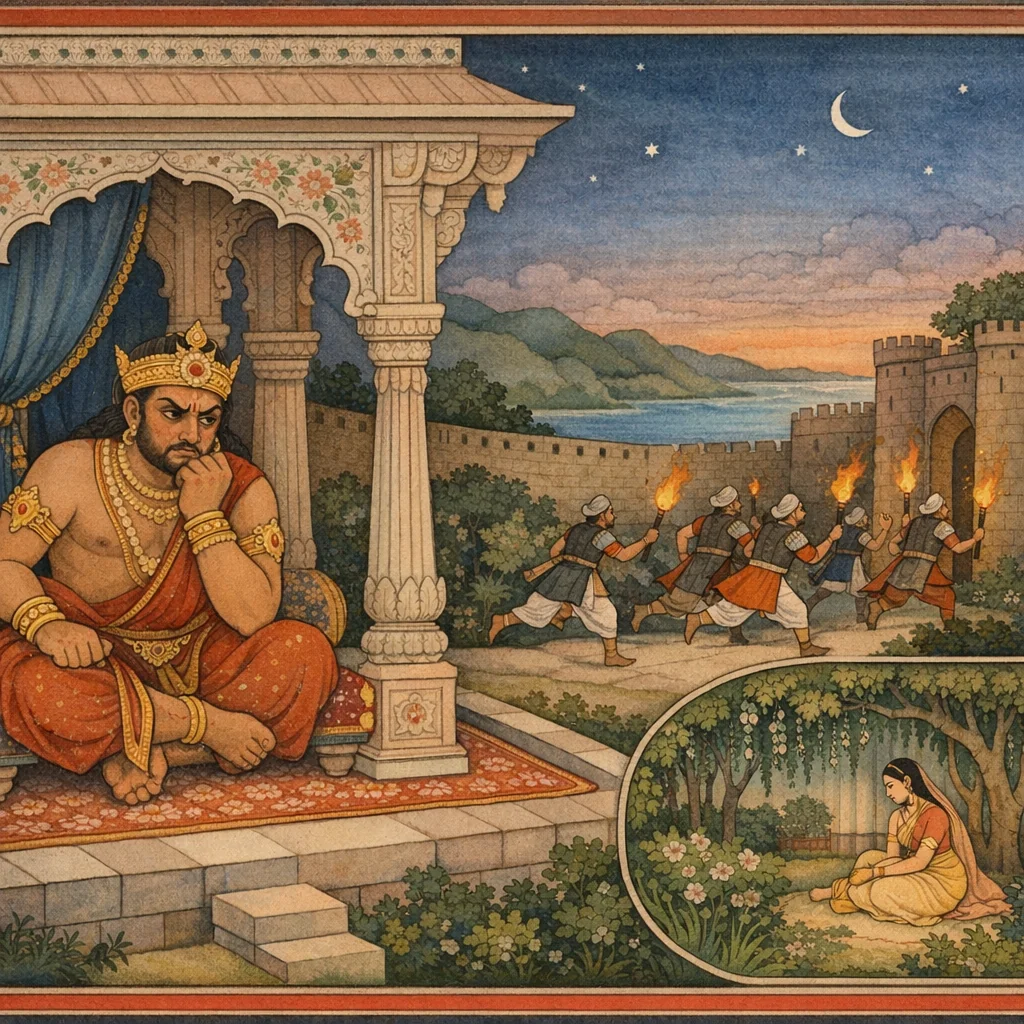
This sarga opens with Rāvaṇa hearing that Atikāya has been slain by the highly energetic Lakṣmaṇa, a report that triggers visible agitation and grief-struck anger. In a reflective register, Rāvaṇa assesses the cumulative attrition of Laṅkā’s elite: earlier commanders and renowned fighters have fallen to Rāma and the vānaras, undermining the myth of rākṣasa invincibility. He recalls Indrajit’s prior binding of the brothers with divinely empowered arrows and expresses astonishment that a bond deemed unbreakable even by gods and celestial beings was nevertheless undone—an admission that the opposing side’s efficacy exceeds his comprehension. The discourse then shifts from lament to administrative command: Rāvaṇa orders comprehensive vigilance across the city, explicitly including the Aśoka grove where Sītā is guarded, and mandates repeated checks of exits, entrances, and troop postings. He instructs night-rangers to watch vānaras’ movements at all hours—dusk, midnight, and dawn—emphasizing continuous readiness whether the army is standing still or advancing. The sarga concludes with rākṣasa forces rising to implement these directives, while Rāvaṇa withdraws to his abode bearing the “thorn of wrath,” repeatedly sighing as he broods over the personal disaster of his son’s death.
Shlokas
Verse 1
अतिकायंहतंश्रुत्वालक्ष्मणेनमहौजसा ।उद्वेगमगमद्राजावचनंचेदमब्रवीत् ।।।।
Hearing that Atikāya had been slain by the highly energetic Lakṣmaṇa, the king (Rāvaṇa) was seized with agitation and spoke these words.
Verse 2
धूम्राक्षःपरमामर्षीधन्वीशस्त्रभृतांवरः ।अकम्पनःप्रहस्तश्चकुम्भुकर्णस्तथैव च ।।।।एतेमहाबलावीराराक्षसायुद्धकाङ्क्षिणः ।जेतारःपरसैन्यानांपरैर्नित्यापराजिताः ।।।।निहतास्तेमहावीर्यारामेणाक्लिष्टकर्मणा ।राक्षसास्सुमहाकायानानाशस्त्रविशारदाः ।।।।अन्ये च बहवश्शूरामहात्मानोनिपातिताः ।
Dhūmrākṣa—fiercely wrathful and foremost among weapon-bearers—Akampana, Prahasta, and likewise Kumbhakarṇa: these heroes of immense strength, eager for battle, conquerors of enemy hosts and never defeated by foes, have been slain by Rāma of untiring deeds—those gigantic Rākṣasas skilled in many weapons. And many other brave and eminent warriors too have been struck down.
Verse 3
धूम्राक्षःपरमामर्षीधन्वीशस्त्रभृतांवरः ।अकम्पनःप्रहस्तश्चकुम्भुकर्णस्तथैव च ।।6.72.2।।एतेमहाबलावीराराक्षसायुद्धकाङ्क्षिणः ।जेतारःपरसैन्यानांपरैर्नित्यापराजिताः ।।6.72.3।।निहतास्तेमहावीर्यारामेणाक्लिष्टकर्मणा ।राक्षसास्सुमहाकायानानाशस्त्रविशारदाः ।।6.72.4।।अन्ये च बहवश्शूरामहात्मानोनिपातिताः ।
These heroic Rākṣasas, mighty in strength and eager for battle—conquerors of enemy hosts, never overcome by their foes—have fallen.
Verse 4
धूम्राक्षःपरमामर्षीधन्वीशस्त्रभृतांवरः ।अकम्पनःप्रहस्तश्चकुम्भुकर्णस्तथैव च ।।6.72.2।।एतेमहाबलावीराराक्षसायुद्धकाङ्क्षिणः ।जेतारःपरसैन्यानांपरैर्नित्यापराजिताः ।।6.72.3।।निहतास्तेमहावीर्यारामेणाक्लिष्टकर्मणा ।राक्षसास्सुमहाकायानानाशस्त्रविशारदाः ।।6.72.4।।अन्ये च बहवश्शूरामहात्मानोनिपातिताः ।
Those great and valiant Rākṣasas—huge of body and skilled in many weapons—have been slain by Rāma of unwearied action; and many other noble warriors too have been struck down.
Verse 5
प्रख्यातबलवीर्येणपुत्रेणेन्द्रजितामम ।।।।यौहितौभ्रातरौतदावीरौबद्धौदत्तवरैश्शरैः ।
Then my son Indrajit—renowned for strength and valor—bound those two heroic brothers, famed in battle, with arrows empowered by boons.
Verse 6
यन्नशक्यंसुरैस्सर्वैरसुरैर्वामहाबलैः ।।।।मोक्तुंतद्बन्धनंघोरंयक्षगन्धर्वकिन्नरैः ।तन्नजानेप्रभावैर्वामाययामोहनेनवा ।।।।शरबन्धाद्विमुक्तौतौभ्रातरौरामलक्ष्मणौ ।
That dreadful bondage—impossible for all the gods, or even mighty demons, and for Yakṣas, Gandharvas, and Kinnaras to undo—was nevertheless cast off by the brothers Rāma and Lakṣmaṇa, whether by their innate power or by some bewildering art unknown to me.
Verse 7
यन्नशक्यंसुरैस्सर्वैरसुरैर्वामहाबलैः ।।6.72.6।।मोक्तुंतद्बन्धनंघोरंयक्षगन्धर्वकिन्नरैः ।तन्नजानेप्रभावैर्वामाययामोहनेनवा ।।6.72.7।।शरबन्धाद्विमुक्तौतौभ्रातरौरामलक्ष्मणौ ।
That dreadful bondage—impossible for all the gods, or even mighty demons, and for Yakṣas, Gandharvas, and Kinnaras to undo—was nevertheless cast off by the brothers Rāma and Lakṣmaṇa, whether by their innate power or by some bewildering art unknown to me.
Verse 8
येयोधानिर्गताश्शूराराक्षसाममशासनात् ।।।।तेसर्वेनिहतायुद्धेवानरैस्सुमहाबलैः ।
All those heroic Rākṣasas who marched out to battle at my command have, every one of them, been slain in the fight by the exceedingly mighty Vānara warriors.
Verse 9
तम्नपश्याम्यहंयुद्धेयोऽद्यरामंसलक्ष्मणम् ।।।।शासयेत्सबलंवीरंससुग्रीवविभीषणम् ।
Even now, in this battle, I do not see anyone who could subdue Rāma together with Lakṣmaṇa—those heroes along with their army, and with Sugrīva and Vibhīṣaṇa at their side.
Verse 10
अहोसुबलवान् रामोमहदस्त्रबलं च वै ।।।।यस्यविक्रममासाद्यराक्षसानिधनंगताः ।
“Ah, how mighty is Rāma—and great indeed is the power of his weapons! Confronting his valor, the rākṣasas have met their destruction.”
Verse 11
अप्रमत्सैश्चसर्वत्रगुप्सैरक्ष्यापुरीवतियम् ।।।।अशोकवनिकायांचयत्रसीताऽभिरक्ष्यते ।
“Let this city be guarded everywhere by vigilant, concealed sentries—especially the Aśoka grove, where Sītā is kept under watch.”
Verse 12
निष्क्रामोवाप्रवेशोवाज्ञातव्यस्सर्वदैवनः ।।।।यत्रयत्रभवेद्गुल्मस्तत्रतत्रपुनःपुनः ।
“Whether it is an exit or an entry, it must always be known to us; wherever detachments are stationed, there—again and again—let checks be made.”
Verse 13
सर्वतश्चापितिष्ठध्वंस्स्वै: परिवृताबलैः ।।।।द्रष्टव्यं च पदंतेषांवानराणांनिशाचराः ।
O night-rangers, take your positions on every side, each group surrounded by its own forces; and keep watch on the movements of those Vānaras.
Verse 14
प्रदोषेवार्धरात्रेवाप्रत्यूषेवापिसर्वत ।।।।नावज्ञातेषुकर्तव्यावानरेषुकदाचन ।द्विषतांबलमुद्युक्तमापतकतिंस्थितंसदा ।।।।
Whether at dusk, at midnight, or at dawn—at all times—there must never be any complacency regarding the Vānaras. Let the hostile army remain ever ready, whether holding position or moving to meet an advance.
Verse 15
प्रदोषेवार्धरात्रेवाप्रत्यूषेवापिसर्वत ।।6.72.14।।नावज्ञातेषुकर्तव्यावानरेषुकदाचन ।द्विषतांबलमुद्युक्तमापतकतिंस्थितंसदा ।।6.72.15।।
At dusk, at midnight, or at dawn—at all times—do not ever be negligent concerning the Vānaras; let the opposing force remain continually prepared, whether standing fast or moving to counter an advance.
Verse 16
ततस्तेराक्षसास्सर्वेश्रुत्वालङ्काधिपस्यतत् ।वचनंसर्वमातिष्ठन् यथावत्तुमहाबलाः ।।।।
Then all those mighty Rākṣasas, having heard the words of Laṅkā’s lord, duly took up their assigned positions and tasks.
Verse 17
स तान् सर्वान् हिसन्दिश्यरावणोराक्षसाधिपः ।मन्युशल्यंवहन् दीनःप्रविवेशस्वमालयम् ।।।।
Having thus issued instructions to them all, Rāvaṇa—the lord of the Rākṣasas—entered his own residence, wretched, bearing within him the painful thorn of anger.
Verse 18
ततस्ससन्दीपितकोपह्निर्निशाचराणामधिपोमहाबलः ।तदेवपुत्रव्यसनंविचिन्तयन्मुहुर्मुहुश्चैवतदाव्यनिश्श्वसत् ।।।।
Then the mighty lord of the night-rangers, with the fire of anger blazing within him, brooded again and again over that very calamity concerning his son, and repeatedly heaved deep sighs.
Verse 19
अतिकायंहतंश्रुत्वालक्ष्मणेनमहौजसा ।उद्वेगमगमद्राजावचनंचेदमब्रवीत् ।।6.72.1।।
Hearing that Atikāya had been slain by the mighty Lakṣmaṇa, the king was seized with agitation and spoke these words.
Verse 20
अतिकायंहतंश्रुत्वालक्ष्मणेनमहौजसा ।उद्वेगमगमद्राजावचनंचेदमब्रवीत् ।।6.72.1।।
Hearing that Atikāya had been slain by the mighty Lakṣmaṇa, the king was shaken with alarm and spoke as follows.
Verse 21
अतिकायंहतंश्रुत्वालक्ष्मणेनमहौजसा ।उद्वेगमगमद्राजावचनंचेदमब्रवीत् ।।6.72.1।।
On hearing that Atikāya had been killed by the powerful Lakṣmaṇa, the king was overtaken by distress and began to speak.
Verse 22
अतिकायंहतंश्रुत्वालक्ष्मणेनमहौजसा ।उद्वेगमगमद्राजावचनंचेदमब्रवीत् ।।6.72.1।।
Hearing that Atikāya had been slain by the mighty Lakṣmaṇa, the king was seized by agitation and spoke these words.
Verse 23
अतिकायंहतंश्रुत्वालक्ष्मणेनमहौजसा ।उद्वेगमगमद्राजावचनंचेदमब्रवीत् ।।6.72.1।।
Hearing that Atikāya had been slain by the mighty Lakṣmaṇa, the king was seized by agitation and spoke these words.
Verse 24
अतिकायंहतंश्रुत्वालक्ष्मणेनमहौजसा ।उद्वेगमगमद्राजावचनंचेदमब्रवीत् ।।6.72.1।।
Hearing that Atikāya had been slain by the mighty Lakṣmaṇa, the king was seized by agitation and spoke these words.
Verse 25
अतिकायंहतंश्रुत्वालक्ष्मणेनमहौजसा ।उद्वेगमगमद्राजावचनंचेदमब्रवीत् ।।6.72.1।।
Hearing that Atikāya had been slain by the mighty Lakṣmaṇa, the king was seized by agitation and spoke these words.
Frequently Asked Questions
The pivotal action is Rāvaṇa’s shift from emotional shock to executive governance: despite personal grief and anger, he formalizes a citywide security protocol—tight control of ingress/egress and constant surveillance—revealing how rājadharma can be invoked even by an antagonistic ruler under existential threat.
The sarga highlights the limits of power grounded only in force or boons: repeated losses compel even a proud sovereign to concede the opponent’s superior efficacy and to rely on vigilance and procedure. It also illustrates how attachment and bereavement destabilize judgment, producing the “manyu-śalya” (thorn of wrath) that clouds leadership.
Laṅkā is mapped as a fortified urban space with controlled gates and troop posts (gulma), and the Aśoka-vāṭikā is singled out as a sensitive inner landmark because it houses the guarded Sītā, making it a focal point for internal security and surveillance.