Sarga 70
त्रिशिरा–देवान्तक–महोदर–मत्त (महापार्श्व) वधः | Slaying of Trisira, Devantaka, Mahodara, and Matta (Mahaparsva)
युद्धकाण्ड
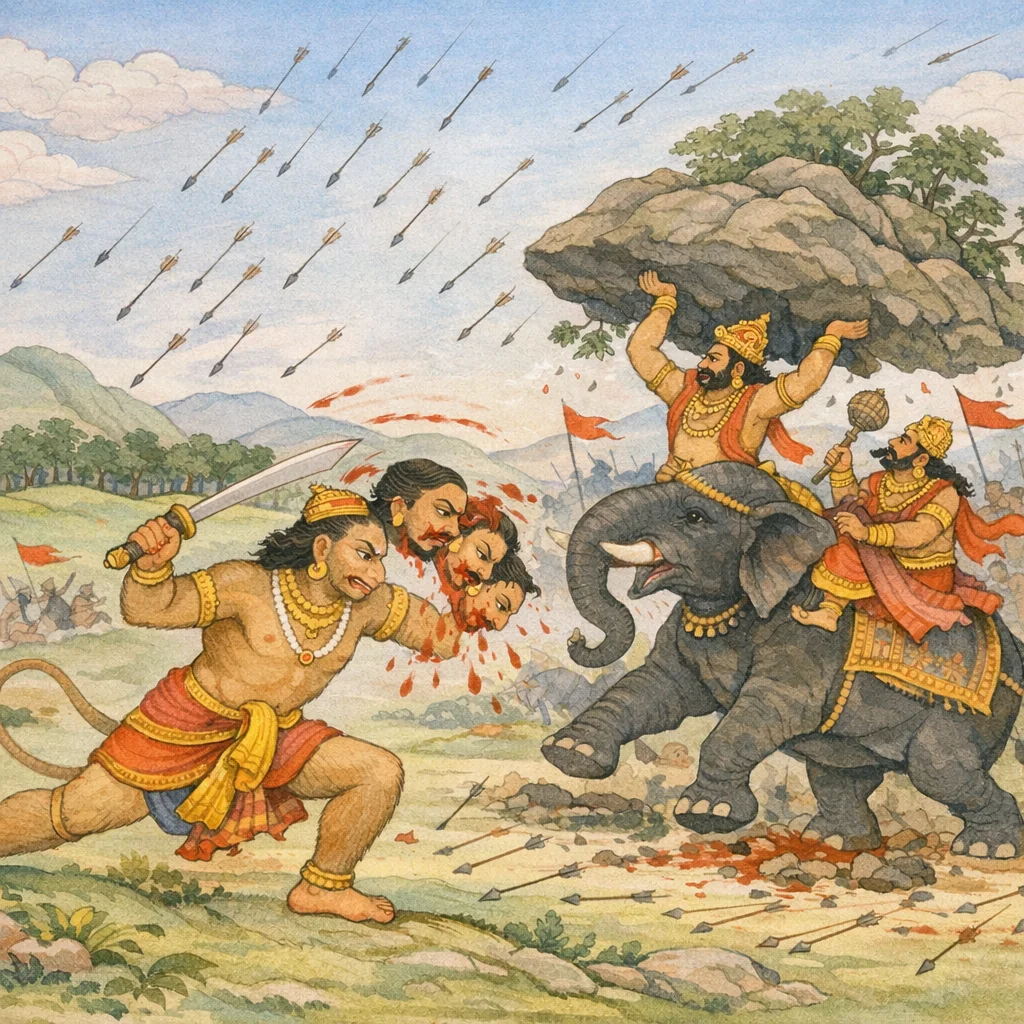
सप्ततितमे सर्गे रणभूमौ प्रमुखराक्षसवीराणां पतनक्रमः वर्ण्यते। प्रारम्भे नैरृतश्रेष्ठाः नरान्तक–देवान्तक–त्रिमूर्धा (त्रिशिराः)–महोदरादयः हतान् दृष्ट्वा राक्षसाः विलपन्ति। महोदरः मेघसङ्काशे गजे आरूढः अङ्गदं (वालिपुत्रं) अभिद्रवति; देवान्तकः परिघेण आघात्य व्यपचक्राम। अङ्गदः त्रिभिः राक्षसपुङ्गवैः युगपत् आक्रान्तोऽपि न विव्यथे; स महागजं तलेन प्रहरति, तस्य लोचने पततः, ततः विषाणं निष्कृष्य देवान्तकं तेन ताडयति। देवान्तकः पुनः परिघं गृहीत्वा अङ्गदं प्रहरति; त्रिशिराः बाणैः ललाटेऽभिजघान। अङ्गदपरिक्षेपं ज्ञात्वा हनूमान् नीलश्च प्रतस्थतुः। नीलः शैलाग्रं त्रिशिरसे क्षिपति, तत् शरैः भिन्नं पतति; देवान्तकः हनूमन्तं परिघेणाभिदुद्राव, हनूमान् वज्रकल्पेन मुष्टिना मूर्ध्नि प्रहरन् देवान्तकं निहन्ति। ततः क्रुद्धः त्रिशिराः नीलोरसि बाणवर्षं ववर्ष; महोदरः पुनर्गजारूढः नीलं शरवृष्ट्या स्तम्भयति, किन्तु नीलः संज्ञां प्रतिलभ्य सवृक्षशैलं समुत्पाट्य महोदरस्य मूर्ध्नि प्रहरति—महोदरः गजेन सह पतति मृतः। त्रिशिराः पितृव्यं निहतं दृष्ट्वा हनूमन्तं शरैः विव्याध; हनूमान् शिखरं क्षिपति, त्रिशिराः तद्भिनत्ति; द्रुमवर्षं अपि छित्त्वा त्रिशिराः शक्तिं क्षिपति, हनूमान् तां गृहीत्वा भञ्जयति। अन्ते त्रिशिराः खड्गेन प्रहरति; प्रत्याघाते हनूमान् तलेन उरसि प्रहरन् तं मूर्च्छयति, पततः खड्गं गृह्णाति, पुनः त्रिशिरा मुष्टिना ताडयति; हनूमान् किरीटधारिणं राक्षसर्षभं गृहीत्वा असिना तस्य त्रयः शीर्षाणि छिनत्ति—इन्द्रेण विश्वरूपवधोपमानं दत्तम्। सर्गस्य उत्तरार्धे मत्तः/मत्तानीकः (महापार्श्वः) त्रिशिर–महोदर–देवान्तक–नरान्तकवधान् दृष्ट्वा क्रुद्धः, सुवर्णपट्टपरिक्षिप्तां घोरां गदां गृह्णाति, हरीन् विद्रावयति। ऋषभः वानरः तस्याग्रतः स्थित्वा वक्षसि गदाप्रहारं सहते; पुनः संज्ञां प्राप्य तस्यैव गदां गृहीत्वा महापार्श्वं पुनःपुनः अभिहत्य विदीर्णनयनेन भूमौ पातयति। राक्षसबलं त्यक्तायुधं जीवितार्थं पलायते—युद्धस्य मनोबलपरिवर्तनं, नेतृत्ववधस्य रणनीतिसिद्धिः, तथा धर्मयुद्धे ‘प्रमुखवधः’ इति निर्णायकपदं अत्र प्रतिपाद्यते।
Shlokas
Verse 1
नरान्तकंहतंदृष्टवाचुक्रुशुर्नैरृतर्षभाः ।देवान्तकस्त्रिमूर्धा च पौलस्त्यश्चमहोदरः ।।।।
Seeing Narāntaka slain, the foremost among the Rākṣasas cried out—Devāntaka, Trimūrdha, Paulastya, and Mahodara.
Verse 2
आरूढोमेघसङ्काशंवारणेन्द्रंमहोदरः ।वालिपुत्रंमहावीर्यमभिदुद्राववीर्यवान् ।।।।
Mahodara, mounted upon a cloud-like lord of elephants, charged with valor at Angada—the mighty son of Vāli.
Verse 3
भ्रारातृव्यसनसन्तप्तस्तदादेवान्तकोबली ।आदायपरिघंदीप्तमङ्गदंसमभिद्रवत् ।।।।
Then Devanthaka, mighty and burning with grief over his kinsman’s calamity, seized a blazing iron club and rushed straight at Aṅgada.
Verse 4
रथमादित्यसङ्काशंयुक्तंपरमवाजिभिः ।आस्थायत्रिशिरावीरोवालिपुत्रमथाभ्ययात् ।।।।
Then the hero Triśiras mounted a chariot blazing like the sun, yoked with excellent horses, and advanced toward Vāli’s son, Aṅgada.
Verse 5
स त्रिभिर्देवदर्पघ्नेर्नेरृतीन्द्रेरभिद्रुतः ।वृक्षमुत्पाटयामासमहाविटपमङ्गदः ।।।।
As three rākṣasa-lords—crushers of the gods’ pride—rushed upon him, Aṅgada uprooted a huge, spreading tree.
Verse 6
देवान्तकायतंवीरच्शिक्षेपसहसाङ्गदः ।महावृक्षंमहाशाखंशक्रोदीप्तमिवाशनिम् ।।।।
Angada, the hero, hurled at Devāntaka a huge, great-branched tree—like Indra casting a blazing thunderbolt.
Verse 7
त्रिशिरास्तंप्रचिच्छेदशरैराशीविषोपमैः ।स वृक्षंकृत्तमालोक्यउत्पपाततदाङ्गदः ।।।।
Triśiras cut down those (trees) with arrows like venomous serpents; seeing the tree severed, Angada sprang up at once.
Verse 8
स ववर्षततोवृक्षान् शैलाश्चकपिकुञ्जरः ।तान् प्रचिच्छेदसङ्कृद्धस्त्रिशिरानिशितैश्शरैः ।।।।
Then the great monkey-warrior showered trees and rocks; enraged, Triśiras cut them down with sharp arrows.
Verse 9
परिघाग्रेणतान् वृक्षान्बभञ्ज च महोदरः ।त्रिशिराश्चाङ्गदंवीरमभिदुद्रावसायकैः ।।।।
Mahodara smashed those trees with the tip of his iron club; and Triśiras charged the heroic Angada with volleys of arrows.
Verse 10
गजेनसमभिद्रुत्यवालिपुत्रंमहोदरः ।जघानोरसिसङ्कृद्धस्तोमरैर्वज्रसन्निभैः ।।।।
Charging with his elephant at Vāli’s son, Mahodara—enraged—struck him on the chest with javelins hard as thunderbolts.
Verse 11
देवान्तकश्चसङ्कृद्धःपरिघेणतदाङ्गदम् ।उपगम्याभिहत्याशुव्यपचक्रामवेगवान् ।।।।
Devāntaka too, furious, came up to Aṅgada and swiftly struck him with an iron club—then, quick of movement, withdrew.
Verse 12
सत्रिभिर्नैरृतश्रेष्ठैर्युगतपत्समभिद्रुतः ।न विव्यथेमहातेजावालिपुत्रःप्रतापवान् ।।।।
Though attacked all at once by three of the foremost Rākṣasas, the radiant and valiant son of Vāli did not waver.
Verse 13
स वेगवान्महावेगंकृत्वापरमदुर्जयः ।तलेनभृशमुत्पत्यजघानास्यमहागजम् ।।।।
Then the swift Aṅgada—hard to overcome—gathered tremendous momentum, leapt up with force, and struck down his great elephant with a crushing blow.
Verse 14
तस्यतेनप्रहारेणनागराजस्यसंयुगे ।पेततुर्लोचनेतस्यविननाद स वारणः ।।।।
By that blow, in the midst of battle, the royal elephant’s eyes fell out, and the beast cried out in agony.
Verse 15
विषाणंचास्यसःनिष्कृष्यवालिपुत्रोमहाबलः ।देवान्तकमभिप्लुत्यताडयामाससंयुगे ।।।।
Then Vāli’s mighty son tore out its tusk and, springing upon Devāntaka in the battle, struck him with it.
Verse 16
स विह्वलस्तुतेजस्वीवातोद्धूतइवद्रुमः ।लक्षारससवर्णं च सुस्रावरुधिरंमहत् ।।।।
That formidable rākṣasa, shaken like a tree buffeted by the wind, poured forth a great stream of blood, red like lacquer.
Verse 17
अथाश्वस्यमहातेजाःकृच्छ्राद्देवान्तकोबली ।आविध्यपरिघंवेगादाजघानतदाङ्गदम् ।।।।
Then the mighty, dreadfully radiant Devāntaka, rallying with difficulty, seized his iron club and swiftly struck Angada.
Verse 18
परिघाभिहतश्चापिवानरेन्द्रात्मजस्तदा ।जानुभ्यांपतितोबूमौपुनरेवोत्पपात ह ।।।।
Though struck by the iron club, the son of the Vānara king fell to the ground upon his knees—yet at once he sprang up again.
Verse 19
तमुत्पतन्तंत्रिशिरास्त्रिभिर्बाणैरजिह्मगैः ।घोरैर्हरिपतेःपुत्रेंललाटेऽभिजघान ह ।।।।
As Angada sprang up, Triśiras struck the son of the Vānara lord on the forehead with three fearsome arrows that flew straight.
Verse 20
ततोऽङ्गदंपरिक्षिप्तंत्रिभिर्नैरृतपुङ्गवैः ।हनूमानपिविज्ञायनीलश्चापिप्रतस्थतुः ।।।।
Then, realizing that Angada had been surrounded by three foremost rākṣasas, Hanumān and Nīla moved in to engage.
Verse 21
तश्चिक्षेपशैलाग्रंनीलस्त्रिशिरसेतदा ।तद्रावणसुतोधीमाबनिभेदनिशितैश्शरैः ।।।।
Then Nīla hurled a mountain-peak at Triśiras; but that wise son of Rāvaṇa shattered it with sharp arrows.
Verse 22
तद्बाणशतनिर्भिन्नंविदारितशिलातलम् ।सविस्फुलिंगंसज्वालंनिपपातगिरेशशिरः ।।।।
Split by hundreds of arrows and its rocky mass torn apart, that mountain-crest fell down, scattering sparks and flames.
Verse 23
ततोजृम्भितमालोक्यहर्षाद्वेवान्तकस्तदा ।परिघेणाभिदुद्रावमारुतात्मजमाहवे ।।।।
Seeing that opening in the fight, Devāntaka rejoiced and, in the thick of battle, rushed at Hanumān—the son of the Wind—with his iron club.
Verse 24
तमापतन्तमुत्प्लुत्यहनुमान्मारुतात्मजः ।आजघानतदामूर्ध्निवज्रकल्पेनमुष्टिना ।।।।
As Devāntaka came charging, Hanumān—the son of the Wind—leapt up and struck him on the head with a fist like a thunderbolt.
Verse 25
शिरसिप्रहरवनीरस्तदावायुसुतोबली ।नादेनाकम्पयच्चैवराक्षसान् स महाकपिः ।।।।
Then the mighty Hanumān, son of the Wind, struck Devanthaka upon the head; and by the thunder of that blow the great monkey made the rākṣasas tremble.
Verse 26
मुष्टिनिष्पिष्टविभिन्नमूर्धानिर्वान्तदन्ताक्षिविलम्बिजिव्वाः ।देवान्तकोराक्षसराजसूनुर्गतासुरुत्व्यांसहसापपात ।।।।
With his skull shattered by the fist-blow—his teeth, eyes, and tongue forced out—Devanthaka, the son of the rākṣasa-king, fell at once upon the earth, lifeless.
Verse 27
तस्मिन्हतेराक्षसयोधमुख्येमहाबलेसंयतिदेवशत्रौ ।क्रुद्धस्त्रिमूर्धानिशिताग्रमुग्रंववर्षनीलोरसिबाणवर्षम् ।।।।
When that foremost rākṣasa warrior—mighty and a foe of the gods—was slain in the fray, Triśiras, enraged, poured a fierce shower of sharp-pointed arrows upon Nīla’s chest.
Verse 28
महोदरस्तुसङ्कृद्धःकुञ्जरंपर्वतोपमम् ।भूयस्समधिरुह्याशुमन्दरंरमशिमानिव ।।।।ततोबाणमयंवर्षंनीलस्योरस्यपातयत् ।गिरौवर्षंतडिच्चक्रचापवानिवतोयदः ।।।।
Then Mahodara, inflamed with rage, swiftly mounted an elephant like a mountain—like the sun of radiant beams rising over Mandara—and thereafter he poured a rain of arrows upon Nīla’s chest, as a rain-cloud, wreathed with lightning and rainbow, showers rain upon a mountain.
Verse 29
महोदरस्तुसङ्कृद्धःकुञ्जरंपर्वतोपमम् ।भूयस्समधिरुह्याशुमन्दरंरमशिमानिव ।।6.70.28।।ततोबाणमयंवर्षंनीलस्योरस्यपातयत् ।गिरौवर्षंतडिच्चक्रचापवानिवतोयदः ।।6.70.29।।
This verse is a duplicate presentation of the same unit as 6.70.28 in the supplied input; its sense remains: Mahodara, enraged, mounted his mountain-like elephant and showered Nīla’s chest with arrows like a storm-cloud raining upon a mountain.
Verse 30
ततश्शरौघेरभिवर्ष्यमाणोविभिन्नगात्रःकपिसैन्यपालः ।नीलोबभूवाथविसृष्टगात्रोविष्टम्भितस्तेनमहाबलेन ।।।।
Then, drenched on every side by torrents of arrows, his limbs pierced through, Nīla—the leader of the monkey host—stood shaken and slack-limbed, checked in his movement by that immensely powerful assault.
Verse 31
ततस्तुनीलःप्रतिलभ्यसंज्ञांशैलंसमुत्पाट्यसवृक्षषंण्डम् ।ततस्समुत्पत्यभृशोग्रवेशोमहादरंतेनजघानमूर्ध्नि ।।।।
But Nīla, regaining consciousness, tore up a mountain thick with trees; then, springing forward with fierce speed, he struck Mahodara on the head with it.
Verse 32
तत: स्सशैलेद्रनिपातभग्नोमहोदरस्तेनमहाद्विपेन ।विपोथितोभूमितलेगतासुःपपातवज्राभिहतोयथाद्रिः ।।।।
Then Mahodara—broken by the crash of that mountain—together with his great elephant, was hurled down upon the earth; life departed from him, and he fell like a mountain struck by a thunderbolt.
Verse 33
पितृव्यंनिहतंदृष्टवात्रिशिराश्चापमाददे ।हनूमन्तं च सङ्कृद्धोविव्याथनिशितैश्शरैः ।।।।
Seeing his uncle slain, Triśiras seized his bow; and in blazing anger he pierced Hanumān with sharp arrows.
Verse 34
स वायुसुनूःकुपितश्चिक्षेपशिखरंगिरेः ।त्रिशिरास्तच्छरैस्तीक्ष्णैर्बिभेदबहुधाबली ।।।।
Enraged, Hanumān—the son of the Wind—hurled a mountain-peak; but the mighty Triśiras split it into many fragments with his sharp arrows.
Verse 35
तद्व्यर्थंशिखरंदृष्टवाद्रुमवर्षंमहाकपिः ।विससर्जरणेतस्मिन्रावणस्यसुतंप्रति ।।।।
Seeing that the hurled mountain-peak had proved futile, the great ape, in that battle, let loose a rain of trees against Rāvaṇa’s son.
Verse 36
तमापतन्तमाकाशेद्रुमवर्षंप्रतापवान् ।त्रिशिरानिशितैर्बाणैश्चिच्छेद च ननाद च ।।।।
As that shower of trees came rushing through the sky, the formidable Triśiras cut it down with keen arrows—and roared aloud.
Verse 37
हनूमानुतोप्लुत्यहयंस्त्रीशिरसस्तदा ।विददारनखैःक्रुद्धोनागेन्द्रंमृगराडिव ।।।।
Then Hanumān leapt up in fury and tore apart Triśiras’ horse with his claws, like a lion rending a lordly elephant.
Verse 38
अथशक्तिंसमादायकाळरात्रिमिवान्तकः ।चिक्षेपानिलपुत्रायत्रिशिरारावणात्मजः ।।।।
Then Triśiras, Rāvaṇa’s son, seized a javelin and hurled it at the Wind’s son, like Death casting forth Kālarātri.
Verse 39
दिवःक्षिप्तामिवोल्कांतांशक्तिंक्षिप्तामसङ्गताम् ।गृहीत्वाहरिशार्दूलोबभञ्ज च ननाद च ।।।।
That javelin, hurled and speeding unobstructed like a meteor fallen from heaven—Hanumān, tiger among monkeys, caught it, snapped it, and roared.
Verse 40
तांदृष्टवाघोरसङ्काशांशक्तिंभग्नांहनूमता ।प्रहृष्टावानरगणाविनेदुर्जलदाइव ।।।।
Seeing that dreadful javelin shattered by Hanumān, the troops of Vānaras rejoiced and thundered like rain-clouds.
Verse 41
तःखडगंसमुद्यम्यत्रिशिराराक्षसोत्तमः ।निजघानतदाव्यूढेवायुपुत्रस्यवक्षसि ।।।।
Then Triśiras, foremost among Rākṣasas, raised his sword and struck Hanumān—the Wind’s son—upon the chest, set firmly for battle.
Verse 42
खडगप्रहाराभिहतोहनुमान्मारुतात्मजः ।आजघानतिशिरसंतलेनोरसिवीर्यवान् ।। ।।
Though struck by the sword, Hanumān—the son of Māruta—mighty in valor, smote Triśiras with his palm upon the chest.
Verse 43
सतलाभिहतस्तेनस्रस्तहस्तायुधोभुवि ।निपपातमहातेजास्त्रिशिरास्त्यक्तचेतनः ।।।।
Struck by him with a blow of the palm, the mighty Triśiras let his weapon slip from his hand; his senses failed, and he fell to the ground.
Verse 44
स तस्यपततःखङ्गंतमाच्छिद्यमहाकपिः ।ननादगिरिसङ्काशस्त्रासयन् सर्वनैरृता ।।।।
As Triśiras fell, the great ape snatched away his sword, and—mountain-like—roared aloud, striking terror into all the rākṣasas.
Verse 45
अमृष्यमाणस्तंघोषमुत्पपातनिशाचरः ।उत्पत्य च हनूमन्तंताडयामासमुष्टिना ।।।।
Unable to endure that roar, the night-ranging rākṣasa sprang up and, leaping at Hanumān, struck him with his fist.
Verse 46
तेनमुष्टिप्रहोरेणसञ्चुकोपमहाकपिः ।कुपितश्चनिजग्राहकिरीटेराक्षसर्षभम् ।।।।
Struck by that fist-blow, the great ape blazed with wrath; and, enraged, he seized the rākṣasa-bull by his crown.
Verse 47
स तस्यशीर्षाण्यसिनाशितेनकिरीटजुष्टानिसकुण्डलानि ।क्रुद्धःप्रचिच्छेदसुतोऽनिलस्यत्वष्टुस्सुतस्येवशिरांसिशक्रः ।।।।
Then, enraged, the son of the Wind cut off his heads with a sharp sword—those heads adorned with crowns and earrings—just as Śakra (Indra) severed the heads of Viśvarūpa, the son of Tvaṣṭṛ.
Verse 48
तान्यायताक्षाण्यगसन्निभानिप्रदीप्तवैश्वानरलोचनानि ।पेतुशिरांसीन्द्ररिपोःर्धरण्यांज्योतींषिमुक्तानियथार्कमार्गात् ।।।।
Those heads—huge as mountains, with long, glaring eyes blazing like Vaiśvānara—fell upon the earth from Indra’s enemy, like stars released from the pathway of the sun.
Verse 49
तस्मिन् न्हतेदेवरिपौत्रिशीर्षेहनूमताशक्रपराक्रमेण ।नेदुःप्लवंगाःप्रचचालभूमीरक्षांस्यथोदुद्रुविरेसमन्तात् ।।।।
When Triśīrṣa—enemy of the gods—was slain by Hanumān of Indra-like prowess, the monkeys roared, the earth shook, and the rākṣasas fled in every direction.
Verse 50
हतंत्रिशिरसंदृष्टवातथैवचमहोदरं ।हतौप्रेक्षयदुराधर्षौदेवान्तकनरान्तकौ ।।।।चुकोपपरमामर्षीमत्तोराक्षसपुङ्गवः ।
Seeing Triśiras slain—and Mahodara as well—and beholding the formidable Devāntaka and Narāntaka also killed, Matta, foremost among rākṣasas, flared up in uncontrollable fury.
Verse 51
जग्राहार्चिष्मतींघोरांगदांसर्वायसींशुभां ।।।।हेमपट्टपरिक्षिप्तांमांसशोणितफेनिलाम् ।विराजमानांवपुषांशत्रुशोणितरंजिताम् ।।।।तेजसासंप्रदीप्ताग्रांरक्तमाल्यविभूषिताम् ।ऐरावतमहापद्मसार्वभौमभयावहाम् ।।।।
Then he seized a dreadful, gleaming mace—of iron, yet splendid—bound with bands of gold, foaming with flesh and blood; radiant in form and reddened by an enemy’s gore, its tip blazing with fiery brilliance, adorned with red garlands, and famed as a terror even to Airāvata, Mahāpadma, and Sārvabhauma.
Verse 52
जग्राहार्चिष्मतींघोरांगदांसर्वायसींशुभां ।।6.70.51।।हेमपट्टपरिक्षिप्तांमांसशोणितफेनिलाम् ।विराजमानांवपुषांशत्रुशोणितरंजिताम् ।।6.70.52।।तेजसासंप्रदीप्ताग्रांरक्तमाल्यविभूषिताम् ।ऐरावतमहापद्मसार्वभौमभयावहाम् ।।6.70.53।।
He seized a mace plated with gold—spattered with froth of flesh and blood—its body gleaming, and reddened by the blood of enemies.
Verse 53
जग्राहार्चिष्मतींघोरांगदांसर्वायसींशुभां ।।6.70.51।।हेमपट्टपरिक्षिप्तांमांसशोणितफेनिलाम् ।विराजमानांवपुषांशत्रुशोणितरंजिताम् ।।6.70.52।।तेजसासंप्रदीप्ताग्रांरक्तमाल्यविभूषिताम् ।ऐरावतमहापद्मसार्वभौमभयावहाम् ।।6.70.53।।
Its head blazed with fiery splendor; it was adorned with red garlands, and it inspired terror even in Airāvata, Mahāpadma, and Sārvabhauma (the guardian elephants of the quarters).
Verse 54
गदामादायसङ्कृद्धोमत्तोराक्षसपुङ्गवः ।हरीन् समभिदुद्रावयुगान्तानगिरिवज्वलन् ।।।।
Taking up the mace, Matta—the foremost of rākṣasas—rushed straight at the monkeys in fury, blazing like the fire of the world’s end.
Verse 55
अथर्षभस्समुत्पत्यवानरोरावणानुजम् ।मत्तानीकमुपागम्यतस्थौतस्याग्रतोबली ।।।।
Then Ṛṣabha, the powerful vānara, sprang up, approached Mattānīka (the rākṣasa adversary), and stood firm before him.
Verse 56
तंपुरस्तात् स्थितंदृष्टवावानरंपर्वतोपमम् ।आजघानोरसिक्रुद्धोगदयावज्रकल्पया ।।।।
Seeing the vānara standing before him like a mountain, the enraged rākṣasa struck him on the chest with a mace like a thunderbolt.
Verse 57
स तयाऽभिहतस्तेनगदयावानरर्षभः ।भिन्नवक्षास्समाधूतस्सुस्रावरुधिरंबहु ।।।।
Struck by that mace, Ṛṣabha—the bull among vānara warriors—had his chest shattered; shaken violently, he bled profusely.
Verse 58
स संज्ञांप्राप्यसुचिरादृषभोवानरर्षभः ।क्रुद्धोविस्फुरमाणौष्ठोमहापार्श्वमुदैक्षत ।।।।
After a long while, Ṛṣabha regained consciousness; enraged, with quivering lips, he fixed his gaze upon Mahāpārśva.
Verse 59
स वेगवान् वेगवदभ्युपेत्यतंराक्षसंवानरवीरमुख्यः ।सम्वर्त्यमुष्टिंसहसाजघानबाह्वन्तरेशैलनिकाशरूपः ।।।।
Swift and powerful, the foremost of vānara heroes—mountain-like in form—rushed upon that rākṣasa and, curling his fist, struck him violently between the arms.
Verse 60
स कृत्तमूलस्सहसेववृक्षःक्षितौपपातक्षतजोक्षिताङ्गः ।तांचास्यघोरांयमदण्डकल्पांगदांप्रगृह्याशुतदाननाद ।।।।
Like a tree whose roots have been cut, he fell to the earth, his limbs drenched in blood; then, quickly seizing his dreadful mace—like Yama’s rod—he roared aloud.
Verse 61
मुहूर्तमासीत्सगतासुकल्पःप्रत्यागतात्मासहसासुरारिः ।उत्पत्यसन्ध्याभ्रसमानवर्णस्तंवारिराजात्मजमाजघान ।।।।
For a brief moment the enemy of the gods lay as though life had left him; then, suddenly recovering himself—his hue like the clouds at twilight—he sprang up and struck the son of the Lord of Waters (Ṛṣabha).
Verse 62
स मूर्भितोभूमितलेपपातमुहूर्तमुत्पत्यपुनस्ससंज्ञः ।तामेवतस्याद्रिवराद्रिकल्पांगदांसमाविध्यजघानसङ्ख्ये ।।।।
Ṛṣabha fell senseless upon the ground for a while; then, rising again and regaining awareness, he seized that mace—like a crag of a mighty mountain—and struck his foe in the thick of battle.
Verse 63
सातस्यरौद्रासमुपेत्यदेहंरौद्रस्यदेवाध्वरविप्रशत्रोः ।बिभेदवक्षःक्षतजं च भूरिसुस्रावधात्वम्भइवाद्रिराजः ।।।।
Closing in upon the body of that furious foe—enemy of the gods, of sacrifice, and of brahmins—Ṛṣabha split open his chest; and abundant blood poured forth, like mineral-laden waters streaming from a mountain-king.
Verse 64
अभिदुद्राववेगेनगदांतस्यमहात्मनः ।गृहीत्वातांगदांभीमामाविध्य च पुनःपुनः ।।।।मत्तानीकंमहात्मानंजघानरणमूर्धनि ।
Rushing forward with speed toward the mace of that great-souled warrior, Ṛṣabha grasped the dreadful mace and, striking again and again, smote Mattānīka in the very forefront of the fight.
Verse 65
स स्वयागदयाभग्नोविदीर्णदशनेक्षणः ।।।।निपपातततोमत्तोवज्राहतइवाचलः ।
Shattered by his own mace, with teeth and eyes crushed, Matta fell then—like a mountain struck by a thunderbolt.
Verse 66
विदीर्णनयनेभूमौगतसत्त्वेगतायुषि ।।।।पतितेराक्षसेतस्मिन् विद्रुतंराक्षसंबलम् ।
When that Rākṣasa fell to the ground—his eyes crushed, his strength spent, his life gone—the Rākṣasa host broke and fled.
Verse 67
तस्मिन्न्हतेभ्रातरिरावणस्यतन्नैरृतानांबलमर्णवाभम् ।त्यक्तायुधंकेवलजीवितार्थंदुद्रावभिन्नार्णवसन्निकाशम् ।।।।
When Rāvaṇa’s brother was slain, that ocean-like force of the Rākṣasas cast away its weapons and fled for life alone—like a sea driven beyond its bounds.
Frequently Asked Questions
The pivotal action is the targeted removal of battlefield commanders (Devantaka, Mahodara, Trisira, and Matta/Mahaparsva). The narrative frames decisive force as legitimate when directed toward immediate aggressors and when it protects allied formations under siege.
Upadesha is conveyed through action rather than speech: steadfastness under coordinated attack (Angada), timely reinforcement of an encircled ally (Hanuman and Nila), and the principle that morale and order collapse when unjust command structures lose their leaders.
No named terrestrial landmark dominates; instead, the sarga uses cultural-cosmological references—Indra’s slaying of Viśvarūpa (Tvaṣṭṛ’s son) and the directional elephants (Airāvata, Mahāpadma, Sārvabhauma)—to index weapons, power, and epic-scale comparison.