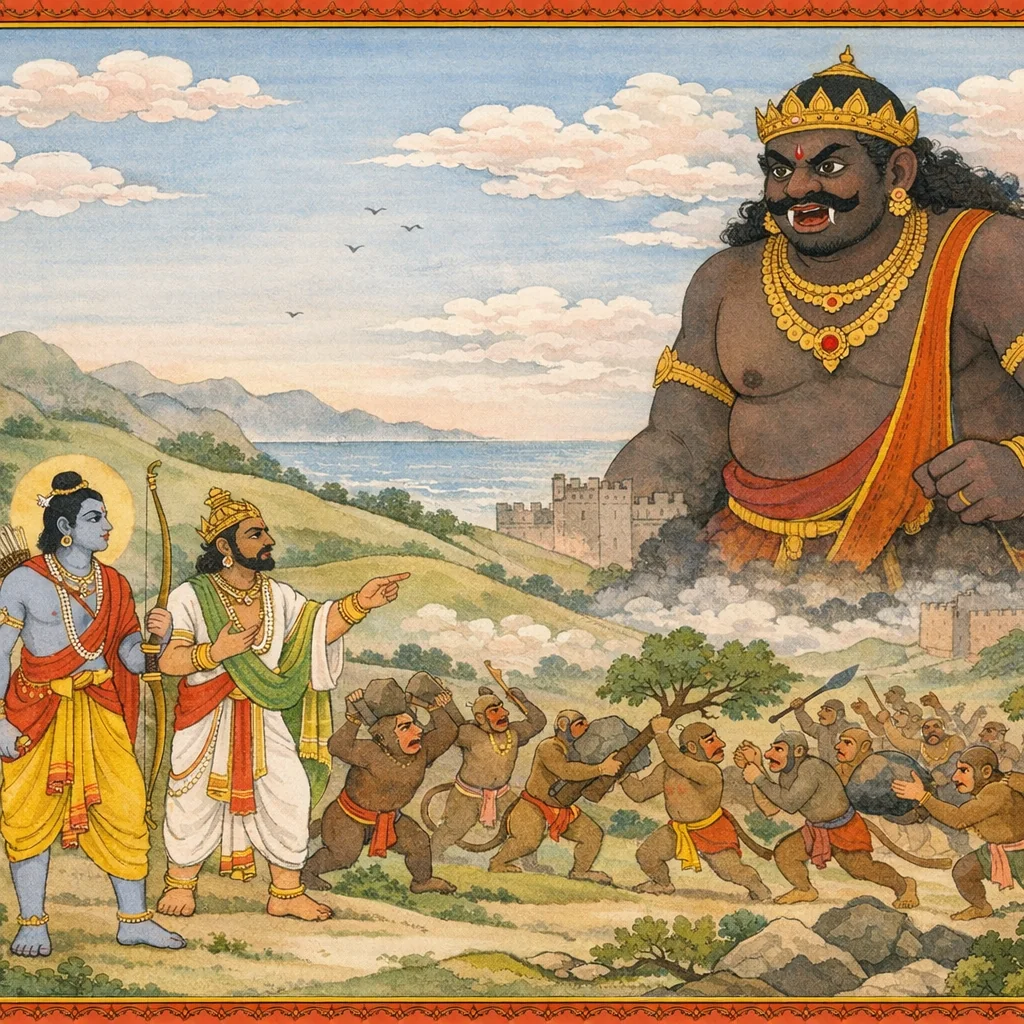
Sarga 61
कुम्भकर्णदर्शनम् — The Appearance of Kumbhakarna and the Account of His Might
युद्धकाण्ड
This sarga opens with Rāma taking up his bow and beholding the crowned, mountain-like Kumbhakarṇa, whose sheer scale causes panic among the vānaras. Rāma questions Vibhīṣaṇa about this unprecedented figure; Vibhīṣaṇa identifies him as Viśravas’s son who once defeated Indra and even Yama’s forces, and whose natural strength surpasses other rākṣasa-lords who rely on boons. The narration then retrospectively explains Kumbhakarṇa’s destructive appetite from birth—devouring beings, terrifying peoples, and provoking Indra’s thunderbolt attack—followed by Kumbhakarṇa striking Indra with Airāvata’s tusk. The devas and beings appeal to Brahmā, reporting Kumbhakarṇa’s violences (devouring, assaulting devas, destroying āśramas, abducting others’ wives). Brahmā curses him to sleep like the dead; Rāvaṇa protests on grounds of lineage and fairness, and Brahmā fixes the compromise: six months of sleep and one day awake—yet that single day is depicted as world-threatening hunger. Returning to the battlefield present, Vibhīṣaṇa urges morale management; Rāma orders Nīla to deploy troops and hold Laṅkā’s gates, roads, and crossings, arming vānaras with trees, rocks, and mountain-peaks as the army forms a dense, cloud-mass-like battle array.
Shlokas
Verse 1
ततोरामोमहातेजाधनुरादायवीर्यवान् ।किरीटिनंमहाकायंकुम्भकर्णंददर्श ह ।।6.61.1।।
Then Rāma—mighty in valor and blazing in splendor—taking up his bow, beheld Kumbhakarṇa, crowned and of immense body.
Verse 2
तंदृष्टवाराक्षसश्रेष्ठंपर्वताकारदर्शनम् ।क्रममाणमिवाकाशंपुरानारायणंप्रभुम् ।।6.61.2।।
Seeing that foremost of Rākṣasas—mountain-like in form—he appeared like the Lord Nārāyaṇa of old, striding up into the sky.
Verse 3
सतोयाम्बुदसङ्काशंकाञ्चनाङ्गदभूषणम् ।दृष्टवापुनःप्रदुद्रवावानराणांमहाचमूः ।।6.61.3।।
Seeing that rākṣasa—dark like a rain-cloud heavy with water and adorned with golden armlets—the great vānara host once again broke into a run (in alarm).
Verse 4
विद्रुतांवाहिनींदृष्टवावर्धमानं च राक्षसम् ।सविस्मयमिदंरामोविभीषणमुवाच ह ।।6.61.4।।
Seeing the host thrown into flight and a rākṣasa swelling into an enormous form, Rāma—astonished—spoke these words to Vibhīṣaṇa.
Verse 5
कोऽसौपर्वतसङ्काशःकिरीटीहरिलोचनः ।लङ्कायांदृश्यतेवीरःसविद्युदिवतोयदः ।।6.61.5।।
“Who is that hero, mountain-like in form—crowned, tawny-eyed—seen there in Laṅkā, like a rain-cloud lit by lightning?”
Verse 6
पृथिव्यांकेतुभूतोऽसौमहानेकोऽत्रदृश्यते ।यंदृष्टवावानरास्सर्वेविद्रवन्तिततस्ततः ।।6.61.6।।
“He appears here, great and solitary—like a comet upon the earth; seeing him, all the vānaras flee in every direction.”
Verse 7
आचक्षवसुमहान् कोऽसौरक्षोवायदिवाऽसुरः ।न मयैवंविधंभूतंदृष्टपूर्वंकदाचन ।।6.61.7।।
“Tell me—who is that exceedingly huge being? Is he a rākṣasa, or perhaps an asura? Never before have I seen a creature like this.”
Verse 8
संपृष्टोराजपुत्रेणरामेणाक्लिष्टकर्मणा ।विभीषणोमहाप्राज्ञःकाकुत्थ्समिदमब्रवीत् ।।6.61.8।।
Thus questioned by the prince Rāma—untiring in action—the highly wise Vibhīṣaṇa spoke this reply to Kakutstha.
Verse 9
येनवैवस्वतोयुद्धेवासवश्चपराजितः ।सैषविश्रवसःपुत्रःकुम्भकर्णःप्रतापवान् ।।6.61.9।।अस्यप्रमाणसदृशोराक्षसाऽन्यो न विद्यते ।
“It was by him that Vaivasvata (Yama) in battle, and even Vāsava (Indra), were defeated. This is Kumbhakarṇa, the mighty son of Viśravas; among rākṣasas none other is known to equal him in sheer size.”
Verse 10
एतेनदेवायुधिदानवाश्चयक्षाभुजङ्गाःपिशिताशनाश्च ।गन्धर्वविद्याधरकिन्नरैश्चसहस्रशोराघवसम्प्रभग्नाः ।।6.61.10।।
"By him, O Rāghava, in battle the devas and dānavas, yakṣas, serpents, flesh-eaters, and also gandharvas, vidyādharas, and kinnaras—by the thousands—have been utterly routed."
Verse 11
शूलपाणिंविरूपाक्षंकुम्भकर्णंमहाबलम् ।हन्तुं न शेकुस्त्रिदशाःकालोऽयमितिमोहिताः ।।6.61.11।।
Kumbhakarṇa—pike in hand, with dreadful eyes, and of immense strength—could not be slain even by the gods, for they were bewildered, thinking, “This is Death itself.”
Verse 12
प्रकृत्याह्येषतेजस्वीकुम्भकर्णोमहाबलः ।अन्येषांराक्षसेन्द्राणांवरदानकृतंबलम् ।।6.61.12।।
For Kumbhakarṇa is radiant and immensely strong by his very nature; whereas the strength of other lordly Rākṣasas is fashioned through boons they have received.
Verse 13
एतेनजातमात्रेणक्षुधार्तेनमहात्मना ।भक्षितानिसहस्राणिसत्त्वानांसुबहून्यपि ।।6.61.13।।
Even at the very moment of his birth, tormented by hunger, this mighty being devoured thousands upon thousands of living creatures.
Verse 14
तेषुसंभक्षयमाणेषुप्रजाभयनिपीडिताः ।यान्तिस्मशरणंशक्रंतमप्यर्थंन्यवेदयन् ।।6.61.14।।
As he kept devouring them, the people—crushed by fear—went for refuge to Śakra (Indra) and reported the matter to him.
Verse 15
सकुन्भकर्णंकुपितोमहेन्द्रोजघानवज्रेणशितेनवज्री ।सशक्रवज्राभिहतोमहात्माचचालकोपाच्चभृशंननाद ।।6.61.15।।
Then Mahendra, enraged, struck Kumbhakarṇa with his sharp thunderbolt; and that mighty one, struck by Śakra’s bolt, reeled—and in fury roared aloud.
Verse 16
तस्यनानद्यमानस्यकुम्भकर्णस्यरक्षसः ।श्रुत्वानिनादंवित्रस्ताःभूमिभूयोवितत्रसे ।।6.61.16।।
Hearing the roar of that Rākṣasa Kumbhakarṇa as he bellowed, the frightened beings were shaken still more, again and again, upon the earth.
Verse 17
तत्रकोपान्महेन्द्रस्यकुम्भकर्णोमहाबलः ।विकृष्यैरावताद्धन्तंजघानोरसिवासवम् ।।6.61.17।।
Then the mighty Kumbhakarṇa, in wrath, tore a tusk from Airāvata and struck Vāsava (Indra) upon the chest.
Verse 18
कुम्भकर्णप्रहारार्तोविजज्वाल स वासवः ।ततोविषेदुस्सहसादेवाब्रह्मर्षिदानवाः ।।6.61.18।।प्रजाभिस्सहशक्रश्चययौस्थानंस्वयम्भुवः ।
Struck and pained by Kumbhakarṇa’s blow, Vāsava (Indra) blazed with anguish. Then the Devas, the Brahmarṣis, and the Dānavas fell suddenly into despair; and Śakra, together with the beings, went to the abode of Svayambhū (Brahmā).
Verse 19
कुम्भकर्णस्यदौरात्म्यंशशंसुस्तेप्रजापतेः ।।6.61.19।।प्रजानांभक्षणंचापिधर्षणं च दिवौकसाम् ।आश्रमध्वंसनंचापिपरस्त्रीहरणंभृशम् ।।6.61.20।।
To Prajāpati (Brahmā) they reported Kumbhakarṇa’s depravity: that he devoured the peoples, violated the dwellers of heaven, destroyed hermitages, and violently abducted the wives of others.
Verse 20
कुम्भकर्णस्यदौरात्म्यंशशंसुस्तेप्रजापतेः ।।6.61.19।।प्रजानांभक्षणंचापिधर्षणं च दिवौकसाम् ।आश्रमध्वंसनंचापिपरस्त्रीहरणंभृशम् ।।6.61.20।।
They reported (to Brahmā) Kumbhakarṇa’s crimes—devouring living beings, assaulting even the devas, destroying the sages’ hermitages, and violently abducting other men’s wives.
Verse 21
एवंप्रजायदित्वेषभक्षयिष्यतिनित्यशः ।अचिरेणैवकालेनशून्योलोकोभविष्यति ।।6.61.21।।
If he keeps consuming living beings like this day after day, then before long, in the course of time, the world will become empty of beings.
Verse 22
वासवस्यवचश्श्रुत्वासर्वलोकपितामहः ।रक्षांस्यावाहयामासकुम्भकर्णंददर्श ह ।।6.61.22।।
Hearing Indra’s words, Brahmā—the grandsire of all worlds—summoned the rākṣasas and beheld Kumbhakarṇa among them.
Verse 23
कुम्भकर्णंसमीक्ष्यैववितत्रासप्रजापतिः ।दृष्टवाविश्वास्यचैवैनंस्वयम्भूरिदमब्रवीत् ।।6.61.23।।
On beholding Kumbhakarṇa, Prajāpati was alarmed; and the Self-born Brahmā, seeking to steady him, spoke these words.
Verse 24
ध्रुवंलोकविनाशायपौलस्त्येनासिनिर्मितः ।तस्मात्त्वमद्यप्रभृतिमृतकल्पःशयिष्यसे ।।6.61.24।।
Surely you have been brought forth by Paulastya for the ruin of the world. Therefore, from this day onward, you shall lie sleeping as though dead.
Verse 25
ब्रह्मशापाभिभूतोऽथनिपपाताग्रतःप्रभोः ।ततःपरमसम्भ्रान्तोरावणोवाक्यमब्रवीत् ।।6.61.25।।
Then, overwhelmed by Brahmā’s curse, he fell down before the Lord. Thereupon Rāvaṇa, greatly agitated, spoke these words.
Verse 26
विवृद्धःकाञ्चनोवृक्षःफलकालेनिकृत्यते ।न नप्तारंस्वकंन्यायंशप्तुमेवंप्रजापते ।।6.61.26।।
A golden tree, once fully grown, should not be cut down at the time of fruiting. O Prajāpati, it is not right to curse your own great-grandson in this way.
Verse 27
न मिथ्यावचनश्चत्वंस्वप्स्यत्येष न संशयः ।कालस्तुक्रियतामस्यशयनेजागरेतथा ।।6.61.27।।
Your word will not prove false—of that there is no doubt; he must sleep. Yet let a time be fixed for him, both for sleeping and for waking.
Verse 28
रावणस्यवचश्श्रुत्वास्वयम्भूरिदमब्रवीत् ।शयिताह्येषषण्मासानेकाहंजागरिष्यति ।।6.61.28।।
Hearing Rāvaṇa’s words, the Self-born Brahmā said: “He will sleep for six months, and he will be awake for one day.”
Verse 29
एकेनाह्नात्वसौवीरश्चरन् भूमिंबुभुक्षितः ।व्यात्तास्योभक्षयेल्लोकान् सङ्कृद्धइवपावकः ।।6.61.29।।
And on that single day, that warrior—ravenous—will roam the earth with gaping mouth and devour beings like a blazing, surging fire.
Verse 30
सोऽसौव्यसमापन्नःकुम्भकर्णमबोधयत् ।त्वत्पराक्रमभीतश्चराजासम्प्रतिरावणः ।।6.61.30।।
Overwhelmed by distress, King Rāvaṇa—afraid of your prowess—has now awakened Kumbhakarṇa from sleep.
Verse 31
स एषनिर्गतोवीरःशिबिराद्भीमविक्रमः ।वानरान्भृशसङ्कृद्धोभक्षयन्परिधावति ।।6.61.31।।
That heroic warrior of dreadful might has come out from his camp; raging with intense anger, he rushes about intending to devour the vānara troops.
Verse 32
कुम्भकर्णंसमीक्ष्यैवहरयोऽद्यप्रविद्रुतुः ।कथमेनंरणेक्रुद्धंवारयिष्यन्तिवानराः ।।6.61.32।।
At the very sight of Kumbhakarṇa, the monkeys today have fled. How will the vānara warriors restrain him, enraged as he is in battle?
Verse 33
उच्यन्तांवानराःसर्वेयन्त्रमेतत्समुच्छ्रितम् ।इतिविज्ञायहरयोभविष्यन्तीहनिर्भयाः ।।6.61.33।।
Let all the vānara warriors be told: “This towering figure is but a contrivance (a ‘device’).” Knowing this, the monkeys here will become fearless.
Verse 34
विभीषणवचश्श्रुत्वाहेतुमत्सुमुखेरितम् ।उवाचराघवोवाक्यंनीलंसेनापतिंतदा ।।6.61.34।।
Having heard Vibhīṣaṇa’s well-reasoned words—spoken for their benefit—Rāghava then addressed Nīla, the commander of the army.
Verse 35
गच्छसैन्यानिसर्वाणिव्यूह्यतिष्ठस्वपावके ।द्वाराण्यादायलङ्कायाश्चर्याश्चाप्यथसङ्क्रमान् ।।6.61.35।।
“Go, Pavaka: array all the troops and take your position—securing the gates of Laṅkā, its thoroughfares, and the crossings (bridges).”
Verse 36
शैलशृङ्गाणिवृक्षांश्चशिलाश्चाप्युपसंहर ।तिष्ठन्तुसायुधास्सर्वेसायुधाश्शैलपाणयः ।।6.61.36।।
“Bring together mountain-peaks, trees, and rocks as well. Let all stand ready, armed—weapon-bearing, with rocks in their hands.”
Verse 37
राघवेणसमादिष्टोनीलोहरिचमूपतिः ।शशासवानरानीकंयथावत्कपिकुञ्जरः ।।6.61.37।।
Thus instructed by Rāghava, Nīla—the lord of the vānara host, an ‘elephant among monkeys’—directed the monkey battalions exactly as ordered.
Verse 38
ततोगवाक्षश्शरभोहनूमानङ्गदस्तथा ।शैलशृङ्गाणिशैलाभागृहीत्वाद्वारमभ्ययुः ।।6.61.38।।
Then Gavākṣa, Śarabha, Hanūmān, and likewise Aṅgada—taking mountain-peaks and boulders—advanced toward the gate.
Verse 39
रामवाक्यमुपश्रुत्य हरयो जितकाशिनः ।पादपैरर्दयवनीरावानराःपरवाहिनीम् ।।6.61.39।।
Hearing Rāma’s command, the monkey-warriors—eager for victory—began to crush the enemy host, striking it with trees.
Verse 40
ततोहरीणांतदनीकमुग्रंरराजशैलोद्यतदीप्तहस्तम् ।गिरेःसमीपानुगतंयथैवहन्महाम्भोधरजालमुग्रम् ।।6.61.40।।
Then that fierce vānara host shone forth—its hands blazing as they lifted rocks and trees—massed close together like a terrible bank of great storm-clouds clinging to a mountain’s side.
Frequently Asked Questions
The chapter frames a governance dilemma: Brahmā must restrain a destructive force (Kumbhakarṇa) without violating the integrity of divine speech and lineage obligations; the resolution fixes a bounded sleep-wake cycle, balancing cosmic protection with the principle that a creator’s decree should not be rendered false.
Power without restraint becomes world-threatening; therefore, cosmic and royal order requires limits (niyama) and disciplined strategy. The narrative also models counsel-based leadership: Rāma listens to Vibhīṣaṇa, then converts knowledge into coordinated defensive deployment.
Laṅkā’s defensive infrastructure is emphasized—its gates (द्वाराणि), roads/highways (चर्या/मार्ग), and crossings/bridges (सङ्क्रम)—as tactical landmarks, alongside the āśrama motif (hermitages) as a cultural-religious institution endangered by Kumbhakarṇa’s earlier violence.